
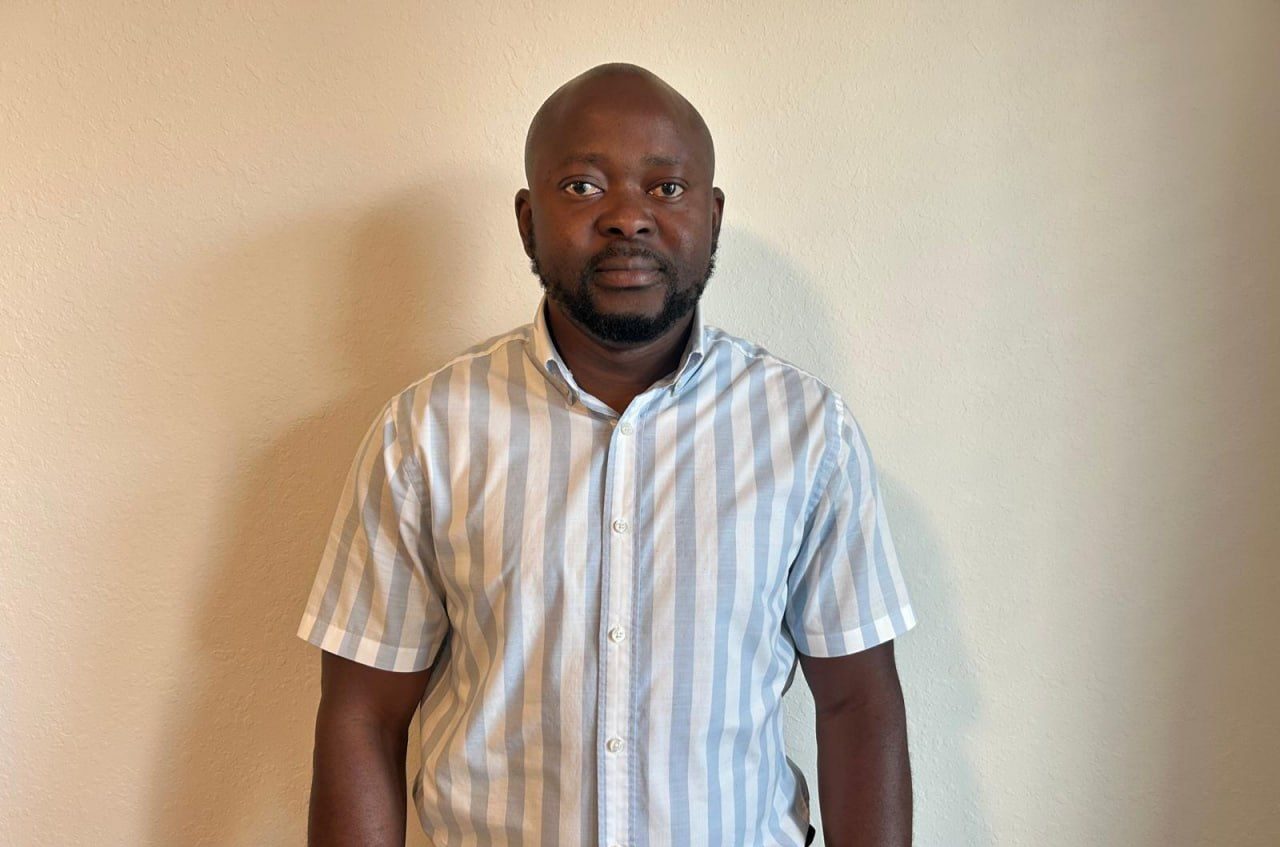
Olusesan Ogundulu
By Feyi Emma
Migration to the cloud is often perceived as an exclusively technical process, but a Microsoft Certified Data Engineer, Olusesan Ogundulu, is changing this approach, making it a restart point for the entire data management system.
Now Africa is making a qualitative leap in the development of data and AI infrastructure: in late last year, the continental telecom giant Vodacom has entered into a major partnership with Google Cloud to unify its corporate data in the cloud and bring real-time analytics to a new level, as well as lay the foundation for large-scale integration of generative artificial intelligence into all business processes.
These events reflect a broader trend: Africa is rapidly investing in digital infrastructure and analytical solutions, supporting not only commercial but also socially significant projects, from healthcare to smart cities, as seen at the African Symposium on Big Data, Analytics and Machine Intelligence 2026, which brings together experts from around the world to discuss real data-driven solutions.
But behind high-profile strategic agreements, there is always an engineering reality: outdated ETL processes, fragmented systems, data quality, and governance issues. This is where the work of specialists begins, who turn ambitious statements into sustainable architecture of companies.
Olusesan Ogundulu is a Microsoft Certified Professional and a Senior Data Engineer at Alvarez & Marsal Holdings LLC, a global professional services firm that helps corporations, financial institutions, and governments improve performance, manage risk, and optimize operations. For such organizations, data is not just technical infrastructure – it determines how quickly financial reports are delivered, how accurately risks are assessed, and how confidently leadership makes strategic decisions.
In one of the key projects he worked on, Olusesan participated in the transformation of a large internal data-processing system. After migrating the company’s data operations to a modern cloud platform, the time the system spends processing data was reduced by more than 60%, and infrastructure costs were significantly lowered.
As African companies move towards real-time analytics and AI models, these architectural solutions are becoming the foundation of the future. And in this context, Olusesan’s experience is a practical understanding of how an intelligent data infrastructure is built in a globally competitive environment.
Transition to cloud architecture as a basis for digital transformation
Today, for companies in the process of digital growth, the main challenge is to move away from outdated ETL tools. Legacy systems often accumulate years of business logic, depend on manual processes, and scale poorly. Moving to the cloud requires not only technical migration but also a review of the entire data architecture.
The key challenge for the company where Olusesan Ogundulu works was quite understandable for any business: data was processed for too long, infrastructure support was expensive, and internal systems began to slow down development. When a client needs analytics quickly, internal delays turn into wasted time and potentially missed opportunities.
One of the key stages of Olusesan Ogundulu’s work was transitioning from traditional ETL tools like SSIS and Informatica to modern cloud-based architectures. This transition meant moving from batch processing to a more flexible, scalable, and manageable model. The company moved away from the model in which it constantly maintained its own servers and infrastructure, and switched to a model where computing resources are used as needed and paid for upon use.
Firstly, it was necessary to reduce costs. Maintaining your own infrastructure requires constant costs, even if it is not used at full capacity. The cloud model allowed paying only for the actual load. Secondly, to speed up data processing. After the upgrade, the processing time was reduced by more than 60%. This meant that reports, financial analytics, and management information became available much faster. Thirdly, it has improved the reliability of the data. During the modernization process, additional information verification mechanisms were introduced to ensure that reporting is based on consistent and verified data.
“Special attention was paid to data quality. During the modernization process, additional validation layers were introduced, and information integrity control mechanisms were improved. This was necessary in order for analytics and reporting to be based on verified and consistent data. At the same time, data lineage and governance control were enhanced through cloud-based tools, which increased transparency of data flows and simplified auditing,” Olusesan Ogundulu commented.
The transition to a cloud architecture in Olusesan’s projects solved several tasks at once: first of all, the management task – to make the company faster, more economical, and more sustainable in the face of growing competition. Moreover, it increased productivity, strengthened quality control, simplified maintenance, and prepared the infrastructure for further integration of AI tools. It is this kind of system modernization that turns technical renewal into the basis of a full-fledged digital transformation.
Centralization of data and formation of a sustainable governance model
After upgrading pipelines and transferring processing to the cloud, the next logical task is to eliminate data fragmentation. Speed is important, but data quality and consistency are equally essential. In large organizations, information is often stored in different systems: financial, personnel, and operational. If this data is not synchronized, the business management receives conflicting reports. Even the most productive infrastructure loses value if data remains distributed across different systems, contradicts each other, and lacks a well-defined access model. At this stage, digital transformation is moving from accelerating processes to ensuring their consistency and manageability.
In Olusesan Ogundulu’s professional experience, this stage was associated with the development of a centralized data warehouse that integrates data from Workday, Agresso, and other corporate systems. The goal of the project was to create a single source for management reporting and compliance tasks. This meant not just combining the data but bringing it to a consistent structure, eliminating discrepancies, and providing uniform processing rules.
The architecture was based on SQL Server and Azure, and Olusesan led the implementation of role-based access control for hundreds of users. This model made it possible to clearly differentiate access to data depending on the functions of employees, reducing the risks of unauthorized use of information. With increasing security and regulatory compliance requirements, this is becoming not an additional function, but an essential element of the infrastructure.
A separate task was to build a solution for synchronizing an on-prem identity system with a cloud access control system: “One of the more unusual and impactful challenges I tackled was building a real-time data synchronization solution between an on-premise identity system and a cloud-based access control system. This involved handling complex transformation logic, ensuring sub-second latency, and integrating with external APIs,” Olusesan Ogundulu shared.
The work was complicated by the fact that many legacy systems had limited documentation or contained embedded business logic that needed to be reverse-engineered before upgrading. This required an in-depth analysis of existing processes and careful transfer of logic to the new architecture without losing critical functionality. The result significantly improved operational efficiency for physical access provisioning and compliance.
As a result, the centralization of data in Olusesan’s projects has become both a step towards organizing information and the basis for building trust in analytics. The governance model provided transparency, manageability, and compliance with security requirements, and the unified data warehouse became the foundation for further development of analytical and AI tools.
How is infrastructure intellectualization going?
When the data architecture is modernized and centralized, the question of its intellectualization arises. Among other things, it is important for any business to “educate” its system as much as possible and make it smart. A modern data infrastructure should not only store and transmit information, but also independently identify deviations, reduce manual workload, and create the basis for predictive analytics. It is at this stage that Olusesan Ogundulu’s professional focus is shifting towards the integration of artificial intelligence and automation.
Now his current work at Alvarez & Marsal is aimed at introducing AI into everyday data processes. A practical step in this direction is the creation of a rules engine with metadata for automated data quality control. This mechanism allows for the identification of inconsistencies at an early stage, minimizes manual checks, and forms the basis for subsequent AI detection of anomalies.
A separate area of Olusesan’s work is related to the study of the use of large language models in engineering processes. Olusesan is currently exploring how to automate complex decision logic using LLMS and how it can complement traditional data development workflows. Due to his data engineering skills, he plans to further develop in the professional community. He is now a Senior member of the IEEE, one of the most respected international engineering associations.
Olusesan’s work in data analytics and infrastructure modernization has gained recognition outside his company. In 2025, he won Cases & Faces in the Achievement in Product Innovation (Data Analytics & Big Data) category. The award is given for contribution to the development of the industry and the introduction of innovative solutions in the field of data analysis. In addition, Olusesan acted as a judge at the AITEX Summit Fall 2025 international summit, where he evaluated projects in the field of AI and digital technologies. Participation in the jury means that his expertise is recognized at the level of the professional community: he not only implements projects, but also evaluates the innovative developments of other teams.
In addition to the strategic direction of the development of his work, Olusesan Ogundulu also plans to engage in mentoring and knowledge transfer to form a new generation of successful data engineers: “Another priority is sharing knowledge more widely – through technical blogs, conference speaking, and mentorship. I want to contribute to the broader data engineering community by documenting real-world lessons, best practices, and innovative approaches that can benefit others facing similar challenges,” an expert shared.
Digital transformation is not a one-time introduction of a new technology, but a consistent architectural evolution, increasing the level of one’s skills and transferring knowledge to future generations. And this is a long path that professionals have been building for years. The transition from legacy-ETL to cloud infrastructure, data centralization, and subsequent pipeline intellectualization – this is the logic behind building a sustainable data ecosystem. Olusesan Ogundulu’s experience shows that each stage requires both technical expertise and an understanding of the strategic goals of the business.
Disclaimer
Comments expressed here do not reflect the opinions of Vanguard newspapers or any employee thereof.