
By Favour Ulebor, Abuja
Experts and diplomats have raised concerns over security issues in Nigeria, noting that it is beginning to affect academic and cultural exchanges with other countries, including Japan.
Speaking on Saturday in Abuja during the 6th Nihongo Speech Contest organised by the Embassy of Japan, Vice Chancellor of the State University of Medical and Applied Sciences (SUMAS), Igbo Eno, Enugu State, Professor James Chukwuma Ogbonna, said insecurity has discouraged some Japanese volunteers and students from coming to Nigeria.
He said that improving security and economic conditions would help deepen bilateral relations and encourage more educational exchanges between both countries.
Ogbonna who is also the coordinator of the Japanese Friendship Association, explained that in the past, many Japanese volunteers, including retired professionals, travelled to Nigeria to teach the Japanese language and support cultural exchange programmes, but the situation has changed in recent years.
According to him, institutions are now finding it difficult to attract foreign volunteers because of security concerns, which has limited some exchange activities between both countries.
He also raised concerns about the growing number of Nigerians who study abroad but choose to remain overseas after completing their programmes.
The professor noted that many of them stay back legally after securing employment, largely because of better economic opportunities and living conditions abroad.
Ogbonna said although the situation is not illegal, it affects efforts to transfer knowledge and expertise back to Nigeria.
Similarly, President of the Nigeria Japan Alumni Association, Professor Mohammed Dauda, said initiatives that promote language learning and cultural exchange remain important for strengthening bilateral relations between Nigeria and Japan.
Dauda explained that understanding a country’s language and culture is essential for building stronger diplomatic and economic partnerships.
However, he acknowledged that insecurity and economic realities influence decisions by both Nigerians and Japanese when it comes to travel and academic exchange.
He noted that some Nigerian students who study in Japan remain there because they are searching for better opportunities, while others continue to support Nigeria through business links, family support, and cultural connections.
Dauda stressed that improving security in Nigeria would encourage more international partners, including Japanese students and professionals, to visit the country.
Also speaking, the Head of mission at the embassy of Japan in Nigeria, Suzuki Hideo said cultural and educational initiatives remain key platforms for strengthening understanding between both nations.
Suzuki noted that Nigerians generally have a positive perception of Japan but often have limited information about contemporary Japanese society.
He said many people tend to associate Japan mainly with traditional symbols such as samurai culture or with modern entertainment such as anime and gaming, while other aspects of Japanese society are less known.
According to him, there is significant potential for deeper cooperation between both countries beyond cultural exchange, particularly in agriculture, renewable energy, mining, and manufacturing.
He also disclosed that Japan provides more than 15 government scholarships annually to Nigerian students through programmes administered by Japan’s Ministry of Education.
Suzuki explained that Nigeria currently receives the highest number of beneficiaries among African countries under the scholarship framework, although expansion of the programme has been slow due to budgetary constraints.
The Nihongo Speech Contest itself, he said, was designed to encourage Nigerians studying the Japanese language and to promote deeper understanding of Japanese culture.
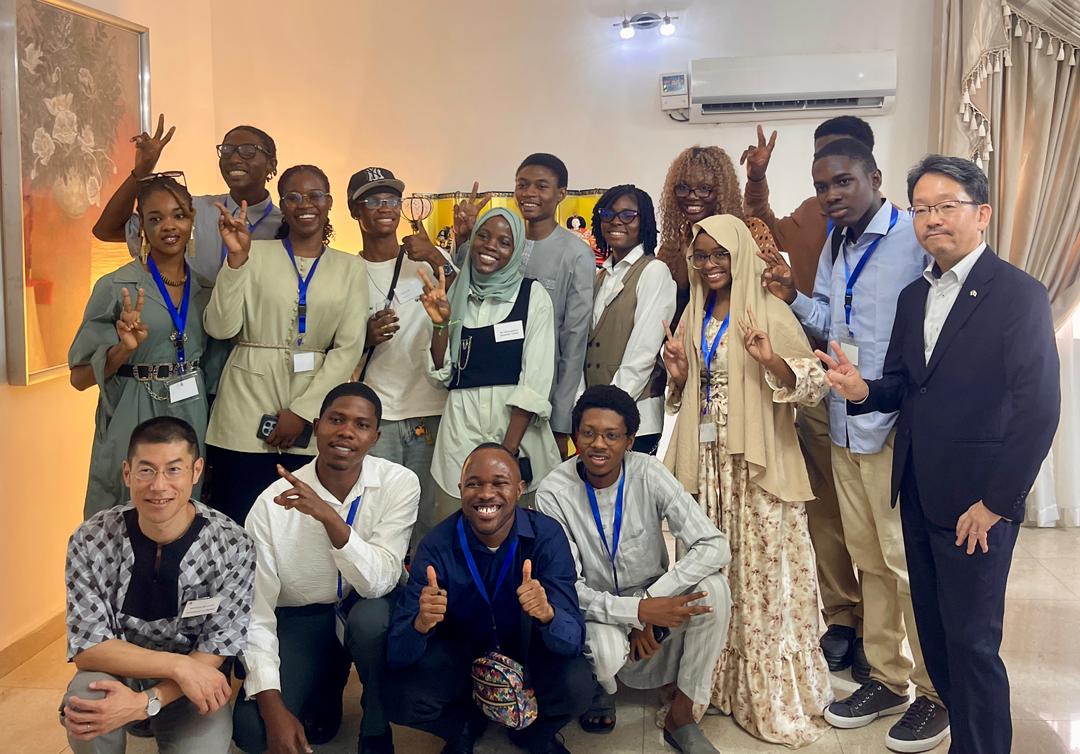
At the event, 10 finalists presented speeches in Japanese after emerging from an initial pool of 26 applicants who applied for the competition.
Students who participated in the contest said the programme has helped strengthen their interest in the Japanese language and culture.
A filmmaker and graduate of the University of Abuja, Stephen Ani Lorenzo, who won today’s contest, said winning a prize at the contest encouraged him to continue studying Japanese despite earlier losing interest.
Lorenzo explained that he was persuaded by a friend to participate in the competition after graduating from the university where he first learned the language.
Another participant and former winner of the contest, Muhammed Hamidat Ismail, also a graduate of the University of Abuja, said the programme has provided opportunities for language exchange and cultural exposure.
She noted that participants sometimes get the opportunity to apply for short language exchange visits to Japan, which helps them experience the culture directly and further strengthen ties between the two countries.
In her remarks, one of the judges, Dr Yukari Honda, said the contest goes beyond language proficiency and serves as a platform for cross cultural understanding, noting that learning each other’s languages helps build empathy, cooperation and stronger global connections.
Disclaimer
Comments expressed here do not reflect the opinions of Vanguard newspapers or any employee thereof.