
By Favour Ulebor, Abuja
In a bid to curb insecurity across the country, the Federal Government has introduced the National Conflict Early Warning Early Response System, NCEWERS, a proactive framework designed to identify potential conflicts early and respond before they escalate into violence.
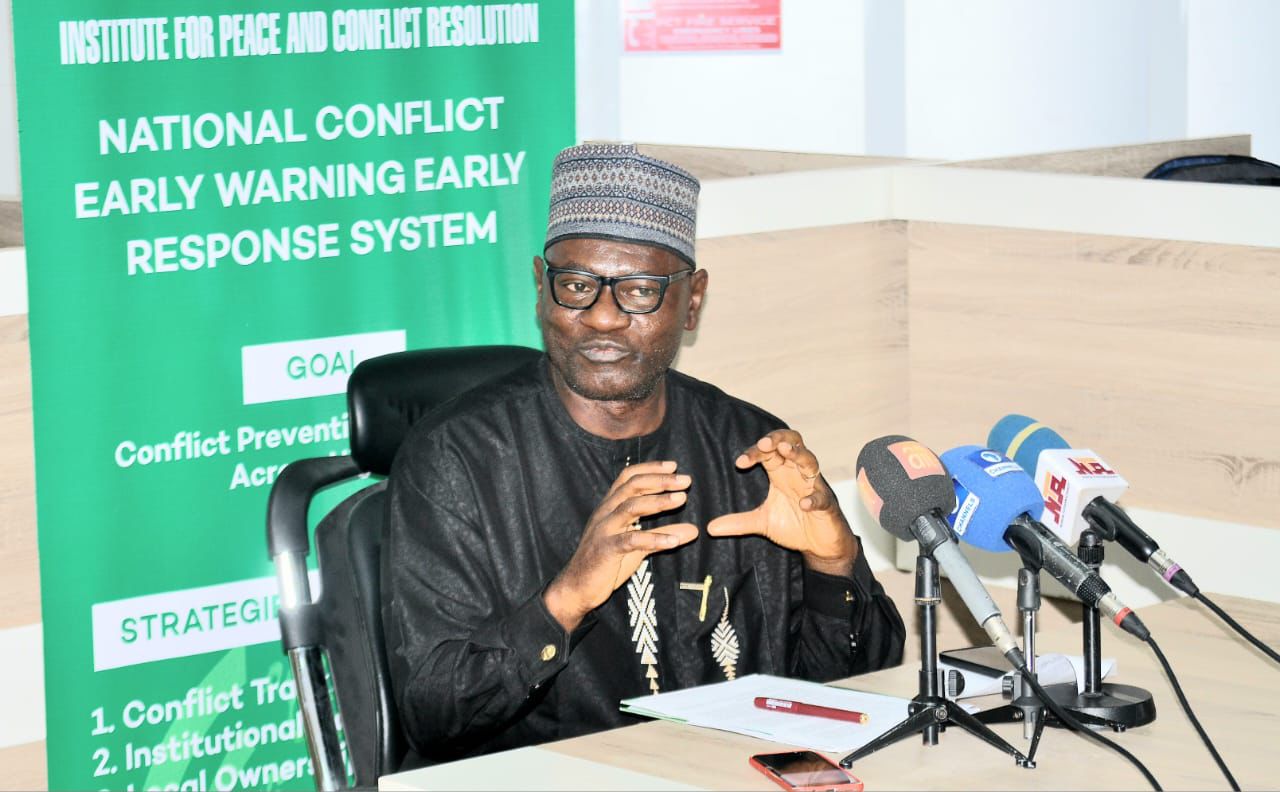
Speaking in a briefing on Tuesday in Abuja, Director General of Institute of Peace and Conflict Resolution, IPCR, Joseph Ochogwu, said the initiative marks a shift from reactive responses to preventive, data driven conflict management across the country.
He explained that Nigeria’s conflict environment remains complex, with issues such as farmer herder clashes, communal and ethno religious tensions, and resource competition varying across regions.
According to him, these realities require context specific monitoring and timely interventions backed by reliable data.
Ochogwu said, “NCEWERS is designed to collect real-time data on conflict indicators, analyze patterns and trends, and trigger timely responses.”
According to the DG, the initiative will also provide the Early Warning Situation Room, EWSR, which serves as the operational hub for receiving, analysing and converting data into actionable intelligence.
The platform integrates digital tools including mobile and web applications, toll free reporting lines and SMS channels, enabling citizens and field monitors to report incidents in real time.
Findings from the Situation Room are processed by trained analysts and shared with relevant authorities to support prompt decision making and coordinated responses to emerging threats.
He said the system operates through a multi layered structure spanning national, state and community levels. At the top is the Early Warning Response Group, EWRG, which provides strategic coordination, while state level structures work with local peace institutions to address issues within their jurisdictions.
At the grassroots, community based actors such as Conflict Early Warning Indicator Monitors, Community Based Reconciliation Committees and Gender Focal Persons play a critical role in gathering information and promoting dialogue, mediation and reconciliation to prevent escalation of tensions.
He noted that the framework also integrates gender and social inclusion by ensuring that the concerns of vulnerable groups, including women and persons with disabilities, are reflected in early warning data and response strategies.
According to Joseph, beyond monitoring, the system generates key outputs including conflict trend reports, policy briefs and early warning alerts to guide government action and support security agencies as well as development partners.
Ochogwu noted: “The Early Warning Situation Room produces several critical outputs that support decision-making and peacebuilding efforts.”
He added that the Strengthening Peace and Resilience in Nigeria, SPRiNG, project has further expanded the reach of the system, increasing community based structures and improving coordination across states such as Plateau, Katsina, Kaduna and Benue, as well as the Federal Capital Territory.
The project, he said, will also help integrate climate related and gender sensitive indicators into the system, strengthening its inclusiveness and responsiveness.
With its emphasis on real time data, local participation and coordinated response, NCEWERS is expected to serve as a key national tool for conflict prevention, strategic planning and sustainable peacebuilding.
Disclaimer
Comments expressed here do not reflect the opinions of Vanguard newspapers or any employee thereof.