
By Joseph Erunke, Abuja
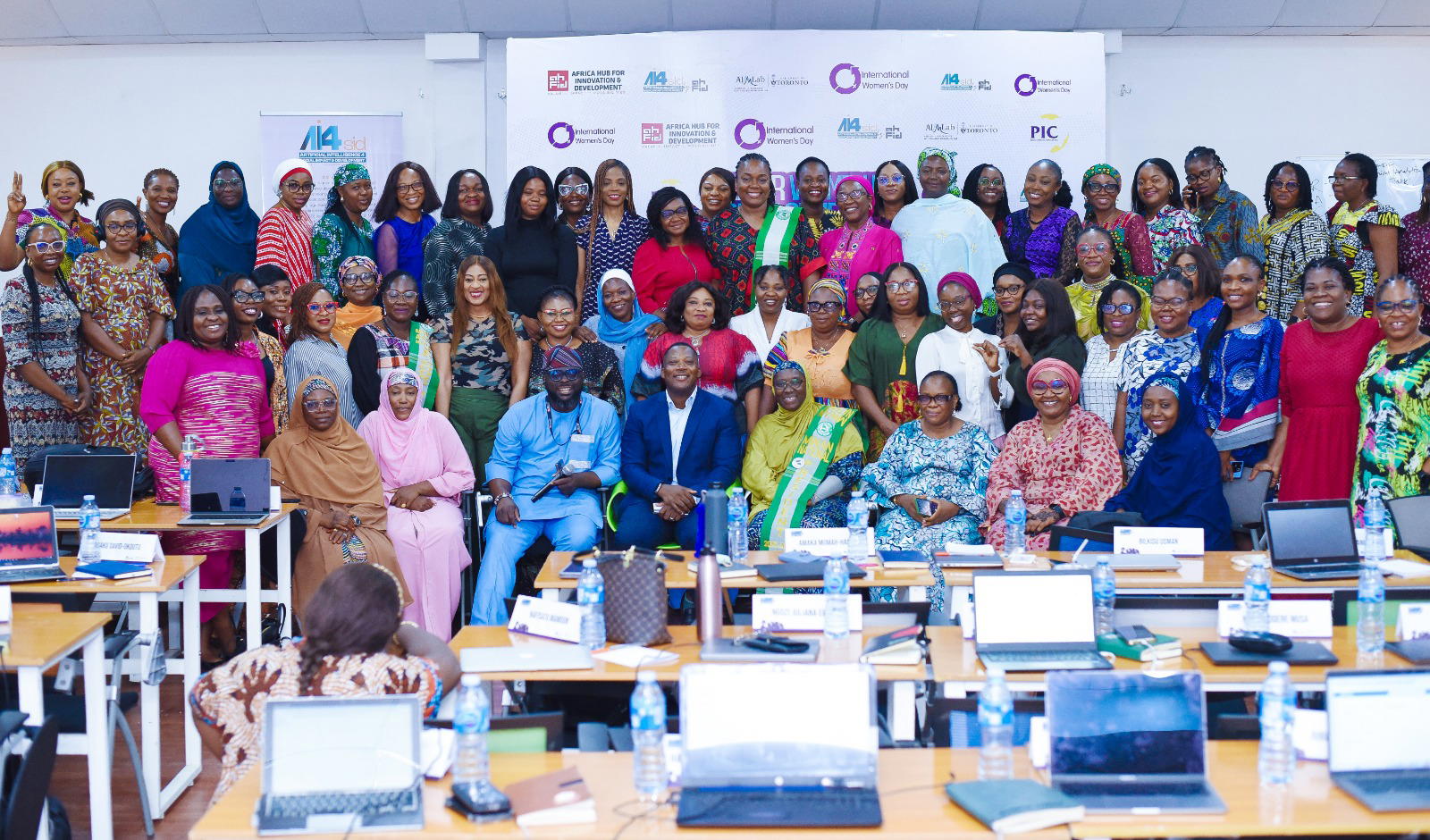
More than 200 Nigerian women from various professional sectors gathered in Abuja on Tuesday for an intensive training on Artificial Intelligence (AI), as the Federal Government and technology experts seek to ensure women are actively engaged in the evolving digital economy.
The programme, which included participants from health, media, public service, and development sectors, focused on equipping women with practical AI skills to enhance productivity, decision-making, and workplace efficiency.
Speaking at the event, the National Director of the National Centre for Artificial Intelligence and Robotics (NCAIR), Dr. Olubunmi Ajala, said the AI for Women initiative aims to move women from being consumers of technology to innovators and contributors in shaping AI development.
“Women have a critical role to play in ensuring that this technology is both ethical and inclusive,” Ajala said, noting that AI is already transforming sectors such as medicine, agriculture, journalism, and commerce. He added that Nigeria has developed a government-backed multilingual AI model capable of supporting local languages, including Yoruba, Hausa, and accented English.
Dr. Kunle Kakanfo, Founder of Africa Health for Innovation and Development and convener of the programme, highlighted the initiative’s goal of closing the gender gap in AI adoption. “Currently, only about 21 per cent of women have access to AI tools. This gap must be addressed,” he said, adding that the programme initially targeted 35 participants but was expanded due to overwhelming interest.
The training also emphasised the responsible use of AI. Dr. Zainab Muhammad-Idris, National President of the Medical Women Association of Nigeria, noted that ethical deployment is vital in sectors like healthcare, where misinformation could lead to errors in diagnosis or treatment.
Participants were encouraged to replicate the training in their workplaces and communities to create a wider impact on AI literacy across the country.
Adekemi Omole, Gender and Inclusion Lead at the Policy Innovation Centre, noted the economic benefits of AI adoption, citing studies showing productivity gains of 20–60 per cent when AI is effectively used.
Abosede Famuyiwa, Chief Accountant at the Legal Aid Council, said the training enhanced her understanding of tools like ChatGPT, Gemini, and Copilot, particularly in prompt engineering and professional applications, and praised the organisers for offering the programme free of charge.
The initiative demonstrates ongoing efforts to ensure women are equipped to participate meaningfully in Nigeria’s growing digital economy while fostering innovation and inclusion in AI development.
Disclaimer
Comments expressed here do not reflect the opinions of Vanguard newspapers or any employee thereof.