
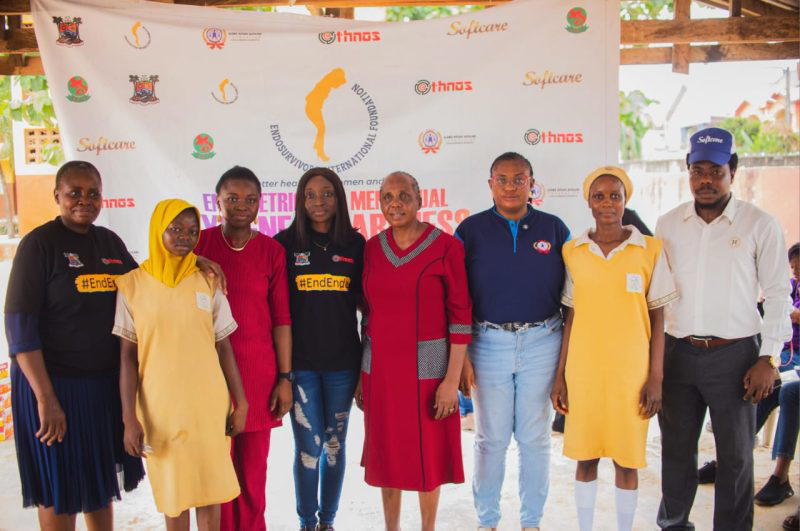
L-R: Mrs Esther Samuel (State Health Educator, Lagos Ministry of Health, Miss Doyin-Enisan P.E (School Counsellor, Ogudu Junior Grammar), Mrs. Olivia Nwankudu, Executive Director, EndoSurvivors Int’l Foundation, Mrs. Ojo Adebola, Vice Principal, Ogudu Junior Grammar School, Mrs. Esther Faleye (Ajose Ayisat Afolabi Foundation and Student, Marketing Media Manager, Softcare Sanitary Pads Michael Osasona.
By Ebunoluwa Sessou
As the world marks Endometriosis Awareness month, EndoSurvivors Int’l Foundation, ESIF, Ajoke Ayisat Afolabi Foundation, AAAF, and Lagos State Ministry of Health, LSMoH, collaborate to intensify calls for early education, improved healthcare access and stronger societal support for women and girls living with the condition.
Leading the advocacy campaign to Ogudu Junior Grammar School, Lagos, Olivia Nwankudu, Executive Director of Endosurvivors International Foundation, ESIF, described endometriosis as a largely misunderstood disease affecting millions of women globally.
“About 10 per cent of women worldwide are affected by endometriosis, and the symptoms often begin as early as adolescence,” she said. “One of the key signs is severe menstrual pain, but many people still dismiss painful periods as normal.”
According to her, the organisation has spent over seven years raising awareness despite persistent challenges, particularly funding constraints and limited public understanding of the condition.
For Olivia the fight is both professional and personal. She shared her experience as a young girl, navigating recurring pain without clear answers.
“I was told it was a phase,” she said. “People said when I get married or have children, it would go away. I tried everything avoiding sugar, exercising but the pain never stopped.
“Like many others, I lived through years of uncertainty, relying on painkillers while hoping the condition would eventually disappear, but, it never did.
“Today that experience drives my work and that is why I am ensuring that young girls do not grow up confused or dismissed when they speak about their pain.
“Endometriosis is often invisible. A woman may look healthy, but she could be in constant pain, sometimes having only a few pain-free days in a month. Because it’s not physically obvious, it is often not taken seriously by society, policymakers, or even funders,” she added.
The foundation’s approach focuses on awareness, education, research, advocacy, and patient support. Through school outreach programmes, it aims to instill early care-seeking behaviour among young girls.
Nwankudu noted that many students already experience alarming symptoms but lack the knowledge to seek medical help.
“When we conducted questionnaires, some girls rated their menstrual pain as high as nine out of ten. Some even reported vomiting during their periods. These are warning signs that should not be ignored,” she said.
She emphasised that beyond physical pain, the condition also takes a toll on mental health, relationships, and productivity, with some patients experiencing social withdrawal and anxiety about fertility and marriage.
The educator from the Lagos State Ministry of Health, Esther Samuel, stressed the importance of catching the condition early through education.
“Many people are suffering in silence. If we educate these children early, they will recognise symptoms and seek medical attention promptly. Early diagnosis can help prevent complications such as infertility,” he said.
He added that menstrual hygiene education is equally critical, warning that poor hygiene practices can lead to infections and long-term reproductive health issues.
Samuel highlighted ongoing government efforts, including school health programmes and partnerships with NGOs, to improve awareness and healthcare delivery.
“The government is open to collaboration. Through our reproductive health, adolescent health and school health departments, we are working to promote quality health information and services,” he noted.
Also speaking, The Admin/Finance, Ajoke Ayisat Afolabi Foundation, AAAF, Mrs. Esther Faleye said, the foundation is committed to improving lives through impactful health initiatives. In pursuit of this mission, AAAF partners with Endosurvivor to sensitise the girl child on menstrual health and hygiene.
“This effort promotes proper hygiene practices, helps prevent infections, and supports reproductive health. By equipping girls with the right knowledge, they are empowered to adopt safe, healthy habits and make informed decisions about their well-being.
“Educating girl children on Endometriosis and menstrual hygiene equips them with the knowledge and confidence to manage their health and break societal stigma. It promotes early awareness, helping them recognize abnormal symptoms and seek timely medical care.
“Proper menstrual hygiene also prevents infections and supports overall reproductive health. Additionally, sensitisation encourages open conversations and self-advocacy. Ultimately, early education leads to better detection, management, and improved”, she said.
Also speaking, the Media Marketing Manager, Softcare Nigeria, Osasona Michael, said the company’s partnership is driven by its commitment to the well-being of women and girls.
“Our focus is on care and comfort. We provide sanitary products tailored to different needs; light flow, heavy flow and overnight use ensuring safety, hygiene and confidence for users,” he explained.
He added that the company is investing in product innovation to improve user experience and address diverse needs.
One of the students, Usman Sani Zekiyat, said the programme changed her understanding of menstrual health.
“I learned that severe pain during menstruation is not normal and that I should see a doctor if I experience it. Before now, I thought it was something everyone goes through,” she said.
She also expressed willingness to share the knowledge with her family, signaling the ripple effect of such initiatives.
In her reaction, Vice Principal of Ogudu Junior Grammar School, Adebola Ojo, described the programme as impactful but called for the use of more visual learning tools in future engagements.
“The students have learned a lot today. With additional teaching aids like projectors, the impact can be even greater, especially for those who are yet to begin menstruation,” she said.
Despite growing awareness, stakeholders agree that significant gaps remain in public understanding, funding, and healthcare access. Advocates continue to call for stronger policy attention, increased research, and sustained collaboration among government, private sector and civil society.
For Nwankudu and her team, the goal remains clear: ensuring that no girl or woman suffers in silence due to lack of awareness.
“We want a future where women can live without fear of their menstrual cycle, where they can seek help early, and where endometriosis is taken seriously,” she said.
Disclaimer
Comments expressed here do not reflect the opinions of Vanguard newspapers or any employee thereof.