
By Chinedu Adonu
ENUGU — The second edition of the Enugu Tech Festival (ETF 2.0) has concluded with a record-breaking 53,000 physical participants, reinforcing Nigeria’s growing ambition to position itself as a continental leader in digital innovation.
Held from February 24 to 27, 2026, at the Enugu International Conference Centre, the four-day event surpassed its projected target of 50,000 attendees and attracted additional virtual participants from across the globe.
Convener of the festival and Enugu State Commissioner for Innovation, Science and Technology, Dr. Prince Lawrence Ezeh, described the turnout as a strong validation of the state’s vision to become a technology hub in Africa.
“We set out to inspire 50,000 innovators, thinkers, founders, investors and digital talents. To see nearly 60,000 people here in real time shows that the narrative around African tech is shifting from perception to meaningful participation and impact,” Ezeh said.
The event was broadcast live on Africa Independent Television (AIT) and reportedly ranked among the top five global trending events on social media during its run, marking an unprecedented level of digital engagement for an African tech gathering.
Organisers reported attendance of 20,000 participants on Day One, 15,000 on Day Two, 13,000 on Day Three, and 5,000 on the final day. Each day featured a central theme and drew contributions from government officials, global tech firms, startups, investors and academia.
The 2026 theme, “Coal to Code: Energy in New Form,” reflected Enugu’s transition from its coal-mining heritage to a digital economy.
Governor Peter Mbah declared the festival open, emphasising that technology and innovation are central to Enugu’s transformation and urging youths to seize emerging opportunities.
Swedish Ambassador to Nigeria, Anna Westerholm, alongside other dignitaries, toured exhibition halls showcasing startups, robotics demonstrations, coding boot camps and AI-powered agricultural tools.
Observers from Britain and other European markets noted a shift in Nigeria’s tech discourse from aspirational rhetoric to implementation frameworks and measurable outcomes.
Day Two focused on investment and entrepreneurship, featuring a “Deal Room” that connected early-stage startups with venture capitalists from Lagos, Nairobi, London and Dubai. While specific figures were undisclosed, several startups secured follow-up funding discussions.
Day Three explored artificial intelligence, blockchain and Web3 technologies, including a live hackathon showcasing solutions in fintech, healthcare diagnostics and climate-smart agriculture. Hundreds of young participants also received hands-on training in software engineering, cloud computing and blockchain development.
The festival’s closing day combined innovation showcases with awards and cultural performances. Nigeria’s Minister of Innovation, Science and Technology, Kingsley Tochukwu Udeh, reaffirmed federal support for youth-driven enterprise and research commercialisation.
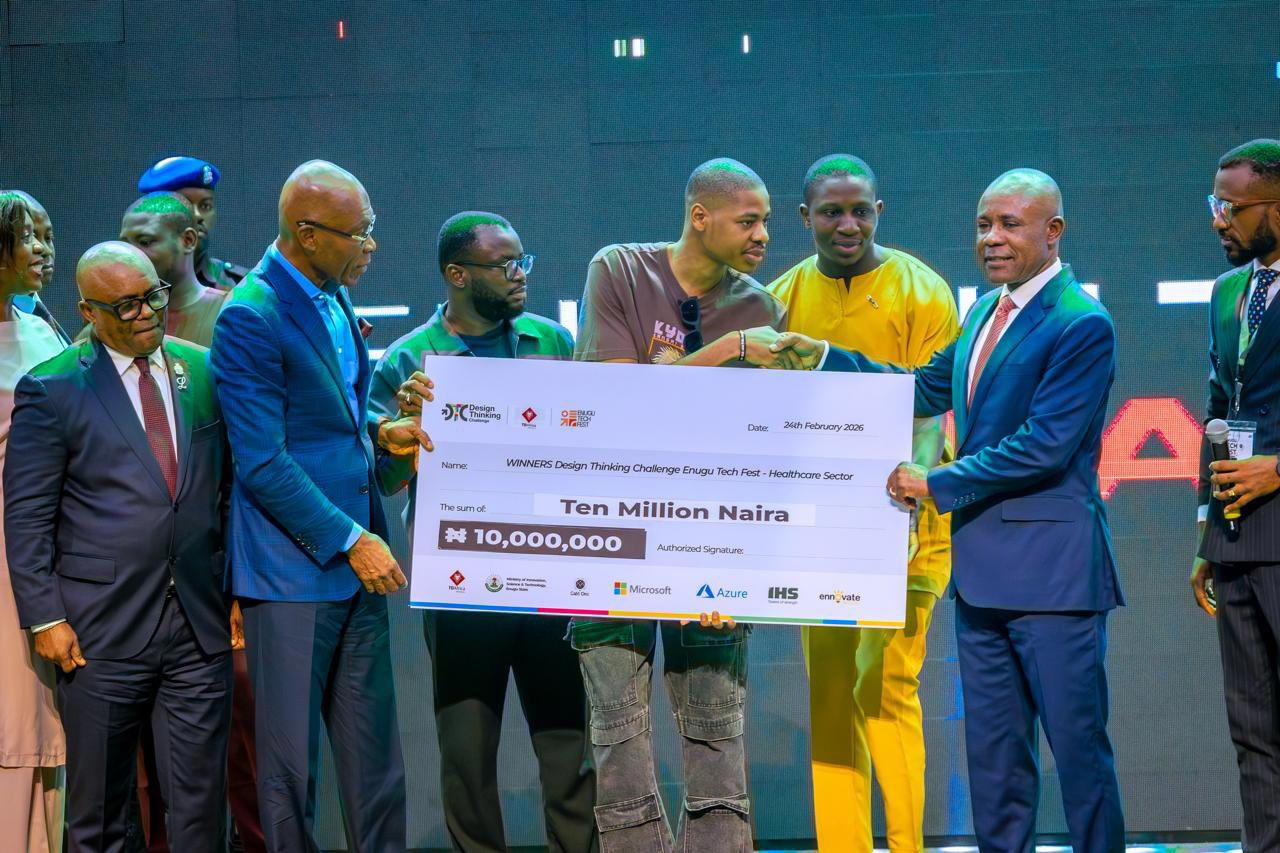
Hundreds of young participants received laptops and tablets, while select startup founders and innovation teams were awarded ₦10 million grants to accelerate product development and market entry. Additional groups received smaller grants to support digital training, prototype development and community tech hubs.
“Inspiration without tools is incomplete. We are placing actual resources in the hands of those who will shape the ecosystem,” Ezeh said.
The Secretary to the Enugu State Government, Chidiebere Onyia, described the festival as a landmark achievement that has elevated Enugu’s global profile.
Beyond speeches and exhibitions, ETF 2.0 blended culture and technology, featuring local music performances and digital art installations, reinforcing the idea that innovation can coexist with cultural identity.
For international observers, the festival reflects a broader continental trend driven by Africa’s youthful, tech-savvy population. Against the backdrop of infrastructure gaps and regulatory challenges, Enugu’s effort to convene tens of thousands of innovators signals a strategic shift toward regional governments acting as active ecosystem builders.
As the festival closed, Ezeh described the gathering as a foundation for Africa’s “defining decade.”
“This festival is not an endpoint. It is the foundation. We are building from Enugu to the world,” he said.
Disclaimer
Comments expressed here do not reflect the opinions of Vanguard newspapers or any employee thereof.