
By Ebunoluwa Sessou
The Down Syndrome Foundation Nigeria, DSFN, has called on governments at all levels to strengthen policy implementation, ensure accountability, and promotes inclusive actions for persons with Down syndrome and other intellectual disabilities.
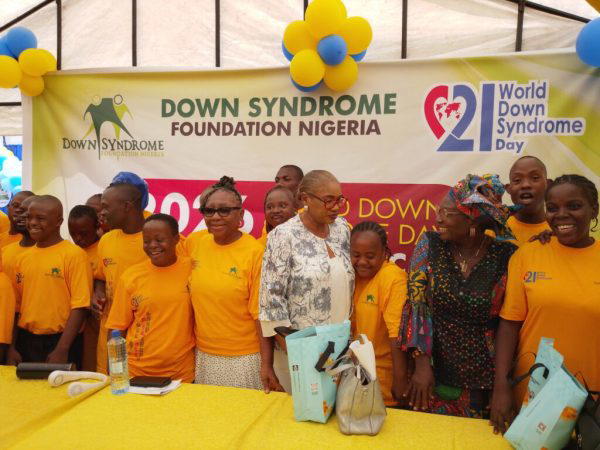
The call was made by the Founder, Chief Executive Officer and President of DSFN, Mrs. Rose Mordi, during a press briefing to commemorate the 2026 World Down Syndrome Day and the foundation’s 25th anniversary.
Speaking at the event, Mordi said the milestone represents “25 years of advocacy, impact, and unwavering commitment” to advancing the rights and dignity of persons with Down syndrome in Nigeria.
According to her, the foundation has, over the years, championed inclusion through awareness campaigns, early intervention programmes, education support, family empowerment, and community engagement.
She noted that the 2026 World Down Syndrome Day, themed “Together Against Loneliness,” highlights the need for stronger social support systems and inclusion.
“Today, we are not just marking the passage of time. We are celebrating 25 years of advancing inclusion, breaking barriers, and building futures for persons with Down syndrome and other intellectual disabilities in Nigeria,” she said.
Despite progress, Mordi stressed that many persons with intellectual disabilities still face significant challenges, including limited access to quality education and healthcare, inadequate social protection, and restricted economic opportunities.
She, therefore, urged the federal, state, and local governments to move beyond policy formulation to full implementation and enforcement of disability laws.
“There must be deliberate budgetary allocations for inclusive programmes, accessible education systems, specialised healthcare services, reliable data for planning, and clear employment pathways,” she added.
Mordi also called on stakeholders, including the private sector, civil society organisations, development partners, and philanthropists, to invest in sustainable and rights-based solutions that promote inclusion and national development.
She further charged the media to play a more active role in advocacy by amplifying the voices of persons with disabilities and holding leaders accountable.
“As an organisation with its head office in Lagos and branches in Abuja and Ibadan, our vision remains clear — a Nigeria where persons with Down syndrome are not hidden, pitied, or excluded, but recognised as citizens with rights, potential, and value,” she said.
Also speaking, the School Administrator of DSFN, Mrs. Chaota Hassan, expressed gratitude for the foundation’s growth over the past 25 years despite economic challenges.
“It is not easy sustaining an organisation in this economy, so we are grateful to God for this milestone,” she said.
Hassan identified stigma as a major challenge facing persons with Down syndrome, noting that public awareness and advocacy remain key to changing negative perceptions.
“This condition is not a death sentence. We are using platforms like this to create awareness and increase advocacy so that people can understand and accept them,” she said.
She called on Nigerians to embrace kindness and inclusivity, stressing that loneliness can have severe emotional impacts on persons with disabilities.
“We are all aware of what loneliness can cause. If we can experience depression as individuals, imagine what persons with Down syndrome go through. We must be kind, open-minded, and supportive,” she added.
Hassan also appealed to the government to ensure that existing disability policies are effectively implemented, particularly in areas of employment and social inclusion.
In his remarks, the Head of Educational and Social Services Unit of DSFN, Mr. Sunday Ojo, emphasised the importance of equal opportunities for children and young adults with Down syndrome.
“Children with Down syndrome deserve inclusion and equal opportunities to thrive. They are just like every one of us and can contribute meaningfully to society if given the right support,” he said.
Ojo described working with persons with Down syndrome as fulfilling, while noting that stigma often extends not only to individuals but also to those who support them.
He called for greater societal acceptance as a pathway to achieving true inclusion.
The event highlighted the need for collective action to address stigma, promote inclusion, and ensure that persons with disabilities are fully integrated into society.
World Down Syndrome Day is celebrated globally on March 21 to raise awareness and advocate for the rights, inclusion, and well-being of people with Down syndrome.
Disclaimer
Comments expressed here do not reflect the opinions of Vanguard newspapers or any employee thereof.