
By Peter Duru, Makurdi
A new six-month conflict data analysis has revealed that farmer-herder crisis account for less than 20 percent of violent incidents in Benue State, challenging long-held perceptions about the drivers of insecurity in the state.
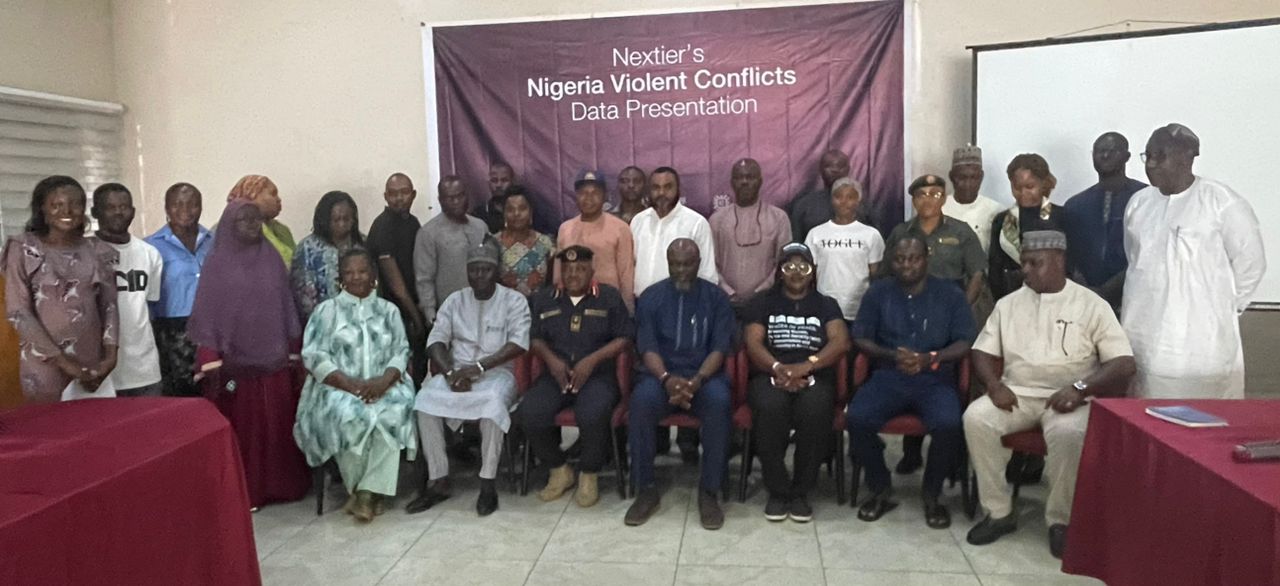
The findings were presented at a stakeholders’ engagement and learning session organised by Nextier under its Nigeria Violent Conflicts Database (NNVCD) Upscale project. The initiative is being strengthened through the UK Foreign, Commonwealth and Development Office (FCDO)-funded Strengthening Peace and Resilience in Nigeria (SPRiNG) Programme.
Speaking at the session, Managing Partner of Nextier, Dr. Ndubuisi Nwokolo, said the event focused on visualising violent conflict data gathered in Benue over the past six months.
He explained that while the organisation had relied on secondary sources such as media reports, it incorporated primary data collection to improve accuracy and timeliness.
According to him, the addition of community-level, real-time reporting significantly enhanced the database.
He disclosed that while just over 50 percent of the data came from secondary sources, more than 40 percent was generated from primary sources, underscoring the importance of grassroots inputs in capturing incidents that might otherwise go unreported.
The analysis showed that beyond farmer-herder clashes, other forms of violence have taken centre stage in the state. These include banditry, kidnapping, disputes over natural resources such as mining and fishing, as well as attacks by unidentified gunmen.
Data trends presented at the session indicated that banditry is on the rise across parts of the state. The report also highlighted variations in the pattern of attacks, with some local government areas recording high incidents but low casualties, and others experiencing fewer incidents with higher casualty figures.
Guma Local Government Area emerged as the most affected, followed by Gwer West, while Kwande LGA recorded increasing incidents linked to mining-related conflicts.
He emphasized that the session also underscored the need for data disaggregation, particularly along gender lines noting that women, children and persons with disabilities were often overlooked in casualty reporting, as public narratives tend to focus largely on male victims.
Advising authorities, Nwokolo stressed the need for stronger political will to address the crisis, warning that statistics alone cannot resolve the problem. He emphasised that behind every casualty figure are families and communities, urging leaders to rise above ethnic, political and religious divisions.
Senior Data and Research Analyst at Nextier, Mr. Samuel Oluwajobi, said the exercise was aimed at validating both primary and secondary data collected over the six-month period.
He said participants confirmed that the trends and patterns presented aligned with on-ground realities.
Oluwajobi added that violent incidents in Benue were often spontaneous, with some attacks resulting in mass casualties but not occurring frequently. He noted that the pattern differs from states such as Kaduna and Zamfara, where attacks were reported almost daily, making early warning systems critical for Benue.
Beyond tracking trends, Nextier disclosed plans to develop predictive modelling tools using artificial intelligence and other technologies. The goal, according to the organisation, is to strengthen early warning mechanisms and enable proactive responses to emerging threats.
Stakeholders at the meeting validated the findings, confirming that the data mostly reflected realities in their respective communities.
Participants at the session welcomed the initiative and pledged closer collaboration with Nextier to improve data collection systems, deepen evidence-based responses and enhance peacebuilding efforts across Benue State.
Disclaimer
Comments expressed here do not reflect the opinions of Vanguard newspapers or any employee thereof.