
By Peter Duru, Makurdi
The AIDS Healthcare Foundation (AHF) Nigeria and key stakeholders have called on the European Union (EU) to support health equity in the ongoing negotiations for a global pandemic agreement, warning against a repeat of the disparities witnessed during the COVID-19 crisis.
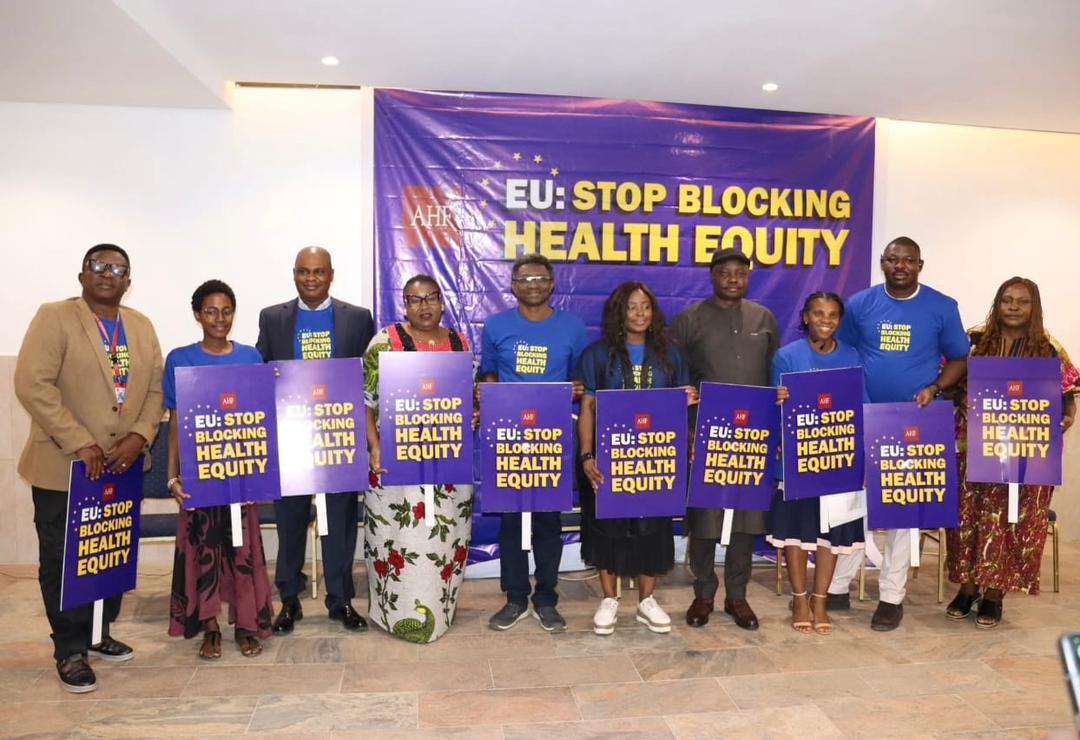
The appeal was made during a press briefing on the World Health Organization (WHO) Pandemic Agreement and the Pathogen Access and Benefit-Sharing (PABS) Annex negotiations. The event was organised by AHF Nigeria in collaboration with other Civil Society Organisations (CSOs).
Speaking at the briefing, the Country Programme Director of AHF Nigeria, Dr. Echey Ijezie, urged EU leaders to stop blocking equity provisions and facilitate the conclusion of a fair and effective agreement.
“The EU must stop blocking equity and get the agreement done. A weak Annex risks repeating the vaccine apartheid of COVID-19 while putting all countries at risk,” Ijezie said.
He stressed that the EU must align its position with the values of solidarity and fairness it advocates, noting that mandatory benefit-sharing, legal certainty, and accountability were essential components of a credible agreement.
According to him, a strong PABS Annex is not symbolic but critical to saving lives, warning that weak commitments could perpetuate the inequalities experienced during the COVID-19 era.
Ijezie further noted that developing countries were demanding binding rules rather than voluntary arrangements, insisting that enforceable obligations were necessary to build trust and ensure fairness in global health responses.
He added that the EU’s stance remained pivotal to the success of the negotiations.
“The EU can either unlock progress or weaken the final outcome. Without equitable benefit-sharing, efforts to strengthen regional production and achieve health sovereignty could be undermined,” he said.
Also speaking, President of Lawyers Alert, Mr. Romy Mom decried what he described as the commercialisation of global health emergencies, insisting that equity and justice must take precedence.
“When pathogens are collected, they come from all over the world, but when drugs and diagnostics are ready, the benefits are not shared equally. This is unjust,” Mom said.
“A pandemic does not respect licensing or geography, it affects everyone. The global framework must only be signed if the Annex guarantees fairness in access to medicines, diagnostics, and distribution,” he added.
On his part, the National Secretary of the Joint Health Sector Union (JOHESU), Mr. Martin Egbanubi, emphasised the right of every citizen to access healthcare and urged the Nigerian government to prioritise local vaccine production.
“We must develop strategies for tackling health emergencies. The next pandemic may not be as forgiving, and our system may not withstand it,” Egbanubi warned.
He called on African countries to invest in research and development to reduce dependence on foreign support.
Similarly, Gloria Asuqwo, a Board Member of the International Community of Women Living with HIV/AIDS in West Africa, stressed the need for inclusiveness in the negotiation process. “Equity, justice, and fairness are non-negotiable. Civil society organisations must be carried along and given access to relevant documents before any agreement is signed,” she said.
In her remarks, the Vice President, Zone D of the Nigeria Association of Women Journalists (NAWOJ), Mrs. Chizoba Ogbeche reaffirmed the group’s commitment to promoting equity, inclusivity, and justice across all sectors.
Other contributors at the briefing included representatives from the Network of People Living with HIV/AIDS in Nigeria (NEPWHAN), Association of Women Living with HIV/AIDS in Nigeria (ASHWAN), Association of Positive Youths Living with HIV/AIDS in Nigeria, and the Nigeria Network of Religious Leaders Living with or Personally Affected by HIV/AIDS (NINERELA+).
The stakeholders collectively warned that failure to prioritise equity in the pandemic agreement could deepen global health inequalities and jeopardise future responses to health emergencies.
Disclaimer
Comments expressed here do not reflect the opinions of Vanguard newspapers or any employee thereof.