
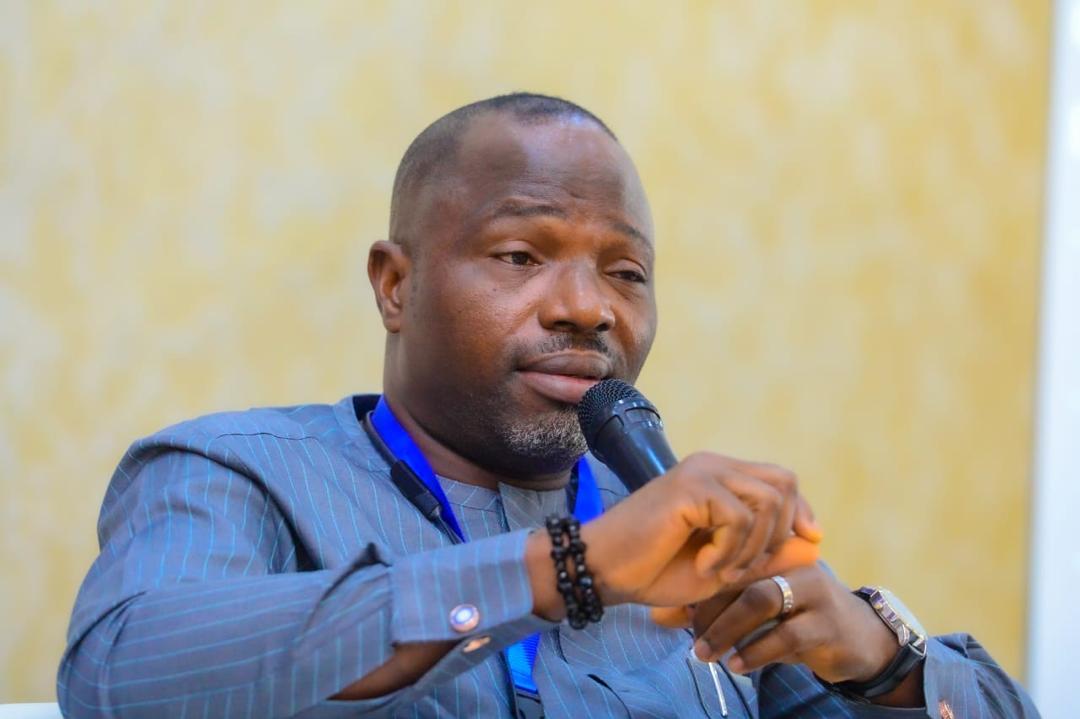
In this interview, Co-founder and Executive Director of Festus Fajemilo Foundation (FFF), Mr. Afolabi Fajemilo, speaks to Cynthia Alo on healthcare gaps, prevention, policy needs and the realities faced by persons living with spina bifida and hydrocephalus in Nigeria.
Tell us about the foundation?
Festus Fajemilo Foundation (FFF) is a disability-focused, not-for-profit organization (NGO) established in 2006 largely based in Lagos but with activities in few other states of Nigeria.
The Foundation began in 2006 and is named after a child (Festus) who developed hydrocephalus two months after he was born. Festus’ parents found it hard to get any information and support, and his condition worsened, seriously limiting his development, and requiring continuous and complex care. Appalled by the lack of affordable care, inadequate medical facilities, harmful taboos, and a pervasively negative attitude in Nigerian society. Festus’ parents decided that gent action was needed hence the birth of FFF.
Foundation is the pioneer non-profit organization in Nigeria advocating for and promoting the rights, access to and inclusion of persons with spina bifida and hydrocephalus (SBH) as well as supporting initiatives targeted at primary prevention.
As time went by, FFF observed that children with SBH also develop other major impairments such as spinal cord injury, physical disability, intellectual and developmental disabilities, etc. Accordingly, FFF considered it necessary to also engage the mainstream disability community.comprising of other categories of disabilities in order to enhance awareness, acceptance and inclusion for children and adults with SBH within the larger disability space. As such, from 2009, FFF expanded its core activities to cover all types of disabilities while still committing significant attention to babies, children, young people and adults with SBH.
You recently organised an event bringing together those living with spina bifida hydrocephalus, what does this event mean to the foundation?
It was our annual children’s party, which we shifted to the New Year. The programme is designed to promote social inclusion among children, young adults and adults living with spina bifida and hydrocephalus.
We invite families, siblings and friends to spend time together. Beyond fun, we introduced educational and activity-based games to encourage brain development.
At the event, we organise the FFF King and Queen contest to promote knowledge about spina bifida, hydrocephalus, disability rights and to demystify myths around these conditions. This is where we evaluate their knowledge on the condition and help them to understand it better.
The event had about 74 persons living with the conditions, over 80 parents, siblings and other guests—close to 300 participants. It was also attended by officials from the Lagos State Office for Disability Affairs.
As a foundation that has been advocating for this issue since 2006,
How would you assess access to healthcare for persons living with spina bifida and hydrocephalus in Nigeria?
There is still profoundly poor access to good healthcare for people with spina bifida and hydrocephalus in Nigeria.
These are lifelong conditions, and treatment is multidisciplinary. You need an array of specialists working together before patients can live a quality life.
However, there are many challenges; high cost of treatment compared to people’s income, inaccessible hospital environments, non-functional facilities like elevators, poor attitudes of health workers, and stigmatization even within healthcare settings.
There is also limited access to information and low awareness, especially in rural areas where many still patronise traditional birth attendants who know little or nothing about these conditions.
In many cases, a child is diagnosed in hospital but sent home because the parents cannot afford treatment immediately. By the time they return, complications have worsened and outcomes are poor.
There is growing emphasis on prevention. What should Nigerians know about this?
Spina bifida develops within the first 28 days of pregnancy, often before a woman even knows she is pregnant.
Research has shown that if women of reproductive age take adequate folic acid three months before pregnancy and during early pregnancy, the chances of having a baby with spina bifida can be reduced by up to 72 per cent.
But awareness is low. Many pregnancies are not planned, and many women do not take folic acid early enough.
What we need is more awareness,taking information to higher institutions, religious centres and communities. The government also needs to enforce food fortification policies, while stakeholders must work together to ensure compliance.
What key intervention should Nigeria prioritise to improve care?
Multidisciplinary care is critical. Patients should be able to access all the specialists they need within the same health facility.
It should not be that a patient goes to one hospital for neurosurgery, another for urology and another for follow-up care. That system creates frustration.
Also, spina bifida and hydrocephalus must be integrated into the national health and disability frameworks. This will support training of specialists, provision of equipment and improved service delivery.
How significant is the mental health burden associated with these conditions?
The mental health burden is huge. These are lifelong conditions, and families pay out of pocket for care, which puts enormous pressure on them.
It has led to separation in some families, while in others, couples remain together but live like strangers due to the strain.
For individuals, challenges like bladder and bowel incontinence affect their education, social life and relationships. Many withdraw from society, leading to low self-esteem and isolation.
Through our support groups, we provide counseling and a platform for families to share experiences. When families come together, it helps to reduce the emotional burden.
Can you share a success story from your work?
One example is a young man we started supporting at about nine years old. He went on to complete his education and is now serving in the National Youth Service Corps.
At the organisational level, our continence management project has partnered with 11 teaching hospitals across five geopolitical zones. We have trained over 120 healthcare professionals and supported more than 300 patients, improving their quality of life.
What challenges does your foundation face in the fight against these conditions?
Funding remains a major challenge. While we have some donor support, it is not enough to meet the growing demand. We provide training for healthcare workers, supply essential medical items and run outreach programmes, all of which require sustained funding.
We also face staffing challenges, partly due to migration trends. Space constraints and the need to expand our facilities are additional concerns. Despite these, we continue to work towards reducing stigma and improving inclusion.
What is your message to government and Nigerians?
Disability is no longer a matter of charity, it is a matter of rights.
We have international and national frameworks, including the United Nations Convention on the Rights of Persons with Disabilities and Nigeria’s Disability Act.
Society must change its attitude. People with disabilities have the right to education, healthcare and employment.
Government must ensure inclusive policies and involve persons with disabilities in decision-making from planning to implementation.
It is not about tokenism; it is about full inclusion and participation.
Disclaimer
Comments expressed here do not reflect the opinions of Vanguard newspapers or any employee thereof.