
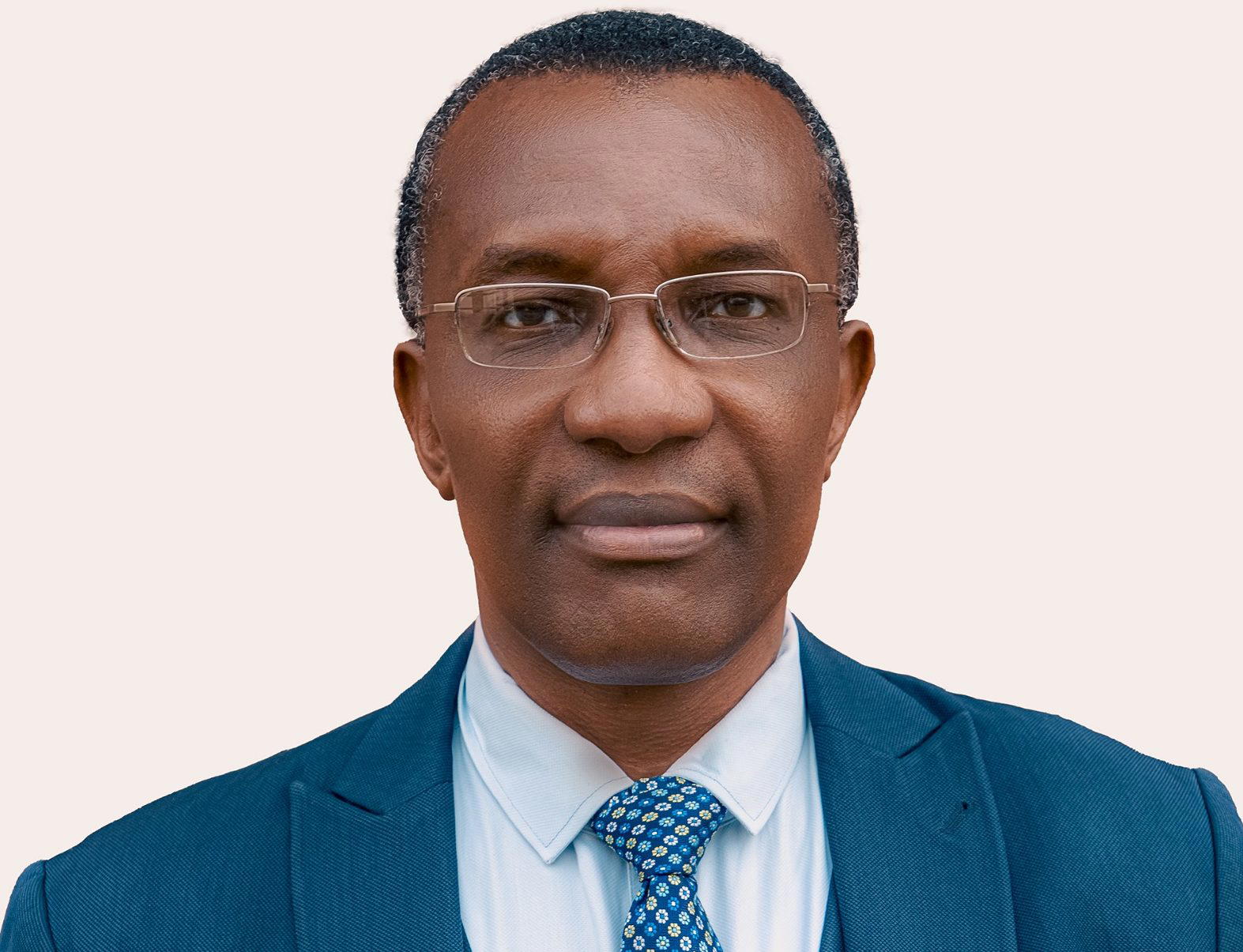
Eze
Participants at the just-concluded 2026 Nigeria International Energy Summit, NIES, brought to the forefront the urgency required to facilitate the utilization of natural gas toward fast-tracking development, as well as harnessing the opportunities inherent in it for the economic boom of the country and Africa in a theme: Energy for Peace and Prosperity, Securing a shared future.
In this interview with the Managing Director of Frazimex Engineering Limited (Subsidiary of Oilserv Group of Companies), Engr. Chuka Eze, M.CIoD, FNATE, speaks on how to explore the catalyst needed to spur up investment and bring future gains to our grasp, even as he reiterated the Group’s strong commitment towards aligning and maintining a front burner in the actualization of these strides to the forefront in the industry.
With over 210.5 Trillion Cubit Feet (TCF) of proven gas reserve in Nigeria, coupled with the complaints of shortage of gas to feed the power sector, what are the odds of this development and what is Oilserv’s contribution to address this deficiency in the coming few years?
Alright, thank you very much. What needs to change in the gas industry to utilise the proven gas reserve that you have mentioned? Currently, from the data from the Nigerian Midstream and Downstream Regulatory Authority, NMDPRA, and the Nigerian Upstream Petroleum Regulatory Commission, NUPRC, Nigeria’s proven gas reserves stands at over 210 trillion cubic feet (Tcf). And if you look at the discussions in the panel session and key note addresses at the Nigeria International Energy Summit 2026, with the theme, Energy for Peace and Prosperity, securing a shared future remained the front burner.
Gas, as we all know and agree, Nigeria has that in abundance. It is a catalyst that will drive industrialisation, bringing power to people and making life easier. However, the gas that will bring this economic impact is not the gas that is still under the ground.
It is the gas that has been extracted, processed, and transported to where it is needed. If you look at the Decade of Gas, it talks about the demand, the supply, and the Gas infrastructure that needs to be in place. And that’s where Oilserv comes to play a big role in engineering and building this gas infrastructure to bridge the gap from where the gas is sourced to where it is needed.
So, we have had a lot of policies in place, very good policies in place, it requires a lot of action right now. Action from the upstream, because the upstream has to invest in extracting this gas that is under the ground.
Some of the transportation system are already there but inadequate. We have credible EPC service contractors like Oilserv Limite that will design and Construct the gas infrastructure that is required. And we have the market.
We have a growing population, and we have a growing demand for it. So, there is a market, there is capacity and capability to design and install this infrastructure. We have the gas.
A decision has to be made quickly in raising the necessary funding and bringing the relevant projects as contained in the Gas Master plan and Decade of Gas to life.
In terms of the AKK projects, what percentage are we at in completion? Have you done your 100% project?
Yes, you must be aware that in December last year, the main pipeline welding was completed 100 percent. So, in terms of the gas that will feed this main line, as I mentioned at a session, the gas from the OB3 project when the section of the OB3 project handled by a different Company completes the River Nigeria crossing to feed into the AKK Gas pipeline.
So, the pipeline of AKK, the main welding line, has been completed. What then is remaining is that of the back end works.
Gas pricing remains a major issue in the gas space, and that is what is responsible for some of this discouragement of investments. We are not seeing much, despite the fact that there is a willing buyer, willing seller policy. Issues around pricing, what can you say to that?
Yes, it is a very determining factor because every investor would like to know his return on investment, if they are making any money to develop these Gas infrastructures or in the exploration and production of new gas wells..
For me, it is a key element that is being managed internally with the authorities responsible for this gas pricing. In the session of the Gas Master Plan, it was mentioned that something is being done, and we expect to see a new pricing regime in the coming weeks.
Having said that, can you take us through some of your major interventions within the domestic gas space? How has Oilserv fared among its competitors?
Oilserv is a group of companies that is strategically set up to provide Engineering, Procurement, and Construction (EPC) services in the oil and gas industry.
What we are doing as a company is that, we are playing a major role in the major critical gas pipelines and projects for the country. Notably, we have mentioned the OB3. OB3 is the Obiafu-Obrikom-Oben gas pipeline, which is 48 inches in diameter with about 127 km gas pipeline.
It also contains a gas treatment plant that has the capacity to process 2 bscf of gas per daywith four trains,each train having a capacity of s 500 mscf per day.
Oilserv has been instrumental in designing the facility and the pipeline. They have built it and the section ( Lot B) that was Designed and constructed by Oilserv has been commissioned. It is currently flowing 300 mmscf/day of gas as we speak today in the pipeline.It was mentioned earlier by the Decade of of Gas coordinator, who reaffirmed that position. We as an organsiation provides engineering procurement and construction of the major critical gas pipelines in Nigeria. If you look at the recent gas master plan that was published by NNPC, there are some projects that are being listed there.
Oilserv has been involved in those projects. Projects which included the AKK pipeline, the Obiafu-Obrikom-Oben, OB3 Gas pipeline project, Renaissance Assa North-Ohaji South (ANOH) gas project, and NNPC Assa North-Ohaji South (ANOH) gas projects. The NNPC ANOH has a manifold and a 36-inch pipeline, 23 kilometres, feeding gas into the OB3 Custody Tranfer Metering System, CTMS at Omoku..
It is one of the critical gas infrastructures that was commissioned last year, May, by the President. Right now, the NNPC ANOH Gas pipeline is flowing gas from ANOH Gas Processing Company (AGPC) Gas plant to OB03 CTMS to AGIP Facility at Obiobi and finally to NLNG. The detail engineering details of all the above mentioned projects was successfully designed by Frazimex Engineering Limited and by Nigerian Engineers led by me.
AKK is a big project. How do you manage the detailed engineering designs that reduce construction risks. How do you manage the construction risks associated with it on one level? We have seen a lot of issues with the East African gas pipeline. How were you able to manage the interactions with the communities from the beginning to where you have stopped?
Your question is centered on the detailed engineering for the AKK segment 1 which is the section awarded to Oilserv. That segment comprises of the main pipeline, which is 40 inches by 304 kilometres of gas pipeline. It has Twelve (12) block gas stations, one(1) intermediate pigging station and two (2) terminal gas stations, one at Ajaokuta and another one at Abuja. It has a capacity to handle 700 million scf of gas. The detailed engineering was done by Frazimex Engineering Limited using Nigerians in the country, and that has been delivered.
That is one of the testaments that we can say that indeed, in Nigeria, we have good talents and capability to perform engineering. We have talent that will execute these credible and critical projects in Nigeria. This project was also done by Frazimex.
In doing so, we are developing in-house and in-country capacity to deliver engineering of any project in this space, be it facilities, pipeline. We have the capacity and capability in Nigeria. All we just need is the opportunity, as well the projects.
We have Nigerians who are credible, experienced and can deliver these projects. All the team, we have about 200 various discipline engineers, at peak, on the project of the AKK to deliver the detailed engineering, and that is done and is being constructed. The NNPC Assa North we talked about, the engineering was done by Frazimex and Nigerians, and constructed and commissioned with minor puchlist items to be closed out
We are doing a lot in engineering. Currently, in Frazimex, we have been providing engineering services for NLNG, Seplat, Aradel for the past four years and has been one of their preferred engineering service providers. We also have new customers for engineering services
So, do we have the capacity and capability in Nigeria? Yes. Are we able, as a nation, to undertake the engineering of these critical projects in Nigeria? The answer is emphatically yes.
What is lacking? What is lacking is that we do more of them, so that we can also build in-country capacity. Currently, as we speak, in Oilserv, we have a programme that we have been running for the past three years. Every year, we engage 20 fresh graduates and run them into a programme of two years.
Within these two years, we take them around the business, projects, and give them on-the-ground training to build capacity in Nigeria and make them industry ready. It is a commitment that Oilserv, as a Group and as a business, is intentionally doing as part of our contribution to human capacity development in Nigeria. We started with 20, the first set.The second set, we had another 20. The 2026 sets had just finished their induction session last week Friday, and they are starting now. Next year, we are going to engage another set of 20.
So when you ask what are we doing? We believe that Nigerians, even Africans, should be trained and should be able to have the capacity to handle some of these critical projects and export the the skill and talents.
On communities
The projects we have done and the projects that are currently done, one strategy is to have a very good relationship with the community. We treat the community not just to fulfil the freedom to operate, FTO permit, but we also integrate them into our projects as relevant stakeholders.
We are giving them an opportunity to learn. In the AKK project, we have over 100 communities cutting across our section. What we did was to intentionally bring them into the project to train them.
We trained them in automated welding, and they are becoming part of construction team. We also provided an opportunity for them to be self-contained, take up some services as subcontractors, and provide procurement/supply services. These helped to bring them together into the team and gave them the sense of been part of it. They are stakeholders in the development of that project, and in doing so, we are able to deliver our projects.
Across all the projects, currently, we are doing a pipeline project for Ubeta- for TotalEnergies, another critical national project that will supply about 300 millions standard cubic feet of gas per day from Ubeta, via Obite to NLNG. The detailed Engineering was performed by Frazimex. We currently engaged the host communities and provided them opportunity to provide one service or the other, and the construction is expected to be completed before the end f yea 2026.. Again, the communities are directly involved in the execution of the project, either as a service provider or as a supplier. And in doing so, it helps to bring that stakeholder engagement, making them realise that they are an integral part of the project to deliver this national project.
The Assa North projects that we talked about, we also engage with communities, and give them services and supply of equipment.
However, one thing is to consciously ensure they realise that they have value to bring to the table, and you have to make an intentional decision, a deliberate decision to train them and give them an opportunity.
What do you think of the issue of financing?
Financing and funding are critical factors to any project and successful completion. So, what we have done in Oilserv is that we realize that some of the operators or developers will or may be struggling with funds, so we have graduated our business from the typical Engineering, Procurement, Construction, Installation, And Commissioning, EPCIC model to a model where we can offer the clients other solutions, like EPCIC plus F, or other models like build, Operate and transfer, BOT or Build Own Operate and Transfer (BOOT) on specific case – by case basis.
So, in that way, you can help with the financial funding for that project. So, that’s an offering that we can offer to the respective operator or developer, but that has to be discussed with that developer or client on a case-by-case basis. But funding, anywhere, is very critical in delivering a project successfully and on time.
Disclaimer
Comments expressed here do not reflect the opinions of Vanguard newspapers or any employee thereof.