
By Esther Onyegbula & Mathew Johnson
University leaders across Africa have been warned to urgently take control of how Artificial Intelligence, AI, is integrated into higher education or risk deepening the continent’s skills gap and unemployment crisis.
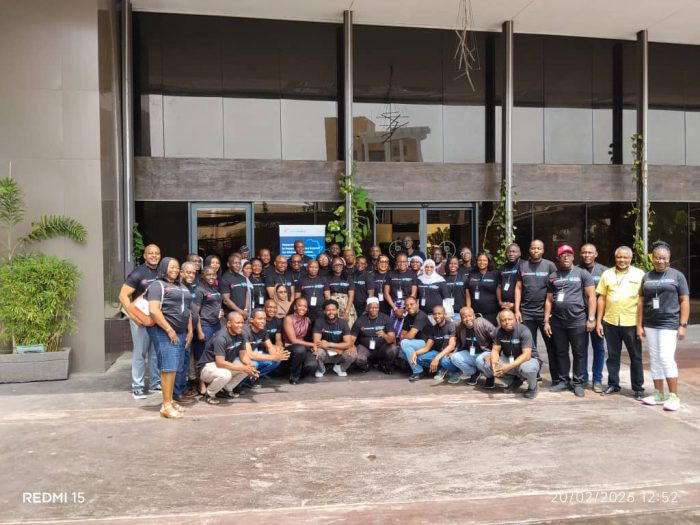
The warning came as Google professionals, non-governmental organisations and educators convened a three-day intensive summit involving 27 universities across Africa, with a strong call for immediate investment in practical, industry-aligned computer science education.
The summit, convened under the auspices of VarsityMentor, with support from Gen AI CS in Education, Google.org and PETGA Initiatives, brought together lecturers, technology experts, industry leaders and government officials from Nigeria, Ghana, Ethiopia, Kenya, Malawi and South Africa.
Speaking at the high-level gathering which opened on February 18, 2026, leading Google technology expert, Obinna Anya, cautioned that Africa must not simply replicate Western AI education models.
“AI is revolutionizing many industries, and education is among the most impacted,” Anya said. “It’s changing how students learn, how teachers teach, and how evaluations are conducted. Africa cannot afford to be left out of this transformation.”
He warned that if African universities merely emulate Europe and America without adapting to local realities, the continent risks falling further behind in the global AI race.
“Instead of copying what Europe and America are doing, we need to ask: what skills and knowledge should we equip our students with to thrive in the information era? And what unique contributions can Africa make to the global AI dialogue?” he queried.
Skills gap, unemployment in focus
The summit focused on the growing mismatch between university curricula and the fast-evolving digital economy, amid rising youth unemployment across the continent.
Participants acknowledged that many computer science programmes remain theory-heavy and outdated, leaving graduates ill-prepared for modern technology-driven workplaces.
Valerie Ehimhem, Technical Programme Manager at Google, said the initiative was designed to move beyond theoretical conversations to practical reforms lecturers can immediately implement.
“We’re already seeing positive changes. Lecturers now have new resources and methods to improve their teaching,” she said.
However, she stressed that government support remains critical to scaling the reforms.
“Without adequate labs, GPUs, and access to real-world tools, students cannot gain the practical experience needed for today’s digital economy,” Ehimhem noted.
She further argued that Africa must build AI systems grounded in its own climate, cultures and social dynamics, rather than relying solely on imported technologies.
“Many solutions are built for outside markets and don’t reflect our realities. We need to develop data and technologies that serve Africa’s unique needs,” she said.
Organisers disclosed that the summit is not a one-off event but part of sustained engagement with participating institutions. Faculty members have reportedly been engaged virtually for over a year, with plans to track how AI awareness translates into curriculum reforms and teaching innovations.
Anya described awareness as the first step toward transformation.
“This awareness marks the beginning of change. We’re committed to tracking how curricula evolve, how teaching methods adapt, and measuring the real impact of this initiative,” he said.
While addressing concerns about the risks associated with AI, Anya warned that the greater danger lies in uncritical dependence on technology.
“AI itself isn’t inherently dangerous, but our over-reliance on it can be harmful. Many people assume they’re thinking independently when they’re merely consuming what algorithms present to them,” he cautioned.
He urged educators to teach students to deploy AI as a tool to enhance critical thinking rather than replace it.
Outdated curricula under scrutiny
Also speaking, Site Reliability Engineer at Google, Adekunle Adeyemo, said Africa can no longer afford to trail global technological advancements.
“Africa has often followed behind. Now is the time to catch up. AI offers us the chance to join the train, if we act now,” Adeyemo said.
Workshops at the summit explored integrating generative AI into curricula, including sessions on AI-powered tutors capable of supporting hundreds of students per lecturer through personalized learning models.
“AI can help us personalize education at scale. The way we use these tools, whether incremental improvements or revolutionary shift, is up to us,” Adeyemo explained.
He also addressed fears around cultural bias in AI systems, emphasizing the need for African-led development.
“We can’t afford to be passive consumers of foreign AI systems. Africa must build solutions that reflect our values, cultures and realities,” he warned.
Ehimhem framed the initiative as a pathway to economic growth and social stability, stressing that graduates should be equipped to work locally and globally, create businesses, and drive national development.
“Students and lecturers are ready. The private sector can help bridge the gap through infrastructure support, internships and skills development,” she said.
Participation in the summit was open to all interested institutions, reflecting what organisers described as a commitment to inclusivity and continental impact.
As discussions concluded, stakeholders agreed that the challenge of AI integration in African education is continental in scope.
“This is not just a Nigerian problem. It’s an African one, and we are committed to leading the change,” Ehimhem said.
With 27 universities now aligned around practical AI-focused reforms, the summit signals what participants described as the beginning of a long-term push to ensure African classrooms do not merely consume global innovations but actively shape them.
Disclaimer
Comments expressed here do not reflect the opinions of Vanguard newspapers or any employee thereof.