
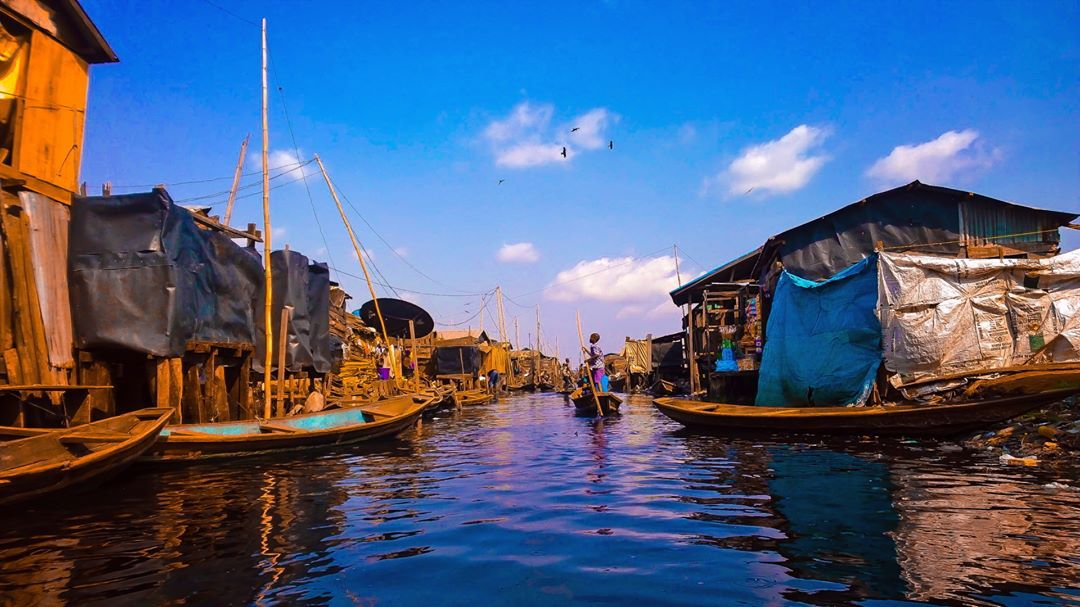
When waste flows into the same lagoon water where children swim, and fishermen catch tilapia bound for Lagos restaurants, the infrastructure deficit becomes impossible to ignore. For two centuries, Makoko’s fishing community has adapted to life on water. Now, Lagos State is testing whether the government can build infrastructure that works with that reality rather than against it.
Speaking at a press briefing at Alausa, Ikeja on Monday, Dr. Olajide Babatunde, Special Adviser to Governor Sanwo-Olu on Electronic Geographic Information System (E-GIS) and Urban Development, announced that Lagos has committed $2 million toward a $10 million Water Cities upgrade for Makoko, with the remaining $8 million sought from UNDP and UN-Habitat.
The project has been in development since 2021, when UN consultants first assessed the community. A 2025 KPMG feasibility study commissioned by UNDP provided a technical framework for what would become Lagos’s first large-scale floating infrastructure project.
The announcement comes amid recent tensions over government demolition of structures in high-tension power line corridors across Makoko and adjoining waterfront communities. Those clearances, which officials defended as necessary safety measures to prevent electrical accidents, sparked protests from residents demanding compensation and an end to enforcement activities.
The Lagos State House of Assembly has since ordered a halt to all demolitions pending resolution of community grievances through a joint committee process. At a stakeholders’ meeting on Tuesday, the Baale of Makoko Shogunro, High Chief Yusuf Sagra, told Assembly members: “We are here to explain our petition on what is happening in our communities, and we are happy and satisfied that they have given us a word of peace.”
“We dropped shoreline extension because experts advised it was not environmentally friendly,” Dr. Babatunde explained at the briefing. “Water Cities is the sustainable option, and that is what we are pursuing with the Makoko community.”
The Water Cities announcement represents a strategic pivot. Initial government plans included shoreline extension that would have required clearing the settlement for land reclamation. Environmental assessments conducted by technical experts and international partners identified significant ecological risks to the lagoon and marine life, prompting the adoption of floating infrastructure.
The approach matters beyond a single settlement because it sets a precedent for how Lagos develops along an estimated 180 kilometers of coastline, where thousands live in similar conditions. If the model works, it demonstrates Lagos can implement the Blue Economy agenda Governor Sanwo-Olu outlined at November’s International Climate Change Summit, where he declared the state’s future “ocean-powered” and anchored on coastal resilience and sustainable financing.
Technical requirements are substantial. Household-scale composting toilets or biogas digesters must integrate into daily routines without requiring boat trips to central facilities. Water distribution must reach structures at varied heights across tidal zones. Solar microgrids need marine-grade components that withstand salt corrosion.
Schools require flood-proof design. Healthcare facilities need consistent staffing to reach residents who currently take expensive boat trips to mainland clinics. Economic infrastructure must strengthen fishing livelihoods rather than disrupting value chains worth hundreds of millions of naira annually.
For Makoko’s roughly 100,000 residents, $10 million works out to approximately $100 per person. Whether that delivers transformation depends on execution, given how distance, weather, and tides behave differently on water than on solid ground. Amsterdam’s canal communities and parts of Hong Kong’s Aberdeen Harbour evolved from informal floating housing to integrated urban infrastructure. But those transformations happened with sustained political will and patient capital accumulated across decades.
The governance challenge outlasts physical construction. Five years after installation, who maintains systems? Who settles disputes over water access? Who controls funds for equipment replacement? The plan proposes community institutions with legal standing and independent revenue streams. Still, details on procurement transparency, resident participation in design decisions, and contingency planning if international funding falls short remain critical questions.
For Lagos State, success establishes a replicable model for waterfront development that serves both the communities that supply fish protein to city markets and the state’s Blue Economy framework, positioning Lagos as a regional climate-adaptation leader. Failure confirms a pattern in which waterfront communities remain outside formal development despite their economic contributions, and policy priorities don’t translate into implementation capacity.
Within 18 to 24 months, physical evidence will indicate whether Lagos can deliver aquatic infrastructure to meet its geographic demands and development agenda. That timeline matters for hundreds of thousands of people along Lagos’s coastline who are watching Makoko to understand whether their communities face similar opportunities or a familiar pattern of displacement.
Disclaimer
Comments expressed here do not reflect the opinions of Vanguard newspapers or any employee thereof.