
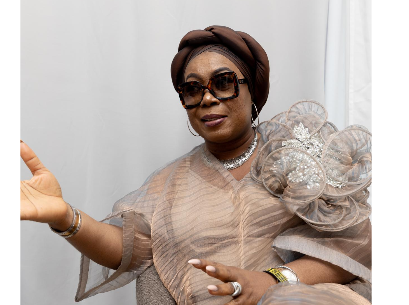
By Vera Anyagafu
For many, leadership in the diaspora is born not out of privilege, but perseverance.
Chief Dr. Lady Aqueen Ibeto’s story is a testament to this. As the President Emeritus of Ohanaeze Ndi Igbo in the UK and Northern Ireland, Convener of Ohanaeze Ndi Igbo Diaspora, and Founder/President of Adaure Initiatives, she is a force to be reckoned with.
A proud daughter of Enugu State, devoted wife, and mother, Adabuzo, as she is fondly called, excels in multiple roles. With a rich academic background that includes, mastery in Business Administration, HNC in Travel and Tourism, and Honorary Doctorate in Transformational Leadership from the UK, she has made a lasting difference in the lives of many Nigerians both home and abroad.
Her humanitarian work, especially with La Vera Nursing School Nssuka, Igbo Charter of Strategic Engagement for National Development and ADAURE initiative, showcase her passion for serving, empowering and strengthening diaspora ties.
In this exclusive interview with Vanguard Consular Hub at Brixton, UK, Adabuzo shares her stewardship and passion, recounting how hardships and resilience of Nigerians in the diaspora fuelled her commitment to service and advocacy.
She said the experiences, stirred in her a deep sense of responsibility to step forward and provide representation, support, and direction for Nigerians.
Being a respected UK voice, she emphasises unity among Nigerians abroad, preserving cultural identity, and using her position to promote their interests and welfare.
Excerpt:
What sparked your passion for what you do for Nigerians in the UK, and how does it drive your work today?
My passion was sparked by seeing the struggles many Nigerians face in a foreign land, ranging from cultural isolation to lack of proper guidance and representation. I recognised the need for strong leadership, advocacy, and structured community support.
As someone raised with deep traditional values and leadership heritage, service comes naturally to me. I believe leadership is responsibility, not privilege. That conviction continues to drive my work daily. Knowing that my efforts can make life easier, more dignified, and more successful for others keeps me focused and committed.
Can you share your vision and mission for the community you are building and supporting?
My mission is to empower, unite, and uplift Nigerians in the UK, especially women and young people through leadership, advocacy, cultural preservation, and socio-economic support.
My vision is to see a strong, united, and respected Nigerian diaspora community that contributes meaningfully to British society while remaining deeply connected to our heritage. I am committed to building structures that provide mentorship, promote education, encourage entrepreneurship, and protect the welfare of our people.
Through the various organisations I lead and support, I aim to create platforms where our voices are heard, our culture is celebrated, and our people are equipped to thrive.
What do you believe is your greatest strength in making a difference?
My greatest strength is my ability to unite people across different backgrounds and perspectives. I believe in inclusive leadership. I listen, I empathise, and I act.
I am also resilient. Community leadership is not without challenges, but I remain steadfast because my work is purpose-driven. My diplomatic approach, organisational skills, and passion for service enable me to build bridges where there might otherwise be division.
What is the most rewarding part of your work, and how does it keep you motivated?
The most rewarding part of my work is seeing lives transformed, whether it is a woman gaining confidence and independence, a young person finding direction, or a family receiving needed support.
When I see unity restored, opportunities created, and people empowered, it reminds me why I started. The appreciation and positive impact within the community give me the strength to continue, even during difficult times.
What are some of the biggest constraints or challenges you face in your work, and how do you overcome them?
One of the biggest challenges is managing diverse expectations within the community. People come from different regions, backgrounds, and perspectives, which can sometimes lead to misunderstandings.
Another challenge is limited resources to meet growing needs. However, I overcome these through dialogue, transparency, strategic partnerships, and prayerful leadership. I also believe in building strong teams and delegating effectively to ensure sustainability and growth.
What does success mean to you, both personally and professionally, and how do you see it impacting Nigerians living across the UK?
To me, success is not measured by titles or recognition but by impact. Personally, success means maintaining integrity, family values, and faith while serving others. Professionally, it means building sustainable institutions that will outlive me.
When Nigerians across the UK are empowered economically, culturally confident, law-abiding, and well-represented, that is success. A thriving diaspora community contributes positively both to the UK and to Nigeria, strengthening our global reputation.
You have mentioned the ADAURE training child initiative as a key project. Could you tell us more about it and how it aims to impact Igbo children?
The ADAURE initiative is close to my heart, launched this year 2026 to give back to our community. We are focusing on training Igbo children, from primary to secondary school, to break the cycle of poverty and lack of education. With a target of raising N1,000,000 (one million) naira per child, we hope to get them off the streets and give them a brighter future. It’s about investing in our future leaders
Is there any concern you would like to discuss?
Yes, one concern I have is the need for stronger unity and collaboration within the Nigerian diaspora. Division weakens progress. We must learn to prioritise collective growth over personal interests.
I also advocate for more structured support systems for vulnerable groups, particularly women facing domestic challenges and young people navigating identity and opportunity abroad.
My continuous call is for unity, accountability, and visionary leadership that places community welfare above all else.
Disclaimer
Comments expressed here do not reflect the opinions of Vanguard newspapers or any employee thereof.