
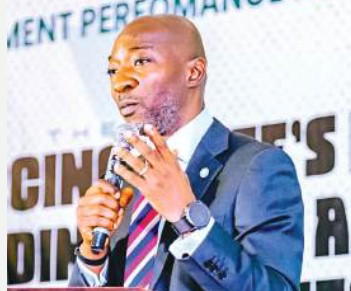
NSITF MD/CEO, Oluwaseun
By Victor Ahiuma Young
The Nigeria Social Insurance Trust Fund (NSITF) has set ambitious performance targets for 2026, with its top management demanding greater transparency, accountability, and measurable results across all levels of the organisation.
At the Fund’s Annual Management Performance Review (MPR) in Abuja, the Managing Director and Chief Executive, Oluwaseun Falaye, told senior officials — including Executive Directors, General Managers, Heads of Departments, and Regional and Branch Managers — that the era of assumptions and comfort zones was over.
Stressing that performance must now be driven by clarity, responsibility, and outcomes, Falaye said: “This review is not a routine calendar event. It is a deliberate pause to reflect, to evaluate performance honestly, and to reset our priorities where necessary in order to deliver better outcomes for the institution and the people we serve.”
He reminded participants that their roles as stakeholders in the organisation carry significant responsibility, noting that the success or failure of the Fund directly affects employers, employees, and the broader social security system.
Reflecting on the 2025 review held in Lagos, Falaye described it as a turning point that reshaped how the Fund assesses its performance. According to him, decisions taken at that session ushered in a more disciplined and outcome-driven management culture.
“Since then, our actions have been purposeful,” he said, listing improvements in operational structures, manpower alignment, expansion of service presence, accelerated automation, and deliberate stakeholder engagement. “These steps reflect a clear strategic direction: repositioning NSITF as a responsive, credible, and value-driven social security institution that commands confidence and trust.”
The theme of this year’s review: Reinforcing NSITF’s Role in Building Trust and Delivering Value Towards Strengthening the Social Security System, underscores the Fund’s renewed emphasis on integrity and service delivery.
Falaye stressed that “trust and value remain the twin pillars of the institution’s mandate. Trust is earned through consistency, transparency, and professionalism. Value is demonstrated when our processes work, when decisions are fair, and when outcomes meet expectations.
“Every interaction with employers, every inspection, every claim processed, and every decision taken by management either strengthens or weakens these two pillars.”
As part of the 2026 roadmap, the Fund identified five strategic priorities: expanding coverage, particularly within the private and informal sectors; improving the timeliness and transparency of claims processing; strengthening operational efficiency and financial discipline; deepening digital transformation; and upholding integrity and professionalism at all levels.
Participants were urged to base their presentations strictly on facts and data and to maintain honesty in self-appraisal as performance targets for the coming year are rolled out.
In her welcome address, the Executive Director of Operations, Honourable Mojisoluwa Ali-Macaulay, described the MPR as a structured platform to evaluate progress and align operational priorities with the Fund’s strategic objectives for 2026.
“Over the past two years, we have worked deliberately to strengthen the operational foundations of the Fund — improving service delivery structures, aligning manpower with operational needs, deepening automation, and reinforcing performance monitoring at all levels,” she said.
Ali-Macaulay also disclosed that new branches and service delivery centres have been established to improve compliance activities and make NSITF services more accessible. She added that the implementation of solutions adopted at the 2024 MPR has recorded significant success.
With renewed focus on transparency, digital innovation, and service expansion, the Abuja meeting signals a determined push by the NSITF leadership to strengthen Nigeria’s social security framework and restore public confidence in the Fund’s operations
Disclaimer
Comments expressed here do not reflect the opinions of Vanguard newspapers or any employee thereof.