
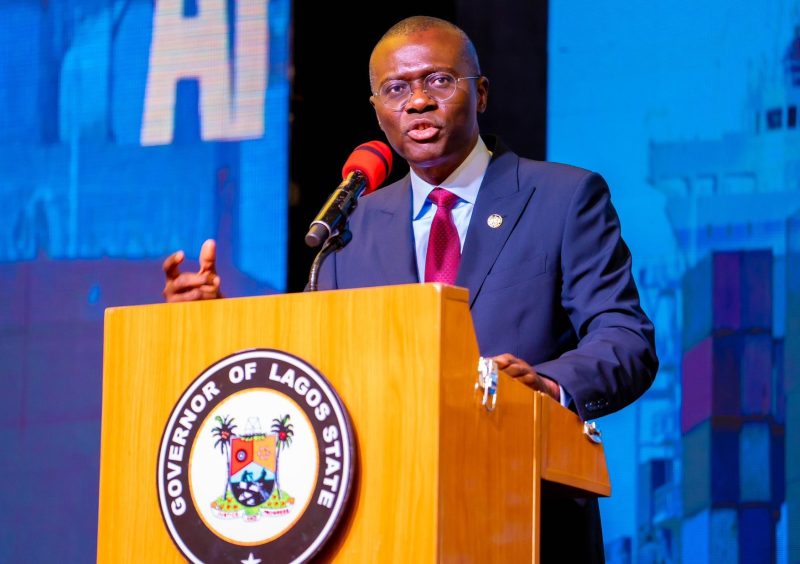
Gov Babajide Sanwo-Olu of Lagos State
By Henry Ojelu
LAGOS — Lagos State and the Government of Canada on Monday moved to broaden justice-sector cooperation, as both sides explored sustained institutional collaboration under the Canada–Nigeria Justice Cooperation Project.
Speaking at an international cooperation meeting in Ikeja, the Attorney-General and Commissioner for Justice, Lagos State, Mr Lawal Pedro, SAN, said the engagement reflected the increasing importance of cross-border partnerships in strengthening justice delivery and institutional capacity.
Pedro noted that Lagos, as Nigeria’s most populous and economically strategic state, faces mounting justice-sector pressures arising from rapid urbanisation, migration, inequality and population growth.
“These realities require a justice system that is modern, coordinated and forward-looking,” he said, stressing that effective justice delivery goes beyond the enactment of strong laws to include responsive institutions, professional capacity and strategic partnerships.
He said the Lagos State Ministry of Justice had, over the years, pursued deliberate reforms through policy initiatives, legislative interventions and the creation of specialised institutions aimed at improving accountability, efficiency and public confidence.
According to him, agencies such as the Directorate of Public Prosecutions, the Law Reform Commission, the Domestic and Sexual Violence Agency and the State Task Force Against Human Trafficking operate within an integrated framework that supports prosecution, law reform, victim support and inter-agency coordination.
Pedro explained that Lagos’ justice model reflects a shift from reactive responses to preventive, protective and restorative approaches.
He cited the state’s multi-agency response system, which combines prosecution with medical care, psychological counselling, emergency rescue, shelters, rehabilitation programmes and financial support for survivors, including services provided through the Mirabel Centre.
Placing the Canada–Nigeria Justice Cooperation Project in a broader context, the Attorney-General said the initiative offered opportunities for collaboration in areas such as capacity building, policy development, legal reform, data management and operational coordination.
He said Canada’s experience in rights-based justice and institutional accountability presented valuable learning opportunities, while Lagos’ experience in managing justice delivery in a large, diverse and rapidly growing urban environment could also offer practical insights.
“International cooperation should be a partnership built on mutual respect, shared values and measurable outcomes,” Pedro added.
Earlier, Co-Director of the Canada–Nigeria Justice Cooperation Project and counsel with Canada’s Department of Justice, Genevieve Westrope, said Canada’s engagement with Nigeria was anchored on a technical assistance mechanism that supports structured, time-bound cooperation with partner countries.
Westrope explained that Canada’s involvement followed a request by Nigeria’s Federal Ministry of Women Affairs for legal technical assistance in addressing ethnic violence and child protection, but noted that discussions in Lagos pointed to broader areas of shared interest.
She said the Canadian delegation had engaged government institutions, civil society and non-governmental organisations in Abuja before visiting Lagos, describing the state as a hub of institutional coordination and innovation.
“We heard consistently that Lagos has developed strong systems and collaborative approaches. We are here to understand how these systems work and to identify areas for mutual knowledge exchange,” she said.
Westrope stressed that the Canadian team was in Lagos primarily to listen and learn, describing the engagement as one of the highlights of the visit to Nigeria.
Also speaking, the Solicitor-General and Permanent Secretary, Lagos State Ministry of Justice, Mr Hameed Oyenuga, said international cooperation provided an opportunity for institutional reflection and improvement.
Oyenuga outlined the Ministry’s mandate, which includes legal advisory services, policy formulation, legislative drafting, criminal prosecution, civil litigation and oversight of specialised agencies.
He expressed confidence that the meeting would lay a solid foundation for sustained Lagos–Canada cooperation, not only in protecting vulnerable persons but also in advancing broader justice-sector reforms with long-term impact.
Disclaimer
Comments expressed here do not reflect the opinions of Vanguard newspapers or any employee thereof.