
By Esther Onyegbula
The Managing Director and Chief Executive Officer of CEOAFRICA, Prince Cletus Iloabanafor, has called on policymakers, corporate organisations, private sector players and civil society groups to strengthen support for the African Academy of Languages ahead of its 20th anniversary celebrations.
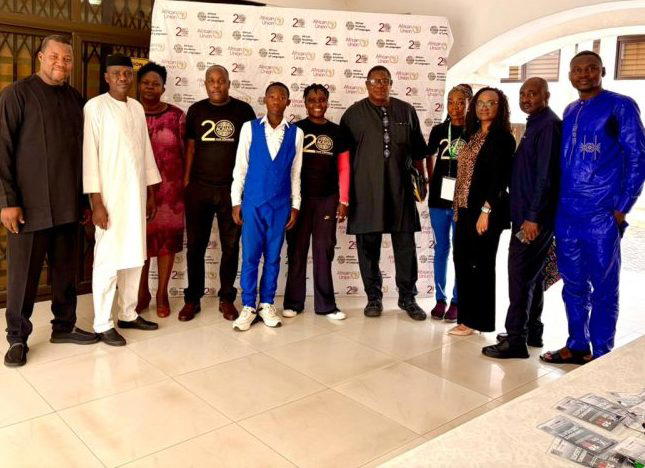
Iloabanafor made the call at the University of Ghana, Legon, during the 2026 Africa Languages Week (ALW) held February 23 to 24 in Accra, Ghana. He described ongoing stakeholder consultations as critical groundwork for the official anniversary programme scheduled to commence in the third quarter of 2026.
A member of the African Languages Week Coordinating Committee (ALWCC) and Chairman, Resource Mobilisation, Iloabanafor stressed that sustained investment in African languages remains pivotal to unlocking inclusive growth and social cohesion across the continent.
The 2026 Africa Languages Week, themed “Sustainable Waters, Shared Voices: African Languages as the Conduit for Water and Safe Sanitation for the Africa We Want,” focused on deepening the role of indigenous languages in advancing development priorities.
Addressing participants, Iloabanafor challenged corporate bodies and policymakers to tap into the economic and social potential of over 600 million indigenous language speakers across Africa. According to him, deliberate engagement with this demographic could significantly expand market reach and inclusion, noting that nearly 60 per cent of Africans remain excluded due to the dominance of colonial languages in governance, commerce and education.
The two-day event featured the official unveiling of ACALAN’s new logo and high-level strategic sessions chaired by Prof. Dr. Vicensia Shule, Acting Executive Secretary of ACALAN. She urged stakeholders to design high-impact initiatives capable of translating two decades of linguistic research into measurable outcomes.
Shule also proposed a recognition ceremony to honour lifetime contributors to indigenous language development, while calling on parents and educational institutions to prioritise intergenerational language transmission as a safeguard for Africa’s cultural identity.
She reaffirmed ACALAN’s resolve to move beyond policy formulation to practical implementation across African Union member states, aligning the 20th anniversary activities with the International Action Plan for Indigenous Languages to enhance governance, quality of life and linguistic rights.
Strategic coordination for the week was led by the ALWCC chaired by Ms. Margaret Nankinga, with members including Iloabanafor, Mr. John Rusimbi, Dr. Babusa Omar Hamisi, Mr. Anicet Allamadjingaye and Ms. Francina Nutifafa Feyi.
During the technical sessions, Nankinga presented proposals on language advocacy, while Iloabanafor outlined strategies to boost the visibility and valorisation of African languages across critical sectors.
Rusimbi showcased artificial intelligence tools designed for African languages, and Hamisi proposed the deployment of animation and cartoons to promote early childhood language learning.
Former Senior Programme Officer, Dr. Babajide Ojo Johnson, emphasised the need to deliver media literacy and entrepreneurship education in indigenous languages to advance the African Union’s development aspirations.
Discussions also centred on the instrumentalisation of African languages, including the development of standardised vocabularies for key sectors such as health, water and public administration. Participants underscored the urgency of adaptive governance frameworks to ensure African languages remain relevant amid rapid digital transformation.
As the event concluded, Iloabanafor renewed his appeal for robust partnerships and sustained backing for ACALAN, noting that the year-long 20th anniversary programme, slated to run from September 2026 to 2027, presents an opportunity to reposition African languages as central pillars of sustainable development and continental integration.
He maintained that reclaiming Africa’s linguistic heritage is essential to shaping a future in which the continent fully realises its global potential.
Disclaimer
Comments expressed here do not reflect the opinions of Vanguard newspapers or any employee thereof.