
Beyond ceremony and personality, the OAU Faculty of Arts Distinguished Alumni Lecture reminds us why universities remain vital to civic imagination, democratic culture, and the disciplined life of ideas
By Stephen Adewale
On Thursday, 29 January, the usually tranquil intellectual town of Ile-Ife will pulse with an uncommon energy. Inside the Oduduwa Hall of Obafemi Awolowo University, scholars, students, writers, administrators, alumni, and cultural observers will gather for the Second Faculty of Arts Distinguished Alumni Lecture, an event poised to rise above routine ceremony and become a meaningful encounter between memory and responsibility.
What gives this gathering its deeper significance is not merely the prestige of the speaker or the ceremonial weight of the occasion, but the reminder it offers about what universities exist to do in public life. At a time when intellectual depth is often sacrificed to speed, outrage, and spectacle, a serious public lecture restores the slower disciplines of listening, reflection, and reasoned disagreement. It affirms the university as a moral and civic institution, not simply a credential-producing factory. In this sense, the Distinguished Alumni Lecture matters because it reconnects scholarship to citizenship, memory to responsibility, and education to the long work of democratic culture.
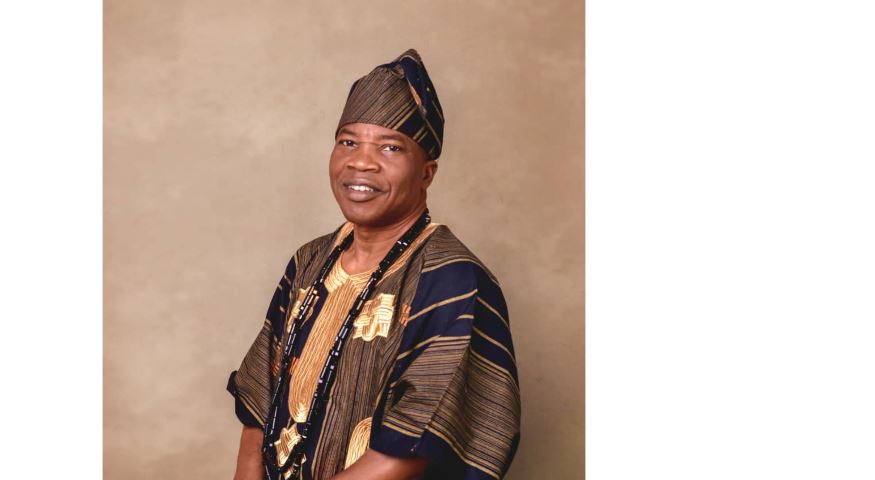
The occasion features Mr. Sam Oritsetimeyin Omatseye, who is an historian by training, journalist by vocation, novelist by imagination, and public intellectual by temperament. He will return to his intellectual home to deliver a lecture titled How to Make a Democrat. In an era when democracy appears triumphant in form yet fragile in substance, the title arrives as moral provocation rather than rhetorical flourish. It invites reflection on how citizens are formed, how judgment is cultivated, and how civic virtue is sustained beyond the rituals of elections and slogans.
The Distinguished Alumni Lecture series reflects the Faculty of Arts’ commitment to intellectual continuity. It is a deliberate effort to link past scholarship with present public responsibility. It affirms that universities are not isolated enclaves but living ecosystems of ideas whose influence flows into journalism, governance, culture, and civic leadership. This second lecture is, therefore, not simply a tribute to an accomplished alumnus, but a public invitation to rethink the civic obligations of education in an age saturated with information yet increasingly starved of wisdom.
Omatseye’s own intellectual journey embodies this porous movement between classroom and public square. As a student in the early 1980s at the then University of Ife, he encountered history not merely as a record of events but as a training in skepticism, complexity, irony, and consequence. Those formative years nurtured a resistance to simplistic narratives and a fascination with the moral textures of power and memory.
Over time, these instincts matured into a prolific public career spanning journalism, creative writing, editorial leadership, and cultural criticism. As Chairman of the Editorial Board of The Nation newspapers, a widely read columnist, and a novelist, poet, playwright, and essayist, Omatseye has consistently occupied Nigeria’s public sphere with a voice that challenges complacency and resists intellectual laziness. His writing ranges across politics, culture, literature, and ethics, insisting that public language must answer to truth rather than convenience. For many readers, his columns remain a familiar provocation against easy certainties and quiet complicities.
Beyond professional achievement, Omatseye exemplifies the enduring capacity of the humanities to shape civic temperament. His historical training sharpens his instinct for context and consequence; his literary imagination deepens his sensitivity to human complexity; and his journalistic discipline anchors him to evidence and clarity. In returning to Obafemi Awolowo University as a Distinguished Alumnus Lecturer, he embodies the cyclical movement of ideas from classroom to public arena and back again.
The lecture theme carries particular resonance within Nigeria’s contemporary political climate. It gestures toward the fragile scaffolding of democratic culture in societies where electoral rituals coexist with civic distrust, historical amnesia, and rhetorical polarisation. It raises enduring questions: What kind of education cultivates judgment rather than conformity? How do media institutions nurture discernment rather than outrage? How does historical memory restrain manipulation and simplification? Democrats, after all, are not manufactured by decree or technology; they are shaped slowly through habits of mind, moral imagination, and disciplined disagreement. In choosing such a theme, OAU Faculty of Arts signal its intention to elevate the public conversation beyond partisan contestation into the deeper terrain of civic formation.
As the date approaches, the campus hums quietly with preparation. Beneath the logistics lies an expectation that the lecture will briefly suspend daily fragmentation and gather diverse minds into a shared intellectual space. Such gatherings possess a rare chemistry. Students witness living models of intellectual vocation. Scholars test ideas beyond disciplinary silos. The public encounters the humanities not as abstract luxury but as moral infrastructure. In an age trained to skim rather than listen, the simple act of assembling to listen carefully to sustained argument acquires renewed significance.
The intellectual homecoming will, in fact, begin a day earlier. On Wednesday, 28 January, the Department of History will host Mr. Omatseye to a private dinner in his honour, a gesture that carries both ceremonial warmth and symbolic intimacy. Away from the formalities of podiums and protocols, the dinner is intended as a moment of fellowship between generations of scholars, colleagues, former teachers, and emerging students. It will be a space where memory can breathe freely and conversation can unfold without the pressure of performance. It will allow the department to acknowledge, in quiet dignity, the long arc of Omatseye’s intellectual labour, his fidelity to the life of ideas, and his sustained engagement with public culture. Such gatherings, modest in scale, will be rich in meaning, and will reflect the deeper rituals of academic life. It will symbolise the passing of intellectual torches, the renewal of collegial bonds, and the affirmation that universities remain communities of minds as much as centres of instruction. In honouring him over dinner before he mounts the public stage, the Department of History symbolically situates the lecture within a continuum of gratitude, memory, and institutional pride.
Beyond the campus, the lecture speaks to broader national anxieties. Nigeria’s democratic experiment continues to wrestle with legitimacy, participation, accountability, and civic trust. Public discourse oscillates between passion and fatigue, engagement and cynicism. In such a climate, asking how democrats are made redirects attention from electoral mechanics to moral formation, from institutional design to civic character, and from political speed to cultural endurance.
The anticipation surrounding Omatseye’s lecture reflects a collective hope that his reflections will illuminate these undercurrents with the clarity of a historian and the imaginative reach of a writer. His career suggests an ability to translate complex ideas into accessible language without sacrificing depth, to provoke without inflaming, and to critique without descending into nihilism. Many attendees anticipate that his lecture will blend narrative, analysis, and moral reflection in ways that challenge complacency while offering intellectual nourishment. For students, it promises an encounter with a model of intellectual vocation that bridges scholarship and public responsibility. For colleagues, it offers an opportunity to renew faith in the civic relevance of the humanities. For the wider public, it extends an invitation into a conversation often confined within academic walls.
Finally, I sense that the significance of this lecture will extend beyond a single evening. It will linger in conversations, classrooms, and quiet recalibrations of civic conscience. The return of Sam Omatseye to Obafemi Awolowo University thus becomes more than a ceremonial homecoming; it becomes a modest but luminous act of civic renewal. In an age tempted to confuse speed with progress and noise with participation, the forthcoming lecture stands as an invitation to pause, reflect, and recover the deeper virtues that sustain free societies. If democracy is indeed something that must be made, defended, and renewed rather than inherited automatically, then gatherings such as this become small yet meaningful acts of civic craftsmanship, shaping minds quietly while history watches patiently.
Stephen Adewale writes from the Department of History, Obafemi Awolowo University.
Disclaimer
Comments expressed here do not reflect the opinions of Vanguard newspapers or any employee thereof.