
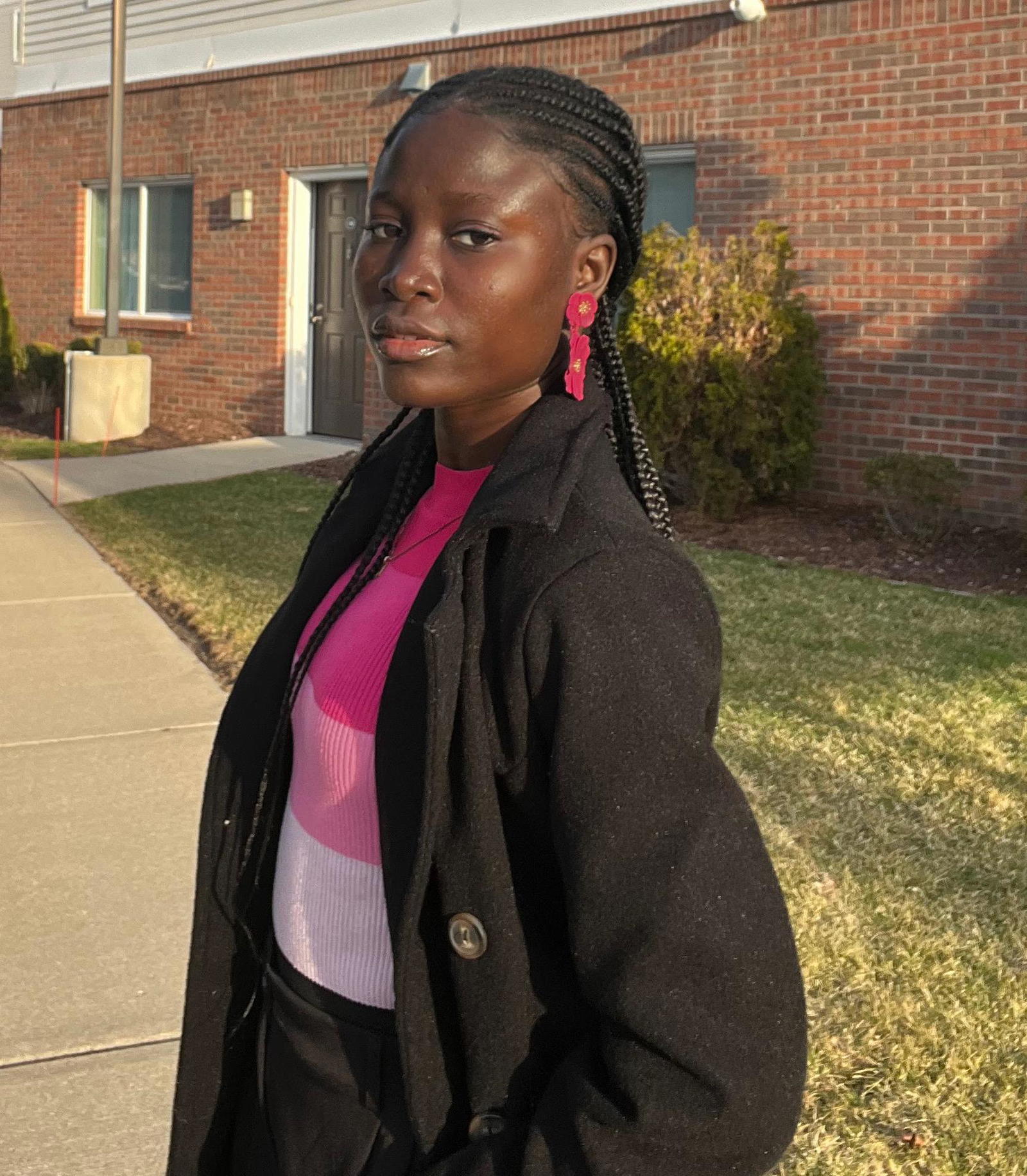
Nigerian scholar, Kehinde Sowunmi, has called for a deeper, written engagement with the histories of Nigerian women, warning that reliance on oral traditions alone risks reducing complex female figures to frozen symbols rather than living memories.
Sowunmi, a second-year PhD student in the Department of Germanic Languages and Literatures at the University of Michigan, made this argument in a recent research essay examining cultural memory, gender and history through the legendary figure of Mọ̀rè́mì Àjánsóro of Ile-Ife.
In the study, the researcher revisits the popular story of Mọ̀rè́mì, celebrated for sacrificing her only son to save Ile-Ife, but argues that repeated praise has gradually erased the woman behind the legend.
“The more she is celebrated, the more she becomes still: a monument, not a memory in motion,” Sowunmi wrote.
According to the scholar, Mọ̀rè́mì’s most overlooked identity is that of a “border-crossing woman,” one who moved across families, territories and dangerous political spaces by choice.
She noted that such transformation “requires more than bravery. It requires transformation,” yet remains difficult to archive when preserved only through chants and performances.
Sowunmi compared Mọ̀rè́mì’s story with Christine, a female character in a 19th-century Swiss-German folktale, Die Schwarze Spinne by Jeremias Gotthelf. She observed that Christine’s story, preserved in written form, has been critically examined for generations, unlike Mọ̀rè́mì’s. “Christine’s suffering became a text. Mọ̀rè́mì’s pain became performance,” she said.
The researcher argued that while Mọ̀rè́mì is praised in oríkìs as “the woman who used her ladypart to conquer the enemy,” such lines often reduce her intelligence and strategy to sexuality.
She explained that “praise, like punishment, can erase,” especially when women’s power challenges social norms.
While acknowledging the strength of Nigeria’s oral tradition, Sowunmi stressed that stories left only in sound risk erosion and ritualisation.
“Because they are not written, they are not questioned,” she noted, adding that crucial elements such as Mọ̀rè́mì’s grief, doubt and life after sacrifice remain largely unexplored.
She emphasised that writing women into history is not about external validation but about authorship and interpretation.
“Representation isn’t the same as interpretation,” the researcher argued, calling for Mọ̀rè́mì’s story to be debated, analysed and revisited beyond festivals and monuments.
Sowunmi warned that portraying women only as martyrs limits future possibilities for women’s autonomy.
According to her, complex storytelling can offer young women broader models of choice, agency and contradiction. “When we write them with complexity, we offer more than remembrance. We offer a blueprint,” she said.
The researcher’s work spans Afro-German modernism, migration, diasporic studies and cultural memory, with a growing focus on how written archives shape whose lives are remembered and how.
Her intervention adds to ongoing debates on gender, history and the preservation of Nigerian heritage.
Disclaimer
Comments expressed here do not reflect the opinions of Vanguard newspapers or any employee thereof.