
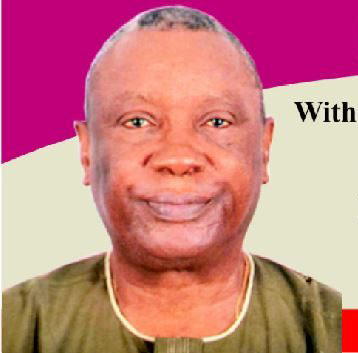
From last week continues the narrative that a one-party state may not materialise in Nigeria. Among politicians who have seen the high and low of this is Alhaji Sule Lamido who as National Secretary of the defunct SDP was one of those who signed the document that created the Interim National Government
Almost 46 years later, he, among others, is still around. Also still around is Chief Tajudeen Olusi (89), who represented Lagos South in the House of Representatives as a UPN member. He is at present Chairman, Governance Advisory Council in Lagos State. Also still around is my friend, Peter Olayemi Obaoye, who represented Irepodun Constituency in Kwara State. However, the game changed after the presidential and senatorial elections of August 20, 1983.
The NPN increased its Senatorial seats to 60, thereby gaining 24 more seats, while the UPN reduced its own to 16, thereby losing 12 seats and the NPP lost four seats, thereby reducing its seats to 12. As for the PRP, it lost two seats, thereby reducing its seats to only five and the GNPP lost six senatorial seats. In the House of Representatives election, the NPN gained 138 more seats, thereby increasing its strength to 306; the UPN lost 60 seats, thereby was left with only 51 seats, while the NPP lost 30 seats reducing its strength to 48. As for the PRP, it lost eight seats and reduced its strength to 41, while the GNPP lost all its 43 seats and had no seat at all.
In the gubernatorial election, the different parties had their members elected. As for the UPN, Alhaji Lateef Kayode Jakande was elected for Lagos State, Senator Cornelius Olatunji Adebayo for Kwara State, Chief Bisi Onabanjo for Ogun State and Chief Michael Adekunle Ajasin for Ondo State.
Chief Cornelius Adebayo, born February 24, 1941, died recently and was buried at Oke Onigbin in his hometown of Kwara State. He was a gentle man. I knew him in 1979 during his Senate years and our friendship lasted till he died. I visited him last at his residence at Mabushi in Abuja. His death pained me. He became lonely after the death of his wife, Elizabeth Funmilayo Ibiwoye.
As for the NPN, the following were elected in their respective states. Alhaji Bamanga Tukur (Gongola), Alhaji Tatari Alli (Bauchi), Mr. Aper Aku (Benue), Alhaji Lawal Kaita (Kaduna), Chief Christian Onoh (Anambra), Dr. Omololu Olunloyo (Oyo), Chief Melford Okilo (Rivers), Alhaji Garuba Nadama (Sokoto), Alhaji Muhammed Anwal Ibrahim (Niger), Chief Donald Duke Etiebet (Cross River), Dr. Samuel Ogbemudia (Bendel) and Alhaji Asheik Jarma (Borno).
Under PRP, Alhaji Sabo Barkin Zuwo was elected in Kano State, while Chief Samuel Mbakwe was elected in Imo State and Chief Solomon Lar was elected on NPP platform in Plateau State. Thereafter speculations became rife that Nigeria was heading for a one-party state. There were celebrations in the NPN camp. I remember visiting the house of Alhaji Umaru Dikko, the then powerful Minister of Transport, in Ikoyi Lagos, along with my friend, Alhaji Usman Muktar of the NTA. Alhaji Dikko Boasted then, that very soon, “the NPN will swallow all other parties”.
Then came the morning of December 31, 1983, when the announcement by Brigadier Sani Abacha(20 September 1943 – 8 June 1998) terminated the attempt of having a single party in the country. The miliary took over and Major General Muhammadu Buhari (17 December 1942 – 13 July 2025), never had a political programme until he too was overthrown by Major General Ibrahim Babangida (84) in August 1985. Following the submission of the Political Bureau made up of S.J. Cookey (Chairman), E. O. Awa, A. D. Yahaya, Haroun Adamu, Ibrahim Halilu, Pascal Bafyau, Oye Oyediran, Tunde Adeniran, Sam E. Oyovbaire, Bala Takaya, O.E. Uya, Sani Zaharadden, Mrs Hilda Adefarasin, Mrs R. Abdullahi, Ola Balogun, Edwin Madunagu and Abdullahi Augie (Executive Secretary), the then Head of State, General Ibrahim Badamosi Babangida on October 7, 1989, decreed two political parties for the country. They were the Social Democratic Party, SDP, and the National Republican Convention, NRC.
In an address to the nation, General Babangida announced that the AFRC had accepted the principles of grassroots democratic two-party system. He declared then: “It is our belief that the system shall: (a) provide a grassroots basis for the emergence of political parties (b) establish a grassroots or mass platform for the emergence of new leadership (c) give equal rights and opportunities to all Nigerians to participate in the political process irrespective of their wealth, religion, geo-political backgrounds and professional endeavours (d) de-empasise the role of money in politics (e) reduce, to a minimum level, the element of violence in our electoral process (f) preclude the emergence political alliances along the same lines as in the First Republic and, therefore, give Nigerians a new political structure within which to operate.
Disclaimer
Comments expressed here do not reflect the opinions of Vanguard newspapers or any employee thereof.