
…As Nigeria Tightens Petrol Tank Regulations Amid Health Concerns
By Emmanuel Elebeke
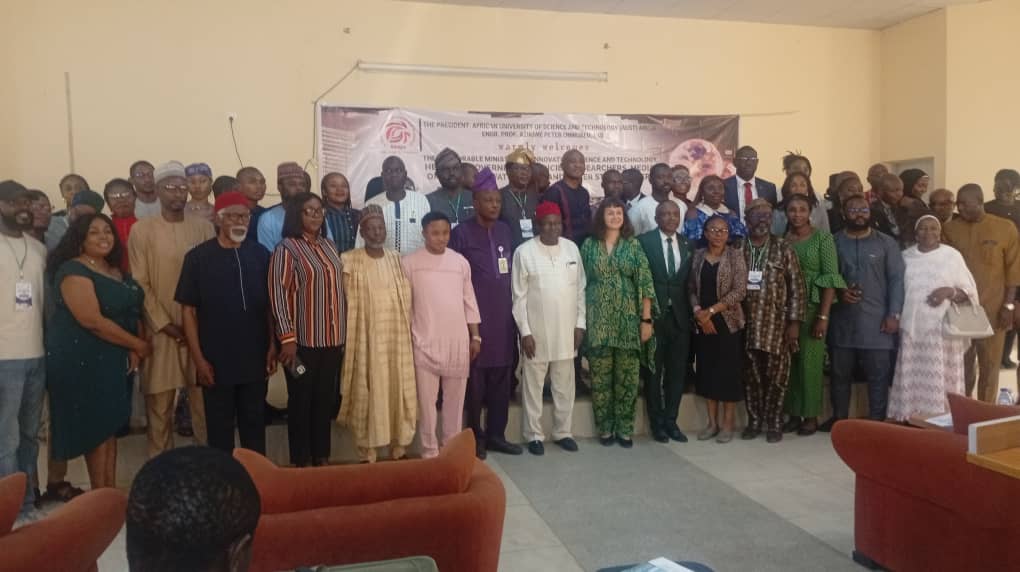
Abuja — At the maiden Nigeria Science, Technology and Innovation Conference (STICOMMS), stakeholders in the country’s science and technology ecosystem emphasized the critical role of science communication in driving national development, shaping public policy, and promoting economic growth. The conference, hosted by the African University of Science and Technology (AUST), Abuja, in partnership with AfriScience Tech Digest Network and Nigeria Science Reporters Association, brought together scholars, innovators, policymakers, educators, journalists, civil society actors, and industry leaders for discussions on leveraging science, technology, and innovation (STI) for societal transformation.
Prof. Azikiwe Onwualu, President of AUST, described the conference as a timely national platform to bridge research and practical application. He underscored that while Nigerians excel globally in science and technology, innovations only achieve real impact when knowledge is effectively communicated and applied to local challenges.
According to him, clear and responsible science communication ensures research informs public policy, drives industry innovation, and delivers societal benefits.
Speaking on the conference theme, “Communicating Science for National Development,” Prof. Onwualu noted that effective communication is especially critical for developing countries, helping address issues such as public health, education, human capital development, food security, climate change, digital transformation, governance, and sustainable economic growth. He highlighted AUST’s interdisciplinary approach, bringing together scientists, innovation managers, entrepreneurs, educators, and policymakers to improve “gown-to-town” engagement, ensuring research outputs enhance livelihoods and commercial activities.
Prof. Onwualu also reaffirmed AUST’s commitment to socially responsive scholarship, emphasizing that universities must generate knowledge that is accessible, commercialized, and aligned with societal needs.
He highlighted AUSTInspire, the university’s innovation hub promoting research commercialization, entrepreneurship, skills development, technology incubation, and Technical and Vocational Education and Training (TVET).
Over the past two years, AUST has registered 12 patents, addressing challenges across different sectors, and is collaborating with government and industry partners to commercialize these innovations. He called on investors and entrepreneurs to partner with the university in co-developing solutions to Nigeria’s and Africa’s pressing challenges.
Dr. Abayomi Theophilus Orishadipe, Acting Director-General of the Sheda Science and Technology Complex (SHESTCO), stressed that science communication is essential for translating research into tangible societal benefits. He explained that without effective communication, innovations risk remaining confined to academic circles, disconnected from policy, industry, and everyday life. “Science communication becomes indispensable in driving national progress,” he said, highlighting the role of communicators in simplifying complex scientific concepts, fostering collaboration, and inspiring the next generation of innovators. Dr. Orishadipe also noted that effective communication supports informed decision-making and accelerates national and global development.
Keynote speaker Prof. Hillary Inyang raised alarm over the public health implications of petroleum pollution in Nigeria. He warned that environmental exposures linked to petroleum residues—such as air pollution, hydrocarbon-contaminated dust, and leaking underground petrol tanks—may contribute to up to 60% of cancers in Nigeria, and highlighted the country’s low life expectancy of 56 years, compared with 81 years in Japan. He stressed that while Nigerians excel in STI, local application remains weak, calling on the federal government to strengthen frameworks supporting research, industry linkages, and human capital development.
In response to these challenges, regulatory agencies under the Petroleum Industry Act, including the Nigerian Upstream Petroleum Regulatory Commission (NUPRC) and the Nigerian Midstream and Downstream Petroleum Regulatory Authority (NMDPRA), have intensified oversight of petrol stations. Regulations now cover the installation, monitoring, and maintenance of underground storage tanks, with penalties for leaks and non-compliance. Authorities are also drafting new rules to address abandoned and poorly decommissioned filling stations, major sources of soil and groundwater contamination. In addition, stricter controls on gas flaring, venting, and methane emissions have been introduced, alongside programs to commercialize flare gas. Environmental enforcement by NESREA continues, though experts warn that stronger implementation and STI-driven solutions are crucial to protect public health and improve national outcomes.
The conference concluded with calls for stronger collaboration among researchers, communicators, policymakers, and industry players, emphasizing that effective science communication and responsible innovation are key to Nigeria’s sustainable development and global competitiveness.
Though, the Minister of Innovation, Science and Technology, was conspicuously absent at the auspicious occasion, the event climaxed with the presentation of awards to the Governor of Nigeria State for exceptional leadership in pursuance of food security via adoption of cutting edge technology and Agricultural Innovation.
Disclaimer
Comments expressed here do not reflect the opinions of Vanguard newspapers or any employee thereof.