
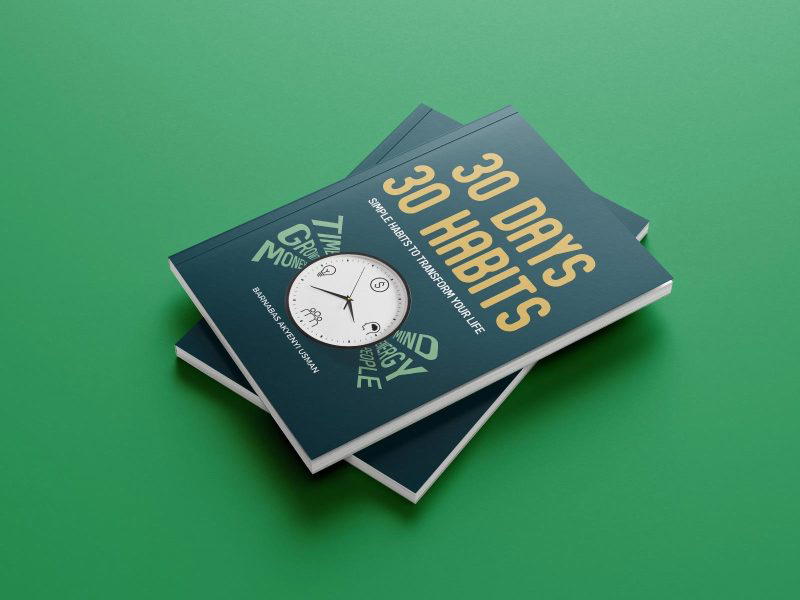
By Barnabas Akyenyi Usman
Every January, professionals step into the year with renewed ambition — sharper targets, tighter deadlines, and a determination to “outperform last year.” This ritual is useful, but it often places pressure on individuals to achieve more without addressing how they will sustain the daily discipline that performance requires.
As workplace expectations continue to rise in 2026, the conversation must shift.
Growth this year will depend less on dramatic change and more on the small, repeatable habits that
quietly strengthen our capacity to deliver consistently.
This is not an argument against hard work. Effort, resilience, and ambition remain fundamental to career success. But effort without structure often leads to fatigue, inconsistency, and a constant feeling of being overwhelmed. What professionals need in 2026 is not more pressure, it’s better systems. And systems
are built through habits: simple, intentional actions practiced daily.
This belief forms the core of my book, 30 Days 30 Habits, a collection of practical habits I have refined
across my journey from microbiology into the not-for-profit and social impact sector.
These habits were shaped by real-world demands: leading teams, managing complex programmes, and navigating the pressures that young professionals face today.
Three Habit Shifts That Will Define Professional Growth in 2026
As the pace of work accelerates, professionals can benefit from three critical categories of habits, each
grounded in simple practices rather than abstract theory.
- Habits That Create Ownership: Planning, Prioritisation, and Focus
One of the most effective habits I emphasize in the book is starting each day with a plan. This habit is anchored on a strategic thinking in layers — beginning with a monthly big-picture view, breaking that into weekly priorities, and finally translating those priorities into daily actionable steps.
At the start of each month, professionals benefit from pausing to identify the major outcomes they intend to achieve, the projects, deliverables, or personal milestones that align with their broader goals for the year. Once that clarity is established, those monthly objectives can be broken down into specific weekly targets that make progress measurable and manageable.
It is this structure that gives meaning to the daily plan.
When you begin each morning by identifying the three most important tasks for the day, you are not simply writing a to-do list, you are advancing a strategic chain of decisions that flows from your annual goals down to the present moment.
This approach reduces mental clutter, sharpens focus, and ensures that your effort each day is connected to something bigger. Starting the day with a plan becomes more than an organisational habit; it becomes a practical tool for alignment, direction, and intentional progress.
Equally important is the habit of deep work, the intentional practice of working without interruption on
tasks that require thinking, writing, or problem-solving. In an environment filled with notifications,
messages, and competing requests, deep work is no longer optional. It directly improves the quality of
deliverables and shortens the time required to complete complex work.
A third habit under this pillar is learning to say “no” when necessary. Not dismissively, but clearly and
respectfully.
Protecting your time is essential when your workload grows faster than your capacity. As I note in the book, every unnecessary “yes” dilutes your focus and delays important work.
- Habits That Build Financial Clarity
Professional growth is difficult to sustain when financial stress is constant. A challenge that persists
among many professionals is the lack of visibility over their spending. In Habit #8, Know Where Your Cash Goes, I encourage readers to track their expenses — not as a means of restriction, but as a way to clearly understand their financial behaviour.
When spending patterns become visible, decisions around saving, planning, and investing become more intentional and far less stressful.
With tracking comes clarity. And with clarity comes control. Individuals are better positioned to save,
plan, invest, or support their families responsibly.
It is a simple habit, but one that dramatically reduces financial anxiety and helps professionals make decisions confidently.
- Habits That Strengthen Consistency — The Foundation of Sustainable Growth
Consistency is the last habit in the book because it binds all other habits together. It is the practice of showing up even when motivation is low, even when the day is busy, and even when progress feels slow.
In 30 Days 30 Habits, I describe how consistent effort creates momentum and gradually transforms
capability.
A few minutes of learning every day builds more competence over time than occasional bursts of effort.
A short morning routine practiced daily brings more stability than an elaborate routine performed only on good days.
Weekly reflection prevents small mistakes from becoming recurring problems.
Consistency is not dramatic, but its impact is lasting.
A Personal Reflection
My own career journey from microbiology into leadership in the not-for-profit and social impact sector,
unfolded not through a single opportunity, but through daily practices: planning with intention, learning
consistently, reflecting weekly, and building networks with purpose. Over the years, these habits
strengthened my performance, shaped my leadership, and helped me navigate demanding roles in the
development space.
These experiences shaped the framework behind 30 Days 30 Habits, a book designed not as a
motivational text, but as a practical resource for professionals seeking more intentional growth.
An Invitation for 2026
Professionals do not need overwhelming resolutions this year.
They need small, manageable habits that support the demands of modern work. Start with one habit. Practice it for 30 days. Then add another. Growth will become less stressful and more deliberate.
As 2026 unfolds, the individuals who excel will not necessarily be those with the most ambitious goals,
but those with the habits that help them think clearly, work intentionally, manage pressure, and remain
consistent. Big growth rarely begins with big actions. It begins with small habits, practiced daily, with intention.
*Barnabas Akyenyi Usman, a development professional, and author of ’30 Days, 30 Habits: Simple Habits to Transform Your Life’, writes from Abuja.
Disclaimer
Comments expressed here do not reflect the opinions of Vanguard newspapers or any employee thereof.