
By UDO IBUOT
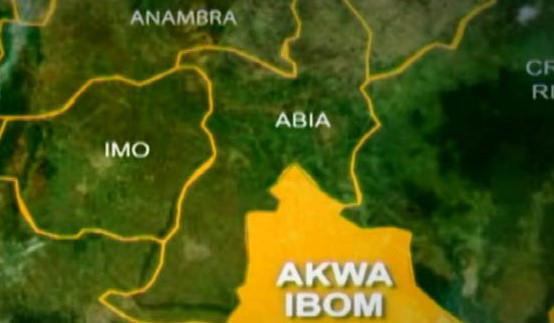
Some enchanting news from unexpected quarters heralded the sunset of the year 2025 in Akwa Ibom. The first was the report of an end to hostilities between Ibeno in Ibeno LGA and Esit-Urua communities in Eket LGA that was consolidated on December 6. The second was the brokering of the peace between youths of Ikot Akpan Udo/Itak Abasi conurbation in Ikot Abasi LGA and Amazaba in Eastern Obolo LGA on December 10. Both peace efforts apparently came after protracted attempts by the government had failed to achieve the desired result.
The initiative by leaders and stakeholders of Esit-Urua in Eket LGA reportedly began on November 22 and was consolidated on December 6 at the palace of the paramount ruler of Ibeno LGA, Owong (Professor) E. B. Achianga, who inaugurated the joint peace committee and also presided over the dialogue. The follow-up on December 6 saw the expansion of participation to 50 Esit-Urua stakeholders, which included the clergy, family heads, youths, and women leaders from the initial 15 members.
The participants endorsed a communique that mandated the committee to draft a memorandum of understanding to define modalities of the peace deal and communicate to the relevant authorities. The Esit-Urua Eket and Ibeno peace initiative possibly came as a result of the state governor, Pastor Umo Eno’s, threat that the government would bulldoze the Stubbs Creek for the Lagos–Calabar coastal highway that traverses the forest reserve.
However, while the Ibeno–Eket peace initiative appears to have followed traditional Ibibio cosmological procedures, the Ikot Akpan Udo/Itak Abasi conurbation-Amazaba communities’ initiative seems to have defied all known procedures. When the divine order for peace was proclaimed and executed at the Ikot Akpan Udo/Itak Abasi conurbation in August 2025, the imperative was that the chiefs, leaders, stakeholders, women and youths of the feuding Ikot Akpan Udo/Itak Abasi conurbation and the Amazaba communities should return to the negotiating table. The chiefs and leaders had abandoned the conurbation to seek refuge in other villages in the Ukpum Ete clan. They, therefore, did not recognise the urgency of the peace move, but the youths did and opened the frontiers. The concern, however, is with the youth’s primitive and fetish method of seeking to secure the peace.
The Ikot Akpan Udo/Itak Abasi conurbation and the Amazaba youths’ memorandum of understanding were observed on a Facebook video to consist of the reciting of incantations and sprinkling of salt water on these youths at the Iso Otoyo beach of the Ikot Akpan Udo River. No chief or elder from these communities was seen in the Facebook video, and this is irregular.
For sustainable peace to be achieved, a bottom-up negotiation has to be carried out with the chiefs, elders and stakeholders from the Ikot Akpan Udo/Itak Abasi conurbation, the clan head of Ukpum Ete and the paramount ruler of Ikot Abasi LGA on one side, and the chiefs, elders and stakeholders of Amazaba, with their paramount ruler on the other, in attendance. This is the acceptable approach that will produce the ultimate peace. Such gathering has the potential of producing the required agreement on the new location to resettle Itak Abasi villagers and to decide on how the Amazaba will live after the crisis.
Such a scheduled meeting is bound to provide an opportunity for interactions on how trust will be rebuilt after 18 years of unwarranted warfare, as well as the issue of compensation and rebuilding of the war-torn communities. If the necessary collaboration is not done, the expected trust will be difficult to exact from Ikot Akpan Udo/Itak Abasi citizens who have been at the receiving end of the attacks from the Amazaba terrorists of Eastern Obolo.
Previous efforts to secure the peace in the Ikot Akpan Udo/Itak Abasi–Amazaba communal crisis failed because government foisted an unjust, top-down memorandum of understanding that was rejected by the Ikot Akpan Udo/Itak Abasi conurbation. During the Governor Godswill Akpabio administration, former deputy governor Obong Nsima Ekere had, at a meeting in May 2012, directed that to drive the peace process, the state boundary committee should set up two committees.
These were the peace and reconciliation committee headed by Chief Effiong Eneyo and a boundary delineation committee led by the state surveyor general, Surveyor Okokon Essien. The clan head of Ukpum Ete and chairman of the Amazaba Council of Chiefs were to work with the surveyor general to delineate an acceptable boundary. Equally, a police station was to be established by the state police commissioner at a location that would be central to the feuding communities.
Although that initiative eventually led to the enactment and assent to the Akwa Ibom State Map Establishment Law of 2023, it failed to restore the required peace to the communities. Rather than establishing a centrally located police station as directed, the police withdrew their presence at the Ikot Akpan Udo/Itak Abasi conurbation. It is on record that following the absence of the government’s security apparatus, the Amazaba terrorists had launched 15 unprovoked attacks on Ikot Akpan Udo/Itak Abasi conurbation. A meeting was also held with Deputy Governor Ekere’s successor, Obonganwan Valerie Ebe, in January 2015 to solicit the government’s rebuilding of the Ikot Akpan Udo/Itak Abasi conurbation. The deputy governor dashed the hopes and aspirations of the conurbation’s citizens, when she declared that the state government was not considering any involvement in the rebuilding of the war ravaged area.
The Ikot Akpan Udo/Itak Abasi conurbation’s immediate response was that since the government was not willing to rebuild the conurbation and would not even defend the citizens that were under siege from the Obolo-directed violence, there was no need to ask for peace. That statement led to the freezing of all the initiatives until the administration of former Governor Udom Emmanuel reportedly used state security to arrest and force the village head of Ikot Akpan Udo to sign the rejected memorandum of understanding. The Udom Emmanuel administration later changed the narrative when it reportedly issued a white paper on the crisis and set up a white paper implementation committee headed by Professor Augustine Umoh. According to the former governor’s deputy, Moses Ekpo, “the government has taken serious steps that would lead to the provision of facilities that were destroyed in the area to enable the people to return to normal life.” The white paper implementation committee visited the Ikot Akpan Udo/Itak Abasi conurbation in July 2022 to “undertake a holistic review of the needs assessment for the development of the areas to make way for proper resettlement.”
In spite of the fence-mending effort, the issue of a new settlement for Itak Abasi village, earlier sacked from their homestead by the Obolos in search of a lebensraum, appeared to be strange to the ears of members of that team. A new settlement for Itak Abasi is one of the crucial issues that must be resolved before any other settlement is discussed. It is understood that the state governor is also desirous of sustainable peace in the Ikot Akpan Udo/Itak Abasi conurbation. Such peace can only be achieved through participatory communication approaches led by the chiefs, leaders and stakeholders of the two parties. A process that is anchored on fetish practices by the youths cannot stand in this age of enlightenment and Christianity, and the governor should not encourage or build sustainable peace on such practices.
•Dr. Ibuot, a journalist, wrote from Lagos.
Disclaimer
Comments expressed here do not reflect the opinions of Vanguard newspapers or any employee thereof.