
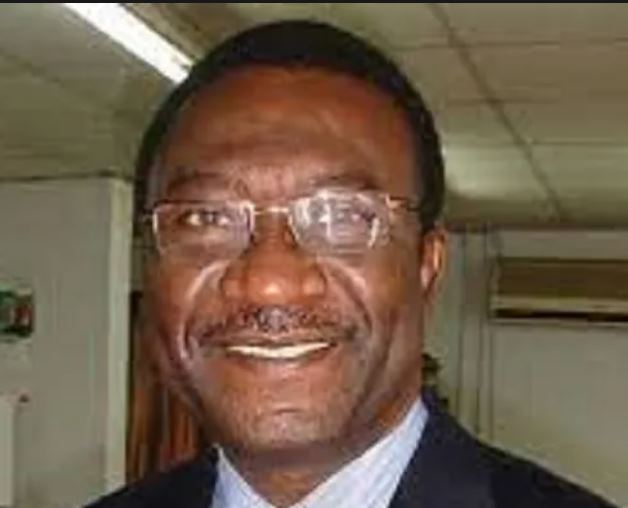
Prof Akin Osibogun
By Chioma Obinna
Nigeria’s heavy reliance on out-of-pocket payments to fund healthcare is pushing families into poverty, delaying care-seeking and fuelling the country’s grim health outcomes, Professor Akin Osibogun, a Professor of Public Health at the College of Medicine, University of Lagos, has warned.
Osibogun who is also a Fellow of the Nigerian Medical Association (FNMA), said an effective healthcare financing system must guarantee access to services without exposing citizens to financial hardship, stressing that Nigeria’s current model falls far short of this standard.
“If you have a financing system that runs families into poverty and makes life uncomfortable and miserable for them, that is not an ideal financing system.
“We should have a system that is progressive, one that allows people to pay for services and still have access to the care they need.”
Speaking on the state of Nigeria’s health system, Osibogun said global best practice is now anchored on Universal Health Coverage (UHC), which prioritises pooled resources and shared risks through health insurance, rather than direct payments at the point of care.
“When we talk about universal health coverage, we are talking about moving away from out-of-pocket expenditure to pooled resources and shared risks,.
“That is what health insurance is about, and there are different models of it.”
He, however, stressed that governments must not abdicate their responsibility to fund public health goods, especially in areas such as epidemic preparedness and disaster response.
“Governments must still finance the prevention of epidemics and pandemics, and the treatment of people affected by medical disasters,” he said.
Osibogun expressed concern that nearly 70 per cent of healthcare financing in Nigeria still comes directly from patients’ pockets, noting that countries where out-of-pocket payments dominate are consistently those with the worst health outcomes.
“Globally, the evidence is clear. Until you move away from this predominance of out-of-pocket payments to more progressive mechanisms like health insurance, you will not see drastic improvements in health outcomes,” he said.
He explained that direct payments force families into painful choices between healthcare and basic needs
“People have to decide whether to use the little money they have for healthcare, to pay house rent or to buy food.
“Most times, health is deprioritised. They wait until the condition has deteriorated before going to hospital, and by then the outcomes are poor.”
He said delayed care is a major contributor to the alarming maternal and child mortality figures.
“Pregnant women are not going for antenatal care or assisted delivery, and the outcomes are poor,” he said.“Our maternal mortality ratio is one of the highest in the world. Infant mortality is about 75 per 1,000 live births, while in Europe it is around three. Under-five mortality in Nigeria is about 125 per 1,000; in Europe, it is already in single digits.”
Osibogun, a Fellow of the Health Writers Association of Nigeria, HEWAN, said Nigeria has no justification for such figures.
“There is no reason why we cannot drastically move from triple digits to double or even single digits over time, if we plan properly.
“We train very good health workers in Nigeria. That is a plus. But it also puts us at a disadvantage because other countries are attracting them with better remuneration and conditions of service.”
He called for expanded training capacity and deliberate retention strategies. “We must train more and retain more. If you don’t put mechanisms in place to retain them, they will not stay,” he said, noting that even in the UK, some doctors are leaving clinical practice due to stress and poor work-life balance.
On health insurance, Osibogun argued that Nigeria’s approach remains too centralised and disconnected from citizens.
“The big work is in taking health insurance to the people. Community-based health insurance schemes that involve citizens in their management will build trust and confidence.”
Osibogun noted that countries like Rwanda, which started health insurance around the same period as Nigeria, have achieved over 60–70 per cent coverage, while Nigeria remains below 10 per cent.
“The difference is strategy,” he said.
“Community-based schemes require hard work—mobilising and empowering communities—but they deliver results. Staying at headquarters and running insurance centrally is the easiest thing to do.”
Osibogun expressed optimism that with the right approach, Nigeria could rapidly expand coverage.
“Within five years, we can achieve over 50 per cent coverage,” he said, adding that equitable financing remains the surest path to better health outcomes and social protection for Nigerians.
Disclaimer
Comments expressed here do not reflect the opinions of Vanguard newspapers or any employee thereof.