
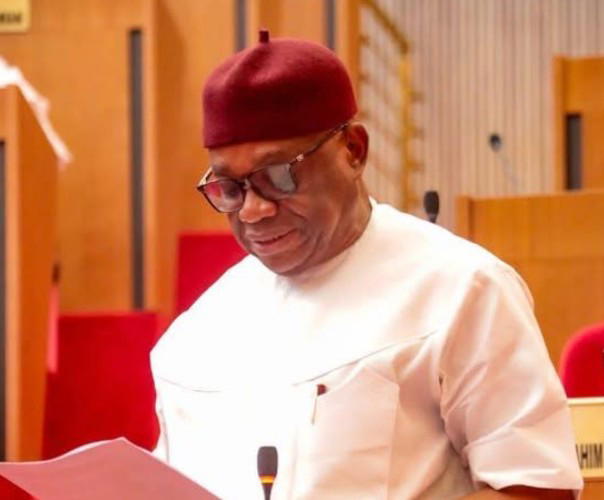
Following the Federal High Court’s judgment on Nnamdi Kanu in November 2025, reactions across the South-East have remained mixed. While some leaders chose silence and others responded emotionally, Senator Orji Uzor Kalu adopted a different approach, offering what he described as a frank and uncomfortable assessment of the situation.
The former Governor of Abia State has again positioned himself as one of the few Igbo leaders willing to speak openly on a sensitive regional issue. Rather than pursue popularity, Kalu said he preferred responsibility, even when commenting on a matter involving a figure from his own region.
Instead of focusing only on the legal dimensions of the case, Kalu drew attention to what he called the wider social and economic damage of the prolonged unrest in the South-East. He claimed that tens of thousands of Igbos may have lost their lives over the years of agitation, stressing that these were real people whose deaths had left enduring pain across communities.
He also spoke about the destruction of businesses and livelihoods linked to violence and illegal sit-at-home orders. As an illustration, he referred to a close friend of his mother — whose identity was not disclosed — a rice trader whose shop was allegedly looted during the unrest. According to Kalu, the losses forced her into bankruptcy and left her owing about ₦4.2 million. For him, this example showed how sit-at-home actions, initially presented as protest tools, ended up harming the same people they claimed to protect.
Kalu’s position has attracted attention because of the political risks attached to it. Nnamdi Kanu remains a sensitive figure in the South-East, yet the senator openly criticised what he described as unruly and unnecessarily aggressive conduct in court proceedings.
He contrasted this with his own experience during his corruption trial in 2019. Although he was sentenced at the time, he said he maintained respect for the judiciary, arguing that disagreement should never translate into contempt for the rule of law.
By speaking publicly, Kalu accepts the possibility of backlash that could affect public opinion, political ambition and even business interests. Nevertheless, he has insisted that the scale of destruction in the region should not be downplayed.
Beyond public commentary, Kalu has said he has worked quietly over the years to encourage a political solution to the crisis. He spoke of holding private engagements with the federal government and consistently advocating for a diplomatic and holistic approach rather than relying solely on court processes.
This, he noted, did not begin recently. During a visit to his Igbere home in 2019, he expressed a similar commitment to dialogue, indicating that his pursuit of peace dates back to the administration of former President Muhammadu Buhari.
Kalu has also said he was involved in persuading the Buhari administration to grant Kanu bail in 2017 and that he pushed strongly for political engagement on the matter when aligning with the APC. He added that he continues such efforts today through discussions with President Bola Tinubu and the Attorney-General, in search of what he described as a political pathway to peace.
Senator Orji Uzor Kalu is now urging restraint rather than emotional escalation. His appeal for people to “go on their knees,” he explained, is not a call for surrender, but for wisdom, dialogue and strategic negotiation over the future of the South-East.
At a time when many leaders speak mainly in popular terms, Kalu says his focus remains on the victims of the crisis, respect for the rule of law, and a peaceful resolution that has been years in the making.
Disclaimer
Comments expressed here do not reflect the opinions of Vanguard newspapers or any employee thereof.