
•Says only 152,000 enrolled in micro-pension scheme
•Pushes for state-backed pension, health cover
By Esther Onyegbula
The Federation of Informal Workers’ Organisations of Nigeria, FIWON, has warned that millions of Nigerians in the informal sector risk falling into old-age poverty due to the failure of the micro-pension scheme, urging federal and state governments to directly fund pension savings for informal workers.
FIWON said the existing arrangement, which depends largely on voluntary contributions by workers with unstable incomes, cannot provide meaningful retirement security. Speaking at the 2025 End-of-Year Get-Together of FIWON in Lagos, the General Secretary, Mr Gbenga Komolafe, said the exclusion of informal workers from social protection programmes remains one of Nigeria’s most critical labour challenges.
He stressed that social security is a fundamental right under international and domestic laws.


Although the micro-pension plan was introduced in 2018 to bridge the gap, Komolafe said it has failed to meet its objective.
“Informal workers are largely left on their own. Contributions are voluntary and based on convenience. Given the instability of informal work, low earnings and frequent economic shocks, the scheme cannot guarantee even minimal protection in old age,” he said.
He noted that evictions, loss of shops and destruction of livelihoods often wipe out workers’ savings, making government intervention unavoidable.
“We believe the government has an obligation to fund the pension savings of informal workers. This will boost confidence, encourage enrolment and ensure that people have something tangible to fall back on at old age,” Komolafe argued.
Citing a recent study conducted with a FIWON partner, he disclosed that only 152,000 people are enrolled out of an estimated 77 million informal workers nationwide. “This represents less than 0.2 per cent. Even more disturbing is that over 70 per cent of those enrolled have extremely low balances. This clearly shows that the government needs to do much more,” he said.
Komolafe also called for expanded universal health coverage for vulnerable informal workers, lamenting that many states have failed to utilise funds provided under the National Health Insurance Act. “People continue to die from preventable causes while the money is sitting idle. This is unacceptable,” he said, adding that subsidies are urgently needed for illnesses like cancer and diabetes.
On occupational safety, he said informal workers are exposed to hazardous conditions without protection, as laws such as the Employees’ Compensation Act largely exclude them.
He also condemned forced evictions, especially in Lagos, claiming over one million people have been affected in two decades.
“Evictions destroy homes, businesses, schools and lives. Government must invest more in social housing and ensure that alternative accommodation is provided whenever evictions are unavoidable,” he said. He criticised existing social protection programmes, including cash transfers, calling for a review of the National Social Protection Policy.
“We need deliberate, structured and sustainable interventions, not arbitrary handouts,” he said.
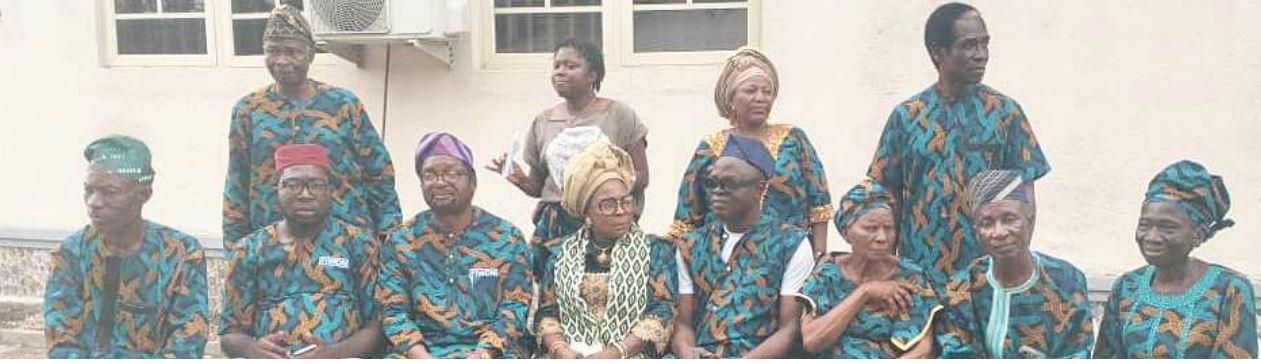
Earlier, FIWON Lagos Chairperson, Comrade Tiamiyu Margaret Olabimpe, said the event was to celebrate members and God’s grace, noting that many had benefited from training, networking and financial support.
“The impact on our members has been remarkable. Many have benefited from training, networking and financial support to scale up their businesses,” she said.
Disclaimer
Comments expressed here do not reflect the opinions of Vanguard newspapers or any employee thereof.