
By Osa Mbonu-Amadi, Arts Editor
Chukwudi Okoro’s “Black Water” and “Sea Life in a Bin”, blends of digital and traditional art, tell the story of survival amid environmental destruction. The subject is water, which is the most vital thing for all living things. Not just water; clean water is what we humans need to survive. But the problem comes when some people turn their taps on or dip their bowls into the river, and what comes out is black water, instead of clean water. The water is polluted.
The pollution is caused by oil exploration and extraction. Due to greed, the blessing of God to the community has become a curse.
This is not hypothetical; some people actually live in such conditions, like in Nigeria’s Niger Delta, and some other parts of the world with crude oil deposits.
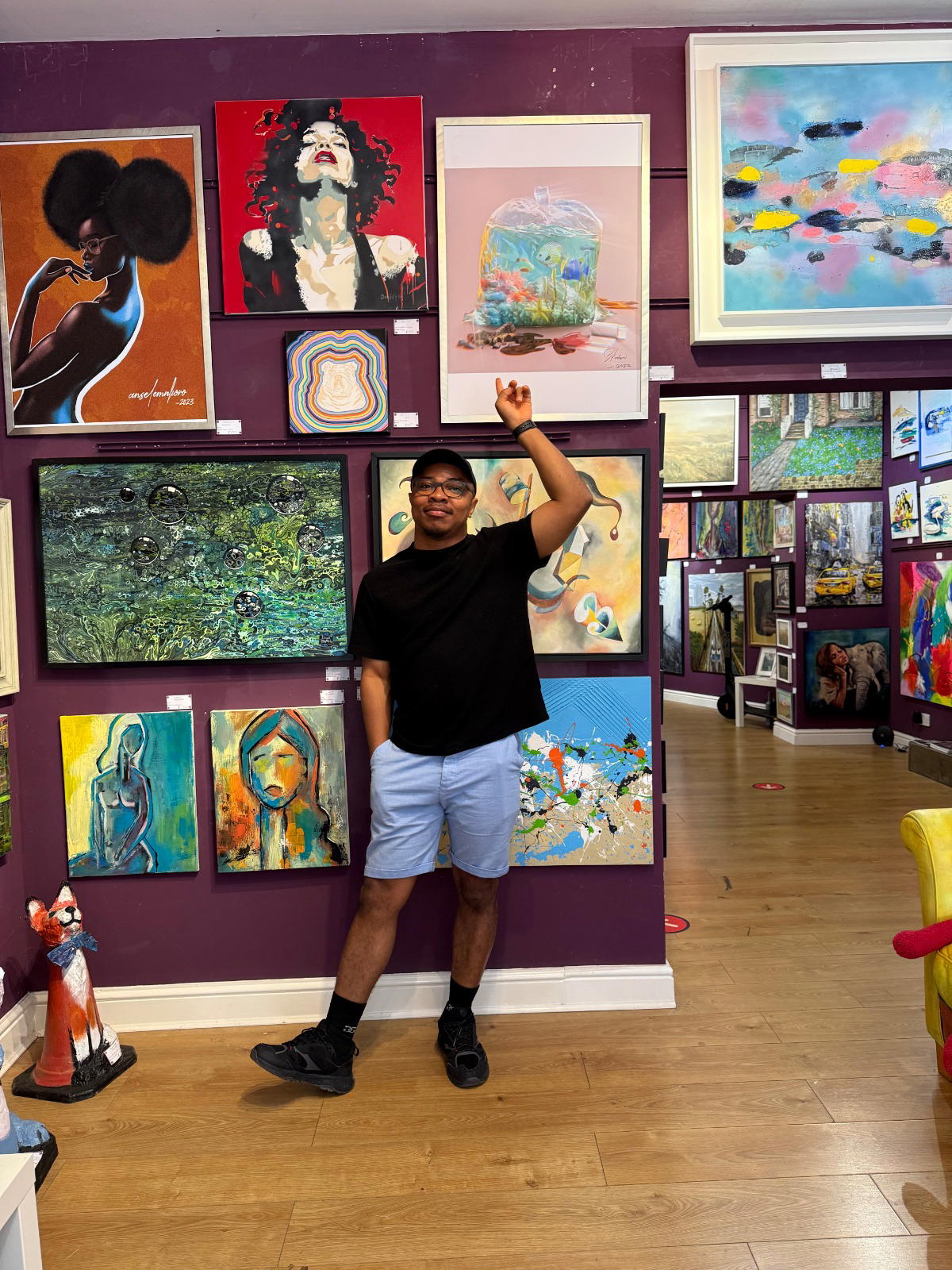
The UK-Nigerian multidisciplinary artist, Chukwudi Okoro, whose work borders on digital animation, motion design, and illustration, presented those two symbolic works titled “Black Water” and “Sea Life in a Bin” at the vibrant second edition of “Undiscovered”, held from October 11, 2025, at Thought Pyramid Art Centre, Benin City, Nigeria. In an exhibition that celebrated creativity and culture, Okoro’s compelling voice was irresistible, drawing viewers to witness bold expressions of identity and ecology, in line with his artist’s statement:
“As a multidisciplinary artist, I create with form, feeling, and movement to tell stories that reflect culture, change, and human experience. My process balances instinct with intention, blending traditional methods and digital tools. Moving between still and motion keeps me curious, while colour, shape, and rhythm let me share perspectives and connect with others.
“My practice explores sustainability, culture, inclusion, and identity, using bold colour, symbolism, and contemporary storytelling to reflect on community and the future we are shaping together in an increasingly digital world.”
“Black Water” and “Sea Life in a Bin” do not only draw attention to a big environmental problem, they also come with urgent environmental pleas.
“Black Water” (2025) arrests the viewer’s attention with its deep, dark ink strokes, suggesting rivers glazed by black oil and poisoned by industrial greed. Those who live in poor rural communities of Nigeria’s Niger Delta can relate to this picture and experience.
The dark, sombre colours the artist chooses as a vehicle to bring his message to life also speak to lives submerged by pollution. We see the slow drowning of ecosystems, where ancestral waters that have served generations gradually turn toxic.
Equally upsetting is Okoro’s “Sea Life in a Bin” (2022), where we see living fish, corals, and other aquatic life forms crammed into a discarded plastic garbage container and struggling inside it. This brilliantly composed work speaks against single-use plastic waste containers, which invariably end up in the oceans, where they threaten marine life.
At “Undiscovered”, Okoro’s contributions highlighted the overall aim of the exhibition, which is the unearthing of undiscovered talents within Nigeria’s booming art scene, especially in Benin City, where historic art meets modernity and innovation.
Together, these two works by Chukwudi Okoro form a pair, one of despair and the other of defiance, all narrating survival amid destruction. They echo Nigeria’s environmental burden, from oil spills to lagoons choked with plastic waste. But they also honour human endurance.
One thing, however, is certain: nature will fight back; nature always fights back. As we grapple with climate threats, Okoro’s art demands we take action, not just to witness it.
Disclaimer
Comments expressed here do not reflect the opinions of Vanguard newspapers or any employee thereof.