
By Marie-Therese Nanlong
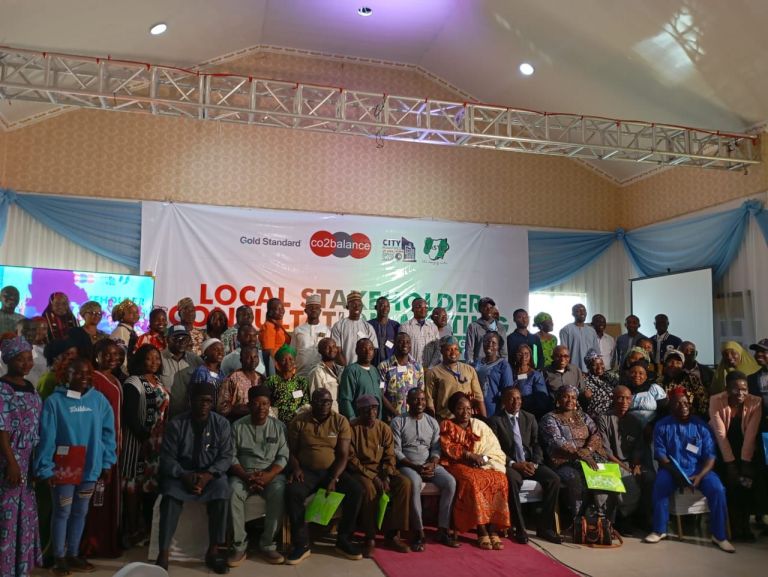
Jos – Stakeholders from government institutions, development agencies, civil society organisations and rural communities have deliberated on critical challenges bordering on water supply, sanitation, climate change and carbon sequestration, with a call for urgent, coordinated action to improve the quality of life of Nigerians.
The Local Stakeholders Consultative Meeting, organised by the Transfer of Appropriate Sustainable Technology and Expertise, TASTE Nigeria, City Ministries of EMS/ECWA, and CO2 Balance, attracted participants from nine Northern States of Plateau, Bauchi, Gombe, Kaduna, Adamawa, Nasarawa, Taraba, Niger, and Abuja.
Providing an overview of the initiative, Mr. Nuhu Chayi, Country Director of TASTE Nigeria, explained that the organisation’s Safe Water Carbon Off-setting Project focuses on carbon sequestration and ecosystem improvement while delivering clean drinking water to rural communities using low-carbon technologies.
He noted that the Jos meeting was the third stakeholders’ consultation organised by TASTE in four years.
Chayi highlighted recent national policy steps, including the establishment of the National Council on Climate Change and the approval of Nigeria’s Carbon Credit Framework in December 2025, which he said would attract climate investment and improve livelihoods.
He disclosed that TASTE Nigeria has conserved four natural forests in Plateau State and rehabilitated over 1,000 boreholes across project areas.
Also speaking, Lydia Shehu, the Director General of the SDGs Office, Bauchi State, and Focal Person for the African Union Development Agency–New Partnership for Africa’s Development (AUDA-NEPAD), described the meeting as timely.
She noted that climate change and rising carbon emissions have worsened water, sanitation and hygiene (WASH) challenges, particularly in rural areas.
“Water is critical for human survival. Rural communities, especially women and children, are the most affected. Most of the disease burden we face today is linked to poor hygiene and the lack of clean water,” she said, adding that access to safe water is central to achieving several of the 17 SDGs.
Yilkudi Kevin from the Plateau State Ministry of Water Resources and Energy, Mary Ashomsha from the ECWA women’s fellowship, Bukuru DCC, Abednego Dada, Project Statistician at the Plateau State Office of the Sustainable Development Goals (SDGs), and others described the forum as crucial to achieving meaningful development.
Dada stressed that consultation provides the direction required for impactful interventions, noting that development efforts without stakeholder input often lack focus.
“For any achievement to be made, there must be direction. Consultation gives us that direction. Nigerians deserve a better life than what we are currently experiencing,” Dada said.
He expressed optimism that discussions at the meeting would produce guiding policy and implementation strategies, urging partners to move beyond discussions to concrete action.
Benefiting communities’ representatives shared testimonies of improved access to clean water, reduced hardship and better health outcomes, while calling for sustained maintenance and stronger regulation to ensure access to clean water.
The meeting ended with technical breakout sessions and a shared resolve to translate recommendations into tangible benefits for rural communities.
Disclaimer
Comments expressed here do not reflect the opinions of Vanguard newspapers or any employee thereof.