
By Juliet Umeh
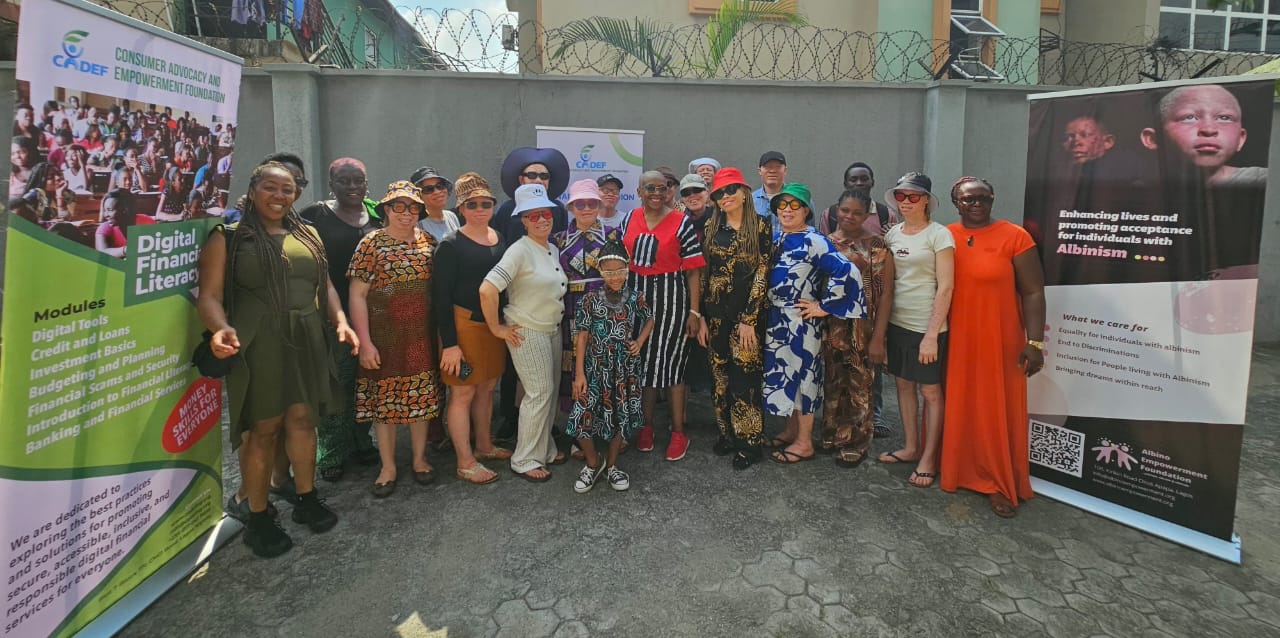
The Consumer Advocacy and Empowerment Foundation, CADEF, in partnership with the Albino Empowerment Foundation, on Saturday hosted an empowerment and listening session for Persons Living With Albinism, PLWA, aimed at amplifying their voices and addressing challenges affecting their wellbeing and inclusion in society.
Speaking at the event, CADEF’s Executive Director, Prof. Chiso Ndukwe-Okafor, stressed that real progress can only be achieved when people are respected and included, not pitied.
She said while relief items such as food, protective clothing, and materials for skin and eye care were distributed, the most impactful moments came from participants speaking for themselves.
“They reminded us that dignity begins when people are fully seen and treated equally,” she said, adding that self-awareness and knowledge of fundamental human rights are critical tools for self-advocacy.
According to her, understanding one’s rights equips individuals to demand fairness, inclusion and accountability — a principle CADEF upholds in its belief that an informed consumer is an empowered one.
On the broader meaning of inclusion, founder of the Albino Empowerment Foundation, Ifeoma Ngesina, said inclusion for persons with albinism is fundamentally about dignity and equal rights.
“It is about being seen, heard and involved in decisions that affect our lives, not being reduced to stereotypes or treated as weak simply because of our skin,” she said.
Ngesina noted that discrimination against persons with albinism is largely driven by myths and misinformation, worsened by limited public enlightenment. She added that when persons with albinism are included in schools, workplaces, leadership spaces and the media, harmful beliefs begin to fade.
According to her, inclusion goes beyond access to opportunities, as it builds confidence, nurtures leadership and reinforces the fact that every person, regardless of appearance, has value and potential.
Also speaking, CADEF Advisory Board member, Ms. Kobi Ikpo, urged participants to take ownership of how society relates to them.
“If you do not tell people how to treat you, they may not know how to address you,” she said, stressing that beyond complaints, experience-sharing, education and confident self-presentation are necessary. “Once you accept yourself as a complete human being deserving of respect, it reflects in how you carry yourself, and that confidence commands respect.”
Addressing family and social challenges, Afolake Odudinu highlighted how lack of parental enlightenment continues to affect children with albinism. She said many struggle academically, not due to lack of intelligence, but because visual impairment is often mistaken for dullness, leading some parents to withdraw their children from school.
She also raised concerns about health risks, recalling an encounter with a woman with albinism selling bottled water under the sun, with severe skin damage. According to her, access to skin cancer treatment remains out of reach for many Nigerians living with albinism.
Another participant, Efosa Peter, warned against insincere empowerment initiatives. He recounted joining an organisation that claimed to empower persons with albinism but later became politicised, with resources failing to reach intended beneficiaries.
“I don’t want pity; I want empowerment,” he said, urging leaders to ensure empowerment programmes are driven by genuine intentions. He stressed that confidence, self-development and self-esteem are key to overcoming discrimination.
Education also featured prominently in the experience shared by Rose Adudu, a teacher, who spoke of bullying during her school years, including from teachers. She said academic excellence and discipline helped shape her future and now guide her mentorship of younger persons with albinism.
Adudu also shared her advocacy efforts to enrol a young girl with albinism in school, noting that although the child was later withdrawn by her parents, the engagement led to increased support staffing.
In their closing remarks, organisers encouraged participants to leverage digital platforms to educate the public and challenge harmful myths.
CADEF disclosed plans to make the programme an annual event and said it is advancing work on Digital Financial Inclusion Rights for Persons With Disabilities.
Participants agreed that persons living with albinism do not seek sympathy, but opportunities, understanding and respect, noting that meaningful inclusion begins when society listens with purpose.
Disclaimer
Comments expressed here do not reflect the opinions of Vanguard newspapers or any employee thereof.