
By Josephine Agbonkhese
Where Light Learns Our Faces, the just concluded private exhibition by Mavic Chijioke Okeugo at The African Centre, emerged as one of the season’s most quietly commanding photographic presentations.
Through an uncompromising yet tender approach to portraiture, Okeugo offered audiences a rare opportunity to engage with images that prioritise presence over performance and depth over immediacy.

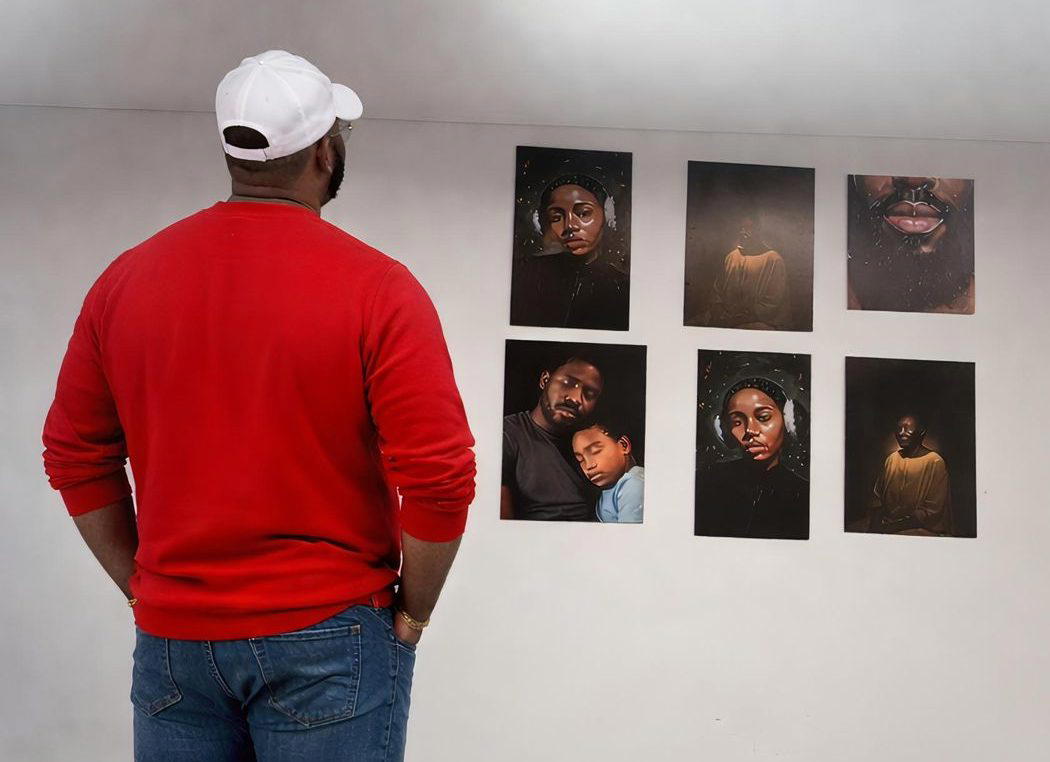
The exhibition brought together a concise but powerful body of photographic works centred on Black interiority, familial bonds, and solitary reflection. Okeugo’s portraits are marked by an intentional stillness faces meet the camera without demand, spectacle, or explanation. Instead, viewers are invited into a slower encounter, one where light functions not as a tool of exposure, but as a patient witness.
Across the installation, lighting is restrained and deliberate, sculpting faces from shadow with an almost devotional care. The absence of distraction amplifies the emotional weight of each image: a child resting against a parent, a figure seated in contemplative silence, a tightly framed detail that transforms skin and gesture into sites of narrative. These works resist the extractive gaze, insisting on mutual respect between subject, artist, and viewer.
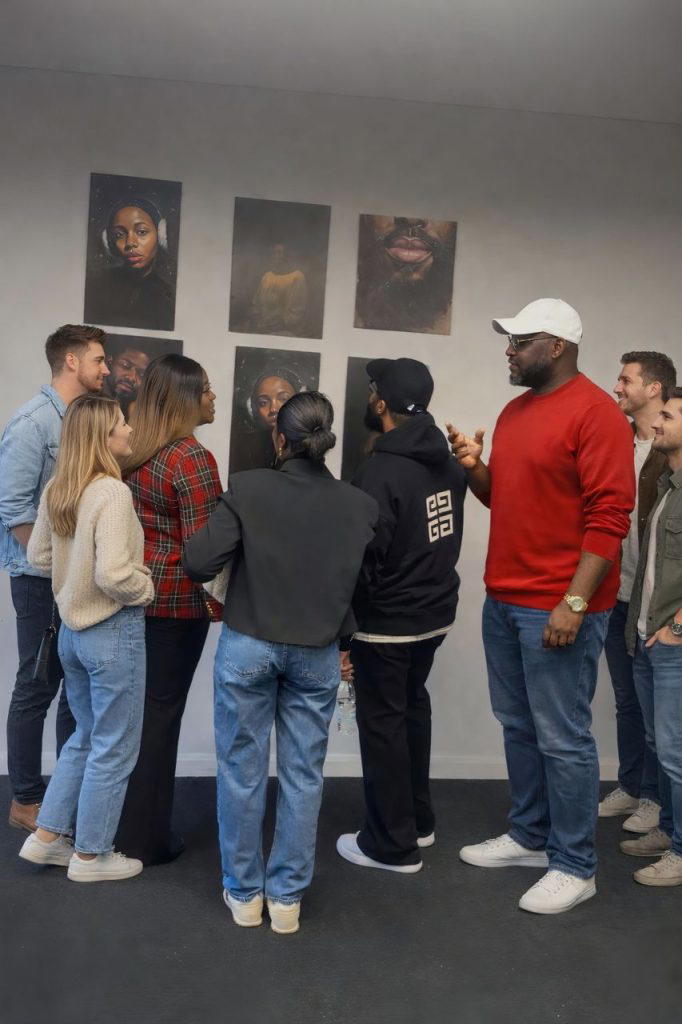
Audience response during the Private View reflected the exhibition’s emotional gravity. The gallery space fostered sustained looking and thoughtful conversation, underscoring the work’s ability to slow time and create meaningful engagement. Rather than overwhelming, the exhibition lingered its impact unfolding through quiet recognition.
Where Light Learns Our Faces stands as a critical intervention in contemporary portrait photography. Okeugo’s practice challenges dominant visual economies by foregrounding care, consent, and attentiveness, offering a model of representation rooted in dignity and emotional truth.
With this exhibition, Mavic Chijioke Okeugo affirms his position as an artist deeply invested in the ethics of seeing. Where Light Learns Our Faces concludes not simply as an exhibition, but as a statement one that reasserts portraiture’s capacity to hold memory, honour humanity, and demand that we look again, more carefully.
Disclaimer
Comments expressed here do not reflect the opinions of Vanguard newspapers or any employee thereof.