
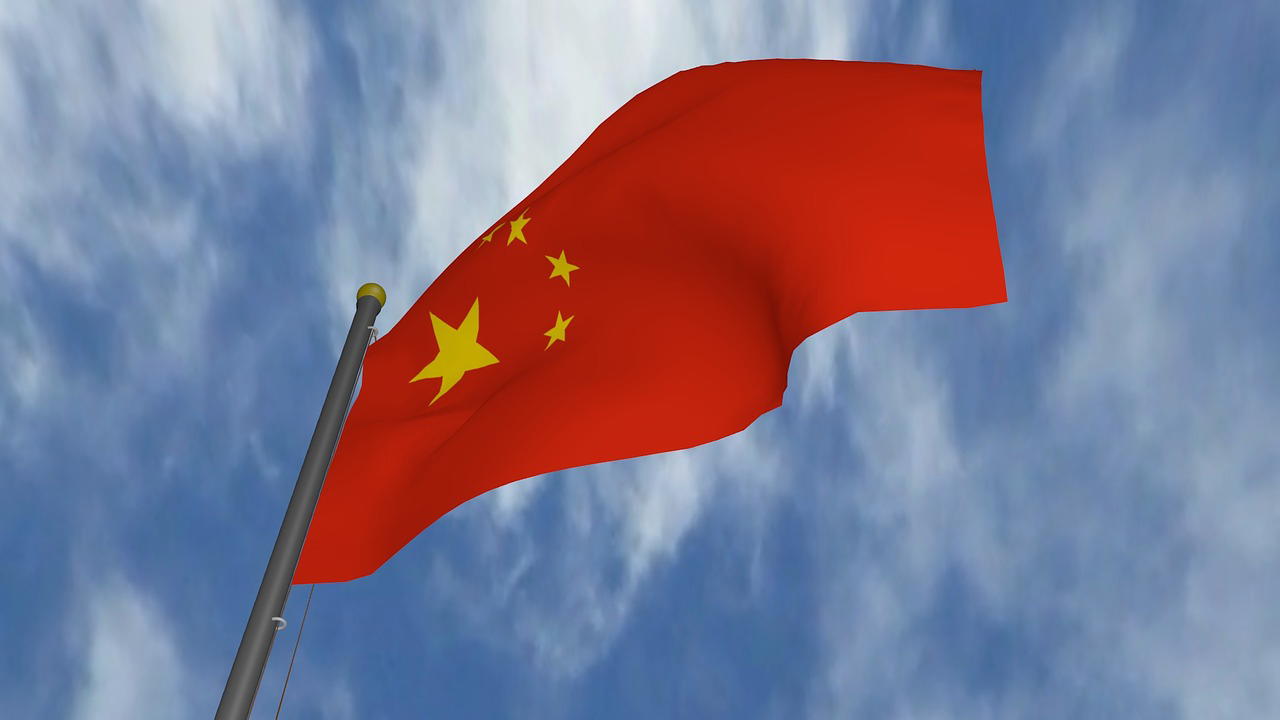
China’s flag
By Soni Daniel & Favour Ulebor
For more than three decades, one quiet but consistent diplomatic ritual has shaped China’s engagement with the world: every January, Africa becomes the first overseas destination of China’s foreign minister.
In 2026, that tradition continues for the 36th consecutive year, as China’s Foreign Minister, Mr Wang Yi, embarks on a tour of four African countries Ethiopia, Somalia, Tanzania and Lesotho underscoring Africa’s enduring place at the heart of Chinese foreign policy.
From January 7 to 12, Wang Yi, who is also a member of the Political Bureau of the Communist Party of China Central Committee, is visiting the four countries at the invitation of their governments.
Beyond the bilateral engagements, the visit carries wider symbolism. It coincides with preparations for the 70th anniversary of diplomatic relations between China and African countries and comes at a time when both sides are seeking to deepen cooperation amid shifting global power dynamics.
Africa’s place as the first stop of China’s top diplomat each year is not accidental. Chinese officials have repeatedly described the tradition as a reflection of mutual respect, solidarity with the Global South and recognition of Africa as a key partner in China’s long term diplomatic vision. Over the years, the practice has evolved from symbolism into substance, with each visit producing concrete outcomes in trade, infrastructure, health, peace and people to people exchanges.
This year’s tour is particularly significant. During his stay in Addis Ababa, Ethiopia, Wang Yi attended the launch of the 2026 China Africa Year of People to People Exchanges at the headquarters of the African Union.
The initiative, jointly agreed by Chinese President Xi Jinping and African leaders, is designed to deepen cultural, educational, youth, media and civil society ties, strengthening what both sides describe as the social foundation of China Africa relations.
Speaking at the launch, Wang Yi conveyed a congratulatory letter from President Xi, in which the Chinese leader stressed the importance of mutual learning among civilizations and people centered cooperation as drivers of modernization.
Wang noted that people to people exchanges form the most solid foundation of China Africa friendship and the strongest driving force for long term cooperation.
The timing of the visit also reflects the momentum generated by the Forum on China Africa Cooperation FOCAC.
At the 2024 FOCAC Summit in Beijing, China and African countries agreed to build an all weather China Africa community with a shared future for the new era. Since the establishment of FOCAC in 2000, the platform has become the backbone of China Africa engagement, translating political goodwill into large scale development projects.
Chinese involvement in Africa’s infrastructure sector remains one of the most visible outcomes of this cooperation.
Over the years, Chinese companies have helped African countries build or upgrade more than 10,000 kilometres of railways, nearly 100,000 kilometres of roads, close to 1,000 bridges and about 100 ports.
These projects have played a major role in improving connectivity, supporting trade and accelerating economic integration across the continent.
Economic ties between China and Africa have also reached new heights. From January to November 2025, China Africa trade volume surpassed 300 billion dollars for the first time, with China retaining its position as Africa’s largest trading partner for 16 consecutive years.
Beyond raw materials, trade is increasingly expanding into manufacturing, digital economy, agriculture processing and green industries, reflecting efforts on both sides to move up the value chain.
A major boost to African exports came with China’s decision to grant zero tariff treatment on 100 percent of tariff lines to all least developed countries with diplomatic relations with China, including 33 African nations, from December 1, 2024.
This was later expanded to cover 53 African countries, marking the largest market opening in the history of China Africa trade. For many African producers, the policy has already translated into wider access to the Chinese market for products such as coffee, cashew nuts, chili peppers and agricultural goods.
Beyond economics, peace and security have emerged as key pillars of cooperation. For decades, insecurity, terrorism and political instability have hindered development in parts of Africa.
At the 2024 FOCAC Summit, China elevated support for Africa’s peace and security to a top priority, announcing programmes to train more than 6,000 African professionals in security related fields over three years and to strengthen support for the African Union and regional bodies.
This approach, Chinese officials argue, reflects the belief that development cannot thrive without security and that lasting security must be built alongside development.
It also aligns with Africa’s Agenda 2063, which emphasises African led solutions to African challenges. Subsequent meetings have focused on translating these commitments into practical cooperation in peacekeeping, counter terrorism and maritime security.
Health cooperation is another area where China Africa relations have deepened. Lessons from the COVID 19 pandemic prompted both sides to move from emergency response to long term health system strengthening.
Joint public health laboratories are now operating in several African countries, including Nigeria, Ethiopia, Kenya, South Africa and Senegal, while training programmes and telemedicine initiatives are expanding access to healthcare, particularly in rural areas.
At the global level, China and Africa continue to align on issues of multilateralism, development finance, climate justice and reform of global governance institutions.
Africa’s hosting of the G20 Summit in 2025 for the first time was widely seen as a milestone in the continent’s growing global influence. During the summit, China and South Africa jointly launched an initiative to support modernization in Africa, reaffirming support for development paths suited to national conditions.
Against this backdrop, Wang Yi’s visit to Ethiopia, Somalia, Tanzania and Lesotho serves as both a reaffirmation of long standing ties and a signal of future intent. African leaders have consistently welcomed the tradition of China’s foreign minister choosing Africa as his first destination each year, describing it as evidence of sincerity and respect.
This tradition has evidently elevated Chinese love, respect and admiration for Africa beyond mere rhetorics and drawn the Asian country and it leadership closer to the hearts and minds of Africans.
This symbiotic relationship speaks volume and paves the way for enduring peace, economic and social integration.
Disclaimer
Comments expressed here do not reflect the opinions of Vanguard newspapers or any employee thereof.