
Highlights urgent need for locally tailored approaches to address Acid Mine Drainage and groundwater pollution
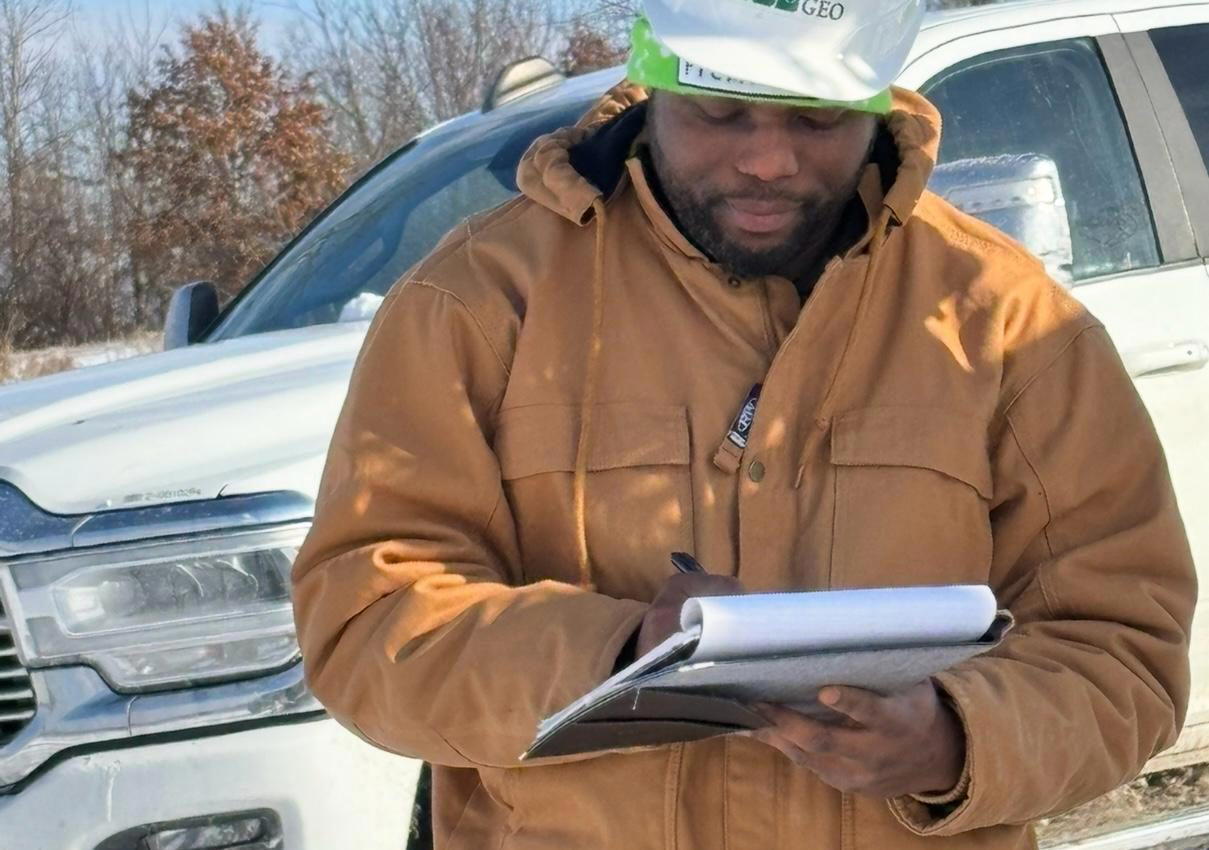
Bright Osuagwu, a U.S.-based registered environmental professional and geophysicist, has called for stronger, locally informed strategies to address escalating environmental and public health risks in mining communities, particularly those affected by Acid Mine Drainage (AMD) in Africa and the United States.
Osuagwu, whose work spans major sedimentary basins including the Permian, Anadarko, Haynesville, Powder River, and West and East African Basins, has built a career at the intersection of geophysics, environmental sustainability, water security, and infrastructure resilience. His research focuses on applying advanced geophysical technologies and geotechnics to understand and mitigate AMD-induced groundwater pollution and associated geohazards.
In Nigeria, Osuagwu has carried out notable research and project work in Edo and Ebonyi States, where mining-related AMD has significantly impacted groundwater resources. By integrating electrical resistivity and electromagnetic geophysical methods, he successfully identified AMD generation zones and subsurface contaminant flow paths in sulphide-rich tailings piles. This approach helped improve prediction of contaminant plume transport, reduce remediation costs, and support early groundwater pollution control measures.
According to Osuagwu, environmental risks in African mining regions are often more severe due to weak regulatory enforcement, artisanal mining practices, deforestation, and widespread heavy metal contamination. While countries like the United States benefit from structured environmental regulations, hazard mapping, and emergency response systems, many African nations struggle with governance gaps and limited technical capacity.
“Acid Mine Drainage is not a sudden disaster—it is a slow, persistent environmental threat that can take decades to fully manifest,” Osuagwu said. “By the time contamination reaches major aquifers, the social, economic, and health impacts on communities are already profound.”
He emphasized that many global geoscience and environmental solutions deployed in Africa are poorly aligned with local realities, often overlooking indigenous knowledge and socio-economic conditions. Osuagwu advocates strengthening local institutions and combining traditional knowledge with modern geophysical and environmental technologies to develop sustainable, community-centered solutions.
Osuagwu also highlighted the political and economic challenges surrounding AMD remediation, noting that mining revenues often take precedence over environmental protection. High remediation costs, weak enforcement of mining laws, and poverty in host communities further complicate effective intervention. He stressed that prevention must be prioritized over remediation, as cleanup efforts are expensive and frequently insufficient to address long-term impacts.
Drawing from his education and professional experience in both Nigeria and the United States, Osuagwu brings a dual perspective that bridges advanced technological training with deep contextual understanding of local environmental challenges. He continues to advocate for targeted research, cross-border collaboration, mentorship, and policy reforms that promote environmental justice and sustainable resource management.
“As environmental professionals, we must recognize that issues like AMD are not purely chemical or technical problems,” he noted. “They are deeply connected to human survival, food security, and social stability. Effective solutions must reflect the lived realities of affected communities.”
Osuagwu concluded that addressing environmental degradation in mining regions requires coordinated action across disciplines, sectors, and borders. By integrating science, policy, and local knowledge, he believes it is possible to protect water resources, strengthen community resilience, and build a greener, more sustainable future without leaving vulnerable populations behind.
Disclaimer
Comments expressed here do not reflect the opinions of Vanguard newspapers or any employee thereof.