
By Henry Ojelu
Speakers at the 6th Lagos Waste Forum have declared Nigeria’s waste sector a major economic frontier capable of driving jobs, innovation and sustainable growth, insisting that the country must urgently move from seeing waste as a burden to treating it as a strategic resource.
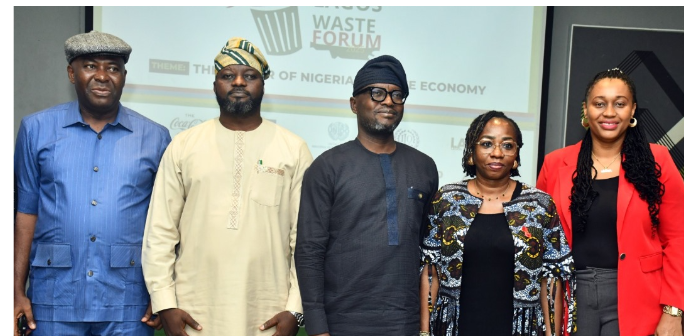
The forum, held at Radisson Blu, Ikeja, brought together government officials, industry leaders, development partners and environmental advocates under the theme “The Power of Nigeria’s Waste Economy.”
The forum was organised by SWEEP Foundation NG and co-sponsored by UNIDO, the European Union and Coca-Cola Nigeria.
Representing Governor Babajide Sanwo-Olu, the Special Adviser on the Environment, Mr Olakunle Rotimi-Akodu, said Lagos was deliberately positioning itself as the engine room of Nigeria’s circular economy.
“Lagos generates enormous volumes of waste, but within that reality lies a powerful economic opportunity.With the right structure, innovation and entrepreneurial intelligence, waste becomes wealth,” he said.
He pointed to sustained government investments, progressive policies and strategic partnerships that are shifting the state away from crude waste disposal to modern systems anchored on recycling, resource recovery and green jobs.
“LAWMA, working closely with the private sector, is building an integrated framework that places Lagos at the centre of circular economy innovation,” Rotimi-Akodu added, reaffirming the state government’s commitment to reforms that turn waste into economic resilience.
In his welcome address, President and CEO of SWEEP Foundation NG, Ambassador Obuesi Phillips, was blunt about the scale of opportunity being wasted across the country.
He said; “Nigeria’s waste sector remains largely untapped. What many still call dumpsites are, in reality, waste mines capable of feeding raw materials back into productive value chains.”
Phillips called for deliberate enabling policies, access to affordable finance through instruments such as a dedicated Green Bank with single-digit interest rates, and ultimately the creation of a Ministry of Waste Resources to match Lagos’ leadership in recycling and environmental innovation.
Delivering the forum lecture, Ogun State Commissioner for the Environment, Dr Ola Oresanya, warned that Nigeria’s environmental problems cannot be solved by declarations alone.
“Policy without research, innovation and evidence-based solutions will not deliver results,” he said, stressing the need for capacity building at all levels of government and the development of a technically skilled environmental workforce.
In the keynote address, a representative of the Food and Beverage Recycling Alliance (FBRA) laid out hard numbers behind the opportunity.
Nigeria, he said, produces about 32 million tonnes of waste annually, with plastics accounting for roughly 13 per cent.
Quoting the Federal Government and UNDP’s Imagine Nigeria report, he noted that the green economy could unlock up to $250 billion in value, adding that Lagos alone generated about ₦18 billion from recycling activities in 2021.
“Circularity is no longer optional,” he said. “It is a strategic pathway to jobs, innovation and environmental protection.”
Participants also examined financing for circular enterprises, waste-to-wealth entrepreneurship, women’s leadership in environmental governance, packaging innovation and alignment with global sustainability standards.
The forum ended with a strong consensus that Nigeria must prioritise financing, technology adoption, capacity building and community engagement to unlock a climate-smart, resource-efficient and economically vibrant waste ecosystem.
Disclaimer
Comments expressed here do not reflect the opinions of Vanguard newspapers or any employee thereof.