
By Ibrahim Hassan-Wuyo
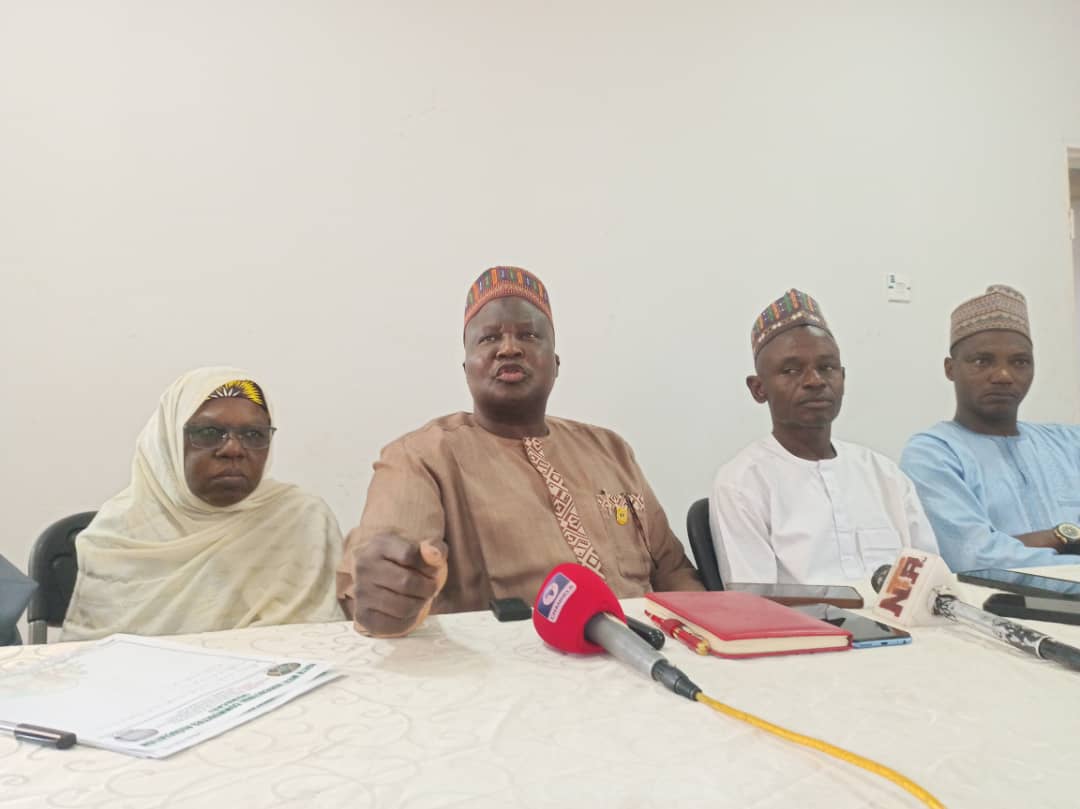
Kaduna — The Chairman of the Board of Trustees of the North West Agricultural Commodities Association (NOWACAS), Alhaji Shuaibu Idris Mikati, has raised the alarm over the dire situation facing Nigerian farmers, warning that rising input costs and collapsing farm-gate prices are threatening livelihoods and national food security.
Speaking at a press briefing in Kaduna on Tuesday, Mikati noted that while food prices appear high in naira terms, a closer look at foreign exchange dynamics reveals a much bleaker reality.
“Before the Buhari administration, a bag of rice sold for between N15,000 and N17,000. Today, it can go for as high as N50,000. But when you index these prices in dollar terms, N50,000 today is actually cheaper than N17,000 was then. As statisticians, we must compare apples with apples,” he explained.
The NOWACAS chairman acknowledged efforts by the Tinubu administration to stabilise the economy but stressed that recent policies, coupled with long-standing structural challenges, have worsened hardships for farmers.
“Farmers who bought a bag of NPK or urea fertilizer for close to N100,000 are now forced to sell a bag of maize for just N30,000 or less. The pain is enormous and unbearable,” Mikati lamented.
He highlighted the widening gap between input costs and produce prices, noting that while farmers once exchanged one bag of maize or rice for a bag of fertilizer, today it takes two to three bags of produce to afford a single bag.
“This raises a fundamental question: where are the bags of maize that farmers are supposed to sell to buy fertilizer for the next planting season? Without inputs, food production will decline, threatening national food security,” he warned.
Mikati also criticized government policies that allow cheap imports of agro-commodities without a guaranteed minimum price to protect local farmers. “Imported commodities are depressing local prices, yet nothing is being done to shield Nigerian farmers from losses,” he said.
He urged the National Assembly to fast-track the National Trust Receipt (Warehouse Receipt) Bill, which has been pending for nearly a decade. Mikati said the bill would allow farmers to use warehouse receipts as collateral, improve access to credit, encourage the establishment of insured warehouses, and stimulate the broader agricultural value chain.
The NOWACAS chairman further faulted the suspension of agricultural finance interventions due to past abuses, arguing that blanket bans unfairly penalize genuine farmers. “Can any farmer borrow from a commercial bank at 36 percent interest and survive? The answer is no,” he said.
He called on the Central Bank of Nigeria (CBN) to channel agricultural interventions through the Nigerian Agricultural and Cooperative Development Bank, citing its nationwide reach and sector-specific expertise.
Mikati concluded by affirming NOWACAS’s readiness to partner with governments at all levels to develop practical policies capable of reviving the agricultural sector. “Food security is not optional. Nigeria must be able to feed itself, and farmers are ready to engage constructively to make this a reality,” he added.
Disclaimer
Comments expressed here do not reflect the opinions of Vanguard newspapers or any employee thereof.