
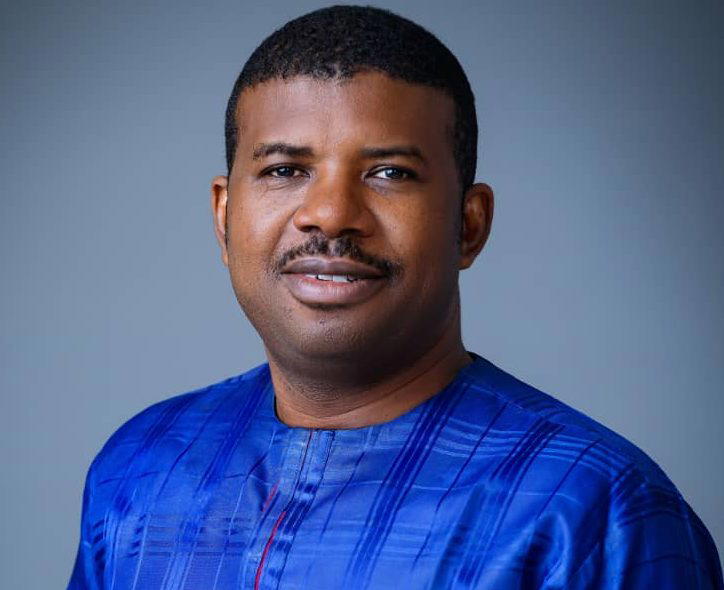
Atiemoria C. Ebhodaghe is a Doctoral Researcher specialising in Business, Finance, and Law, and serves as the Lead Strategist at Acepontis Limited. A maritime professional with over ten years of experience, he previously managed large commercial fleets at Starzs Investments under the mentorship of Engr. Greg Ogbeifun. Now based in the UK, Ebhodaghe is bridging the gap between academic theory and practical operations, advocating for data-driven reforms to boost Nigeria’s competitiveness in the global energy sector. In this interview, he explains what redefines Nigeria’s upstream logistics sector and the expectations that shape its operations and other sundry issues surrounding the industry. Excerpt:
Your company, ACEPONTIS Limited, operates in two key sectors of the economy, the Maritime and Energy sectors. What is the reason behind this choice?
The reason is strategic necessity. In Nigeria, you cannot separate Upstream Energy from Maritime logistics—they are two sides of the same coin. Most of our nation’s exploration and production (E&P) occurs offshore. ACEPONTIS was established to bridge that specific gap: providing the essential offshore logistics support that IOCs and NOCs need to keep their rigs and platforms operational. We chose this niche because the upstream sector does not just require ‘transport’; it demands precision, safety, and 100% reliability, which is where our core expertise lies.
How long have you been in operation, and what would you say is the impact of the company on the country and its economy?
ACEPONTIS is a relatively young company built on more than a decade of hands-on experience in offshore logistics and the maritime domain. Our impact is reflected in the efficiency mindset we bring into upstream logistics, especially in the offshore sector where supply chain delays have significant financial implications. By applying structured, high-reliability operational frameworks, our work contributes to reducing downtime risks and improving service continuity for operators. As we scale, our focus remains on supporting a more efficient, responsive, and globally competitive offshore ecosystem for Nigeria.”
Between the Maritime and Energy sectors, which do you consider your first choice and why?
Maritime is the vehicle, but Energy is the driver. My foundational expertise is in Maritime, but specifically as an enabler for Energy. You cannot operate effectively in the offshore space without mastering or understanding maritime technicalities, vessel operations, and safety compliance. So, while our services ultimately support the Energy sector, we do so through Maritime excellence- a philosophy reinforced by my current doctoral research, which focuses on optimising this very intersection, albeit in the port sector.
What is your assessment of the Maritime industry in Nigeria today? Should it be done to improve its performance?
The industry is resilient but remains structurally challenged by inefficiencies. This is actually the focus of my current PhD research: ‘Transforming Congestion into Competitiveness. While ACEPONTIS operates offshore, we understand that supply chains still rely on the ports. When ports are congested, it delays the movement of critical technical equipment to offshore fields. To improve performance, we need to treat our ports as strategic gateways for energy security, ensuring that E&P cargo is fast-tracked through automated, transparent clearing processes.
What is the plan for ACEPONTIS to become a key player in the industry?
Our growth strategy is centred on specialisation. That means, instead of attempting to cover the entire maritime spectrum, we are deliberately focused on the upstream logistics segment, where precision, compliance, and technical competence are non-negotiable. We aim to position ourselves as a dependable partner within the offshore value chain by combining strong local operational understanding with globally benchmarked strategic practices. As industry requirements evolve, we are investing in capability building, research-driven frameworks, and strategic collaborations that strengthen our relevance to operators and regulators alike.
What are the unique selling points of ACEPONTIS Ltd?
Our unique strength lies in the fusion of operational discipline and strategic insight. I began my professional maritime journey at Starzs Investments Company Limited, where I gained valuable exposure to the technical and compliance demands of the maritime and offshore sector. I am grateful for the opportunity to have learned in an environment that emphasised safety, integrity, and high standards under Engr Greg Ogbeifun, a visionary who taught me most of what I know and am now building on. At ACEPONTIS, we have built on those foundations, integrating them with the modern strategic frameworks and analytical tools I am developing through my doctoral research. This gives our clients a blend of proven industry practice and forward-looking strategy.
What is your main concern about the industry today, and how can it be resolved?
My main concern is the disconnect between Policy and Operations—but I must first acknowledge that we are witnessing a genuine maritime renaissance. The current administration through the Ministry of marine & blue economy has moved beyond rhetoric to action. Nigeria’s return to the IMO Council (Category C) after a 14-year absence is a major diplomatic victory. Furthermore, President Tinubu’s signing of six key IMO instruments of accession in late 2024—clearing a decade-long backlog—proves we are now getting serious about global compliance. When you combine this with the NUPRC’s push to slash contracting cycles to 6 months, the aggressive implementation of the PIA, and our delisting from the piracy ‘Red List,’ the momentum is undeniable. However, my concern is ensuring these high-level wins trickle down to the daily reality of the operator. While we are winning in London at the IMO, we need to ensure the operator in Warri, Port Harcourt, Bonny, etc, faces fewer bottlenecks. The resolution lies in Data-Driven Implementation and collaboration. The regulators, operators and host communities must sit at the same table to ensure our domestic ease of doing business matches our elevated global status.
As a service provider, what are your challenges operating in Nigeria?
The primary challenge is Asset Availability and Financing. The offshore sector requires highly technical, capital-intensive vessels, and accessing the capital to acquire them in a high-interest environment is a significant hurdle for indigenous players. This is exactly why we need to unlock Cabotage fully. Can you imagine the transformative impact a pragmatic disbursement of the CVFF would have? It would be the catalyst that allows Nigerian firms to move from being agents to being asset owners. In the interim, however, Acepontis navigates this by leveraging strong relationships with technical partners. Our model at Acepontis is intentionally an ‘asset-light, strategy-heavy’ business model—focusing on operational efficiency and technical compliance, while collaborating with partners to secure the physical assets.
What do you think can be done to improve the sector?
The answer is collaboration, not just competition. There is often a tendency for indigenous players to fight over the same small slice of the pie, rather than working together to bake a bigger one. I am a firm believer in the quote: ‘A candle does not diminish by lighting another candle.’ If indigenous firms collaborate—sharing assets, technical expertise, and market intelligence—we can collectively build the capacity to handle the complex deep-water logistics that are currently dominated by foreign multinationals. The Renaissance Consortium’s acquisition of Shell’s onshore assets is a powerful example of the potential of collective strength. It proves that when indigenous players aggregate their capacity, they can accomplish more. We need to light each other’s candles to illuminate the whole industry.
What is your assessment of the Nigerian business environment?
It is a high-risk, high-reward environment. For the upstream sector, stability is key. To improve the business environment, we need fiscal policy continuity and a strengthened security infrastructure in the Niger Delta. If we can guarantee asset safety and contract predictability, Nigeria remains the most attractive energy investment destination in Africa.
Disclaimer
Comments expressed here do not reflect the opinions of Vanguard newspapers or any employee thereof.