
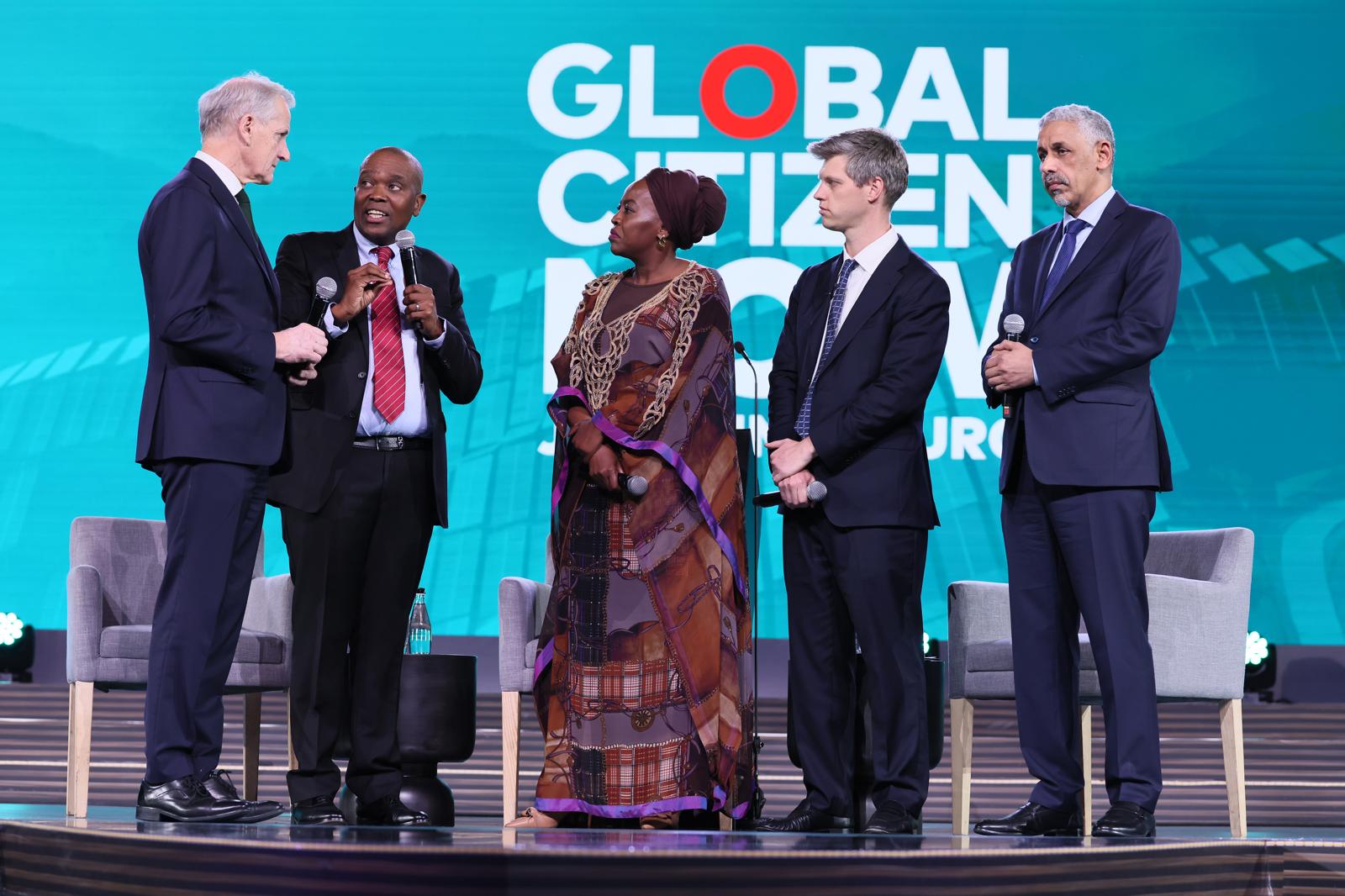
JOHANNESBURG, SOUTH AFRICA – NOVEMBER 21: Jonas Gahr Støre, Prime Minister of Norway, Sipho Makhubela, CEO, Harith General Partners, Maropene Ramokgopa, Ministry in the Presidency, Planning, Monitoring and Evaluation, Republic of South Africa, Michael Sheldrick and Dr. Sidi Ould Tah, President of the African Development Bank Group speak on stage during Global Citizen NOW: Johannesburg on November 21, 2025 in Johannesburg, South Africa. (Photo by Jemal Countess/Getty Images for Global Citizen)
By Michael Sheldrick, Co-Founder, Global Citizen
In a fragmented world where geopolitical rivalry dominates the headlines, smaller and middle powers together with emerging markets are taking the lead to sustain the benefits of cooperation. In a recent essay for Foreign Affairs, Finnish President Alexander Stubb captured this shift succinctly: “Every state has agency, even small ones such as mine… Small states are not bystanders in the story.
To this end, in 2025, countries across Africa, Europe, and Latin America, formed coalitions of the willing to tackle shared challenges — from energy and health security to jobs, inequality, and the barriers holding women and girls back. These efforts were driven not by ideology or charity, but by mutual interest and results.

The sense of agency that Stubb writes about was on full display during the G20’s opening day last month in South Africa. At a pledging summit co-hosted with European Commission President Ursula von der Leyen, leaders announced €15.5 billion to scale up renewables in Africa — one of the largest coordinated clean-energy pushes the continent has seen. Crucially, this was not framed as charity. As Norway’s Prime Minister Jonas Gahr Støre put it, the effort was driven “not out of generosity, but because this is critically important” for both Europe and Africa. African institutions and businesses reinforced that logic by launching a unified Team Africa pledge, committing their own capital to the transition. The commitments include 27.8 gigawatts of new generation, electricity access for 17.5 million households, and an estimated 50,000 jobs.
Such cooperation extended beyond energy. During its G20 presidency, South Africa also co-hosted a fundraising conference with the United Kingdom for the Global Fund to Fight AIDS, Tuberculosis and Malaria, mobilizing $11 billion. That followed by a major replenishment in Brussels, this past June where $9 billion was raised for Gavi, the Vaccine Alliance, which aims to protect up to 500 million children from preventable disease and avert up to 8–9 million deaths by 2030.
What united these moments was African leadership, in the spirit of genuine partnership shaping outcomes. Speaking in Brussels, Ghana’s President John Mahama reflected that when he was born, surviving past age five in Ghana was often a matter of luck. Thanks to Gavi, that is no longer the case. He went on to endorse the African Union’s ambition to produce 60% of the continent’s vaccines by 2040, adding that Ghana intends to “fast-track our weaning off Gavi by 2030” and become a future donor, just as Indonesia had become this year.
To be clear, even as new coalitions delivered results, 2025 also exposed the regrettable consequences of the significant foreign aid cuts by some of the world’s wealthiest nations. For example, despite significant increases from the likes of Ireland, Spain and others, donors collectively failed to fully fund both the Global Fund and Gavi, which will have real impacts in terms of disease disruption and lives at risk. Funding for sexual and reproductive health — including work led by UNFPA — continues to shrink even as need intensifies. Every day, 712 women die from complications during pregnancy and childbirth, the vast majority from preventable causes.
No single country can make up for these shortfalls alone — or shoulder the scale of today’s challenges by itself. But the coalitions that did form in 2025 showed what still remains possible when governments, businesses, and institutions choose cooperation over retreat.
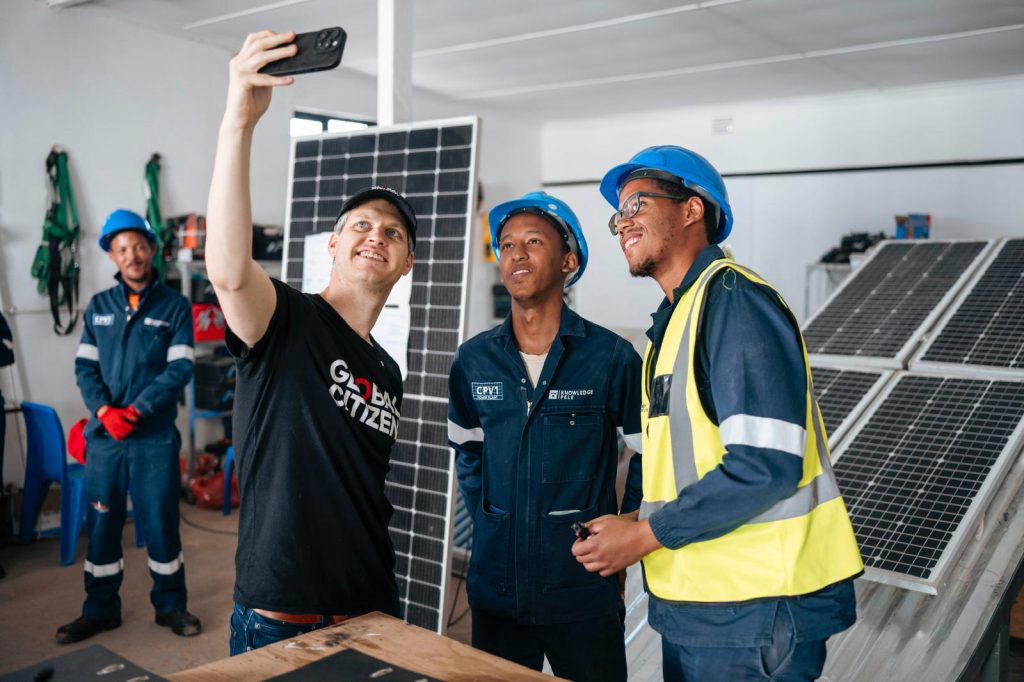
And leaders who do so are not acting in isolation. Recent polling by the Rockefeller Foundation and FocalData shows that 75 per cent of people across major economies support international cooperation when it delivers on basic needs such as energy access and job creation. I saw what that looks like in practice during my time in South Africa, where I met two young solar trainees — Luke and Keanu — preparing for the future through support from Pele Energy. Luke wants to start a rooftop solar business in his community. Keanu dreams of powering Africa’s data centres with solar built by African workers.
True, the latest Global Solidarity Report shows some erosion in public support for international solidarity, particularly around taxation and enforcement. But it also confirms something more important: a resilient base of public backing remains for cooperation that is tangible, fair, and results-driven. The political mandate for cooperation exists, even if it rests on fragile foundations.
President Stubb ends his essay with a warning: “The new order will be determined by decisions taken by political leaders in both big and small states… This is our last chance.” What 2025 showed is that cooperation is not centralized in one capital or institution. It is emerging wherever shared interests align and people choose to act.
The task for 2026 is to double down: to scale what works, build new partnerships, and ensure those shaping the future are participants, not bystanders. The shoots of hope are there. The question is whether we choose to grow them.
Disclaimer
Comments expressed here do not reflect the opinions of Vanguard newspapers or any employee thereof.