
Source: Internet
By Stanley Agbakansi, Ph.D.
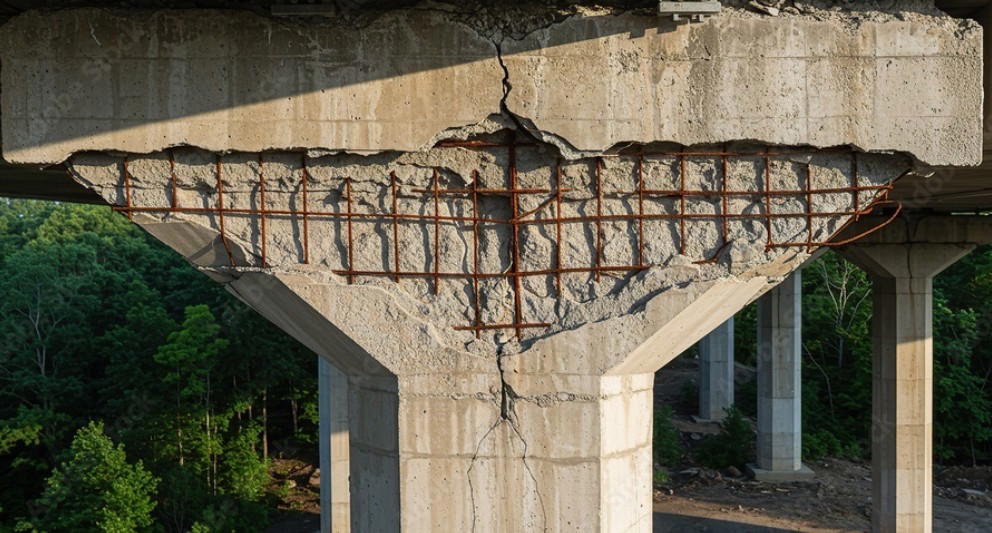
Every day, millions of Nigerians travel over bridges whose internal conditions they cannot see. Beneath the hardened asphalt and concrete layer that are visible to an observer, steel components that hold these structures together are slowly deteriorating. Corrosion— the gradual rusting of steel when exposed to water, air, and salts is silently weakening some of Nigeria’s most important transportation assets. Unless the necessary remedies are implemented, the consequences can be devastating both economically and in terms of human lives.
In coastal areas like Lagos, Port Harcourt, and Calabar, bridges face aggressive deterioration from chloride intrusion, water ingress, and carbonation from atmospheric CO₂. Because corrosion progresses silently, the structure may already be severely compromised by the time the public notices cracks, spalling, or exposed reinforcement. A bridge can appear sound on the surface while the steel within is steadily losing strength, eventually leading to cracking, concrete spalling, bearing failures, joint deterioration and in extreme cases, structural instability. Even without collapse, the economic consequences are significant: lane closures, travel delays, diversions, and higher transport costs that ultimately affect both businesses and ordinary Nigerians.
Globally, studies show that repairing corrosion damage after it becomes visible can cost five to ten times more than addressing it early. Nigeria is no exception. When maintenance is postponed until failure is imminent, rehabilitation becomes unnecessarily expensive, disruptive, and time-consuming. In contrast, preventive maintenance such as routine inspections, drainage cleaning, inhibitor application and early repairs is far cheaper and safer.
Now consider Nigeria’s bridges: the Third Mainland Bridge opened in 1990, the Carter Bridge from 1901, the Niger Bridge from 1965. How many undergo comprehensive corrosion assessments using modern electrochemical methods? How many have any corrosion protection beyond the initial concrete cover? The uncomfortable truth is that most Nigerian bridges have received minimal anti-corrosion maintenance in decades of service in one of the world’s most aggressive corrosion environments.
So why does Nigeria struggle with this? At the core is a reactive maintenance culture, where action is taken only when damage becomes too obvious to ignore. Many bridges go for years without detailed inspections. Weigh stations are almost non-existent, enabling overloaded trucks to accelerate deterioration. On several bridges, water ponds for days after rainfall, seeping into cracks and accelerating corrosion of the steel reinforcement. There is also no single national database that tracks the condition of our bridges, making planning difficult and emergency responses the norm.
The good news however is that corrosion is a scientifically understood problem with proven solutions. Modern engineering offers tools to detect and monitor damage long before it becomes visible. Techniques such as electrochemical measurements, nondestructive testing, and structural health monitoring can identify areas at risk and guide targeted repairs. Materials science provides better coatings, corrosionresistant alloys, and admixtures that improve durability. What Nigeria lacks is not knowledge, but consistent application and policy.
The solutions are not complicated or unknown; they are standard engineering practice globally. What is lacking is the political will and the accountability framework to implement them.
First, Nigeria needs the establishment of a National Bridge Assessment and Preservation Program. Through such system, periodic inspections, corrosion evaluations, and public reporting of bridge conditions would be mandated. Simple non-destructive testing methods such as half-cell potential mapping, ultrasonic pulse velocity, and ground-penetrating radar can detect corrosion long before it reaches critical stages.
Second, in harsh environments like Lagos, Port Harcourt, Warri and other coastal communities, bridges must receive modern corrosion-protection treatments. These include high-performance coatings, corrosion-inhibiting materials, cathodic protection systems, and the use of more durable concrete mixes in rehabilitated or newly constructed structures.
Third, enforcing axle-load regulations is non-negotiable. A bridge designed for the traffic of the 1980s cannot safely carry today’s unregulated 50–70-tonne trucks. Functional weigh stations and penalties for overloading can extend bridge life by decades.
Finally, government must treat maintenance as a core part of national infrastructure investment, not a secondary expense. Every bridge, whether old or new, will eventually face corrosion. What matters is whether we plan for it or respond only after warning signs have been ignored.
Bridge corrosion is a slow-moving threat, but its consequences can be swift and catastrophic. When such failure occurs, it does not just damage the structure; it undermines public trust, endanger lives, and disrupts the national economy. If Nigeria is serious about building resilient infrastructures in the 21st century, our response to the issue of bridge corrosion must be just as deliberate.
Expert Profile: Stanley Agbakansi, Ph.D.
Stanley Agbakansi, Ph.D., is a mechanical and materials engineer specializing in corrosion mitigation, structural durability, and infrastructure failure analysis. He earned his doctorate from the University of South Florida, where he focused on corrosion monitoring and mitigation in bridge tendons and failure forecasting for wastewater force mains. He holds prior degrees in Metallurgy and Materials Engineering from the University of Lagos.
Disclaimer
Comments expressed here do not reflect the opinions of Vanguard newspapers or any employee thereof.