
…says institutional capacity lacking
By Efe Onodjae & Dickson Omobola
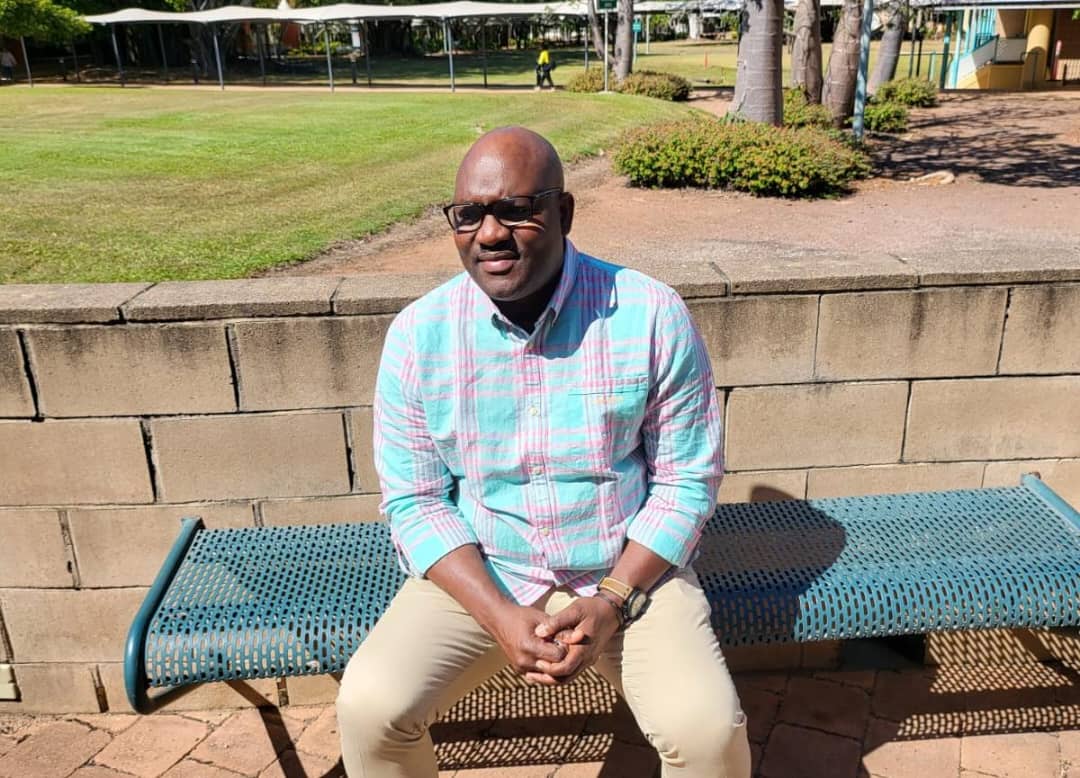
Dr Bolaji Stephen, an Australian-based educationist, is a lecturer at Federation University in Australia. In this interview, Stephen speaks on Nigeria’s education system, the ban on social media for children in Australia, and whether such a policy could be implemented in Nigeria, among other issues. Excerpts:
What is your assessment of the Nigerian education system?
I think that, within the context of what we have, it is an education system that trains the mind. However, the emphasis is more on theoretical knowledge than on what we would call real-life experience attached to the concept of education, the way it should be. I believe that is one of the key differences between what we have in Australia and what we profess to have back home in Nigeria. That is also why it is very easy for anyone who went through the theoretical certification process in Nigeria to perform exceptionally well in the Western world.
Why? It is because we have been able to enhance our memory capacity. Our imagination is trained to cram, do extensive reading and go through a lot of resilience and stress. That has been the mindset back home in Nigeria. However, the education system here is a bit different from that.
So, within the context of what we have as a developing nation and what education means to them here, I consider the education system as something I also went through. Did I regret going through that system? The answer is no. But are there a lot of gaps between what is called a Nigerian education and what is called the education system here? I would definitely say yes. There is hardly any Nigerian who schools in Nigeria and goes to the Western world who does not perform exceptionally well because of what we went through to obtain those so-called qualifications. But reverse the system here, where everything is tailored to meet specific needs.
Based on the two contexts that I have experienced, if I were to choose again, I would probably prefer to go to school in Australia rather than go through that process in Nigeria.
What is your evaluation of the social media ban for kids in Australia? Do you also think such a thing can happen in Nigeria?
Here in Australia, the focus of education is on the well-being of learners. That is why, before you can become a teacher in Australia, you go through extensive screening. By screening, I mean that apart from meeting the benchmark of registration, you also have to undergo criminal record checks to ensure that anyone standing before students in the classroom, whether from early years to Year 12, is physically, emotionally and mentally fit to teach and impart knowledge.
Such a person is also expected to be responsible for the well-being and safety of the children under his or her care. That is why you hardly hear about unethical practices, paedophilia, child abuse, or taking advantage of innocent adolescents within the school system.
The issue of social media has been debated for close to five years. Some schools and states because the education system here operates on a concurrent list, meaning both states and jurisdictions can make decisions, began implementing policies independently. Before a national policy was finalised, the school system in Victoria, whose capital city is Melbourne, issued a policy stating that phones were not allowed in schools. Students could use their phones at home, but not in school. That policy became effective about three years ago.
However, the broader pronouncement about banning social media activities for teenagers started about five years ago, and a resolution was reached this year. The reason is that several studies have shown that rising rates of suicide and cyberbullying are affecting young people.
Some students who could not withstand the pressure lost their lives, while others withdrew from social life and even from school entirely. That has been a major concern.
Recently, issues such as radicalisation and terrorism have also emerged, influencing the decision to restrict social media access for anyone under the age of 18.
Now, can such a thing happen in Nigeria? I will address that question from three perspectives. First, we need to understand that Nigeria has an institutional problem. By institutions, I mean the framework that supports policy formulation and implementation. These frameworks are not well structured enough to effectively implement policy decisions. Let me be clear: Nigeria does not have a problem with policy formulation; the problem lies in the effectiveness of policy implementation.
There are many reasons for this. As someone who has worked in this space and conducted extensive research on Nigeria and Australia over the last 10 years, I understand that our major challenge is not having strong institutions capable of enforcing government decisions.
Second, Nigeria is currently a country where people are struggling to survive. Many children exposed to social media have become breadwinners for their families. For instance, in a country where the average person lives on less than one dollar a day, an adolescent who earns close to $100 daily through unethical means on social media becomes the family’s primary source of income. What do you expect the parents of such a child to do when that child is sustaining the household?
Third, when we look at Nigeria as a country, there is a lack of accountability. When we wake up every day, nobody truly cares about your survival. No government can be held accountable. We do not even have reliable population statistics. There is no comprehensive data bank that can identify who someone is, where they live, or what they do. The framework simply does not exist.
To build such institutions, there must be a critical review of our policies and a reassessment of the values we hold dear. There is a lack of dignity for human life. While I believe that much of the content on social media involving Nigerian adolescents under 18 is unbecoming of a nation, the question remains: who will enforce restrictions, and how will they be implemented?
Social media exists for connection and networking, but there are certain applications that children under 16 or 18 should not have access to. When the system is broken, however, there is very little that can be done.
Unfortunately, it is not that we do not know how to fix the system; we simply choose to ignore it because it is not considered a priority.
Once you are in school and under the age of 16, you should not have access to social media. And for such policies to work, there must be political will, strong policy statements, legislative backing and effective implementation. Social media is useful, but it should be restricted to those below 16 who can manage their emotions and understand that much of what they see online is an illusion.
Looking at the Nigerian situation, what is your assessment of critical reasoning skills among students?
When we were in school, creativity was embedded in three core areas of education. One of them was indigenous knowledge, which the current Minister of Education has removed from schools. There is no longer Yoruba or other indigenous languages. This loss affects identity, values and the moral grounding that strengthened many of us.
Second, history as a subject helped us develop analytical and critical thinking skills. Subjects like history, government, civic education and social studies, within the humanities, taught us how to think, reason and live by values such as Omoluabi. These subjects shaped our ability to think critically. Today, however, these subjects are no longer emphasised.
Critical thinking requires questioning why things are done the way they are. That ability has been eroded. Many young people today struggle to engage in meaningful conversation. Instead, they spend time on their phones playing games, with little physical or social interaction.
I do not entirely blame them, because even the environment is unsafe. In the past, elders would sit us down and share folktales and wisdom. Today, that is largely absent. The education system, as it stands, is not designed to nurture critical thinking and intellectual depth.
What can you say about the increase in private universities in Nigeria?
The current structure of higher education in Nigeria, including the influx of private universities, is positive given our growing population. However, private institutions face challenges with international recognition. To the best of my knowledge, degrees from Nigerian private universities are not recognised in Australia.
Graduates from state universities may also face discrimination. In some cases, if your degree is below a second-class upper, it may be treated as an associate degree. Only federal universities are fully recognised. If state universities are discriminated against, private universities face even greater challenges. This issue must be addressed. Many Nigerian universities lack impactful success stories. Professors are promoted without a strong understanding of research grants or impactful research. A professor must profess something meaningful and contribute research that has real-world impact. That is why politicians pay little attention to universities because they see them as civil service institutions rather than engines of innovation. That is not what universities are meant to be.
Disclaimer
Comments expressed here do not reflect the opinions of Vanguard newspapers or any employee thereof.