
By Joseph Erunke, Abuja
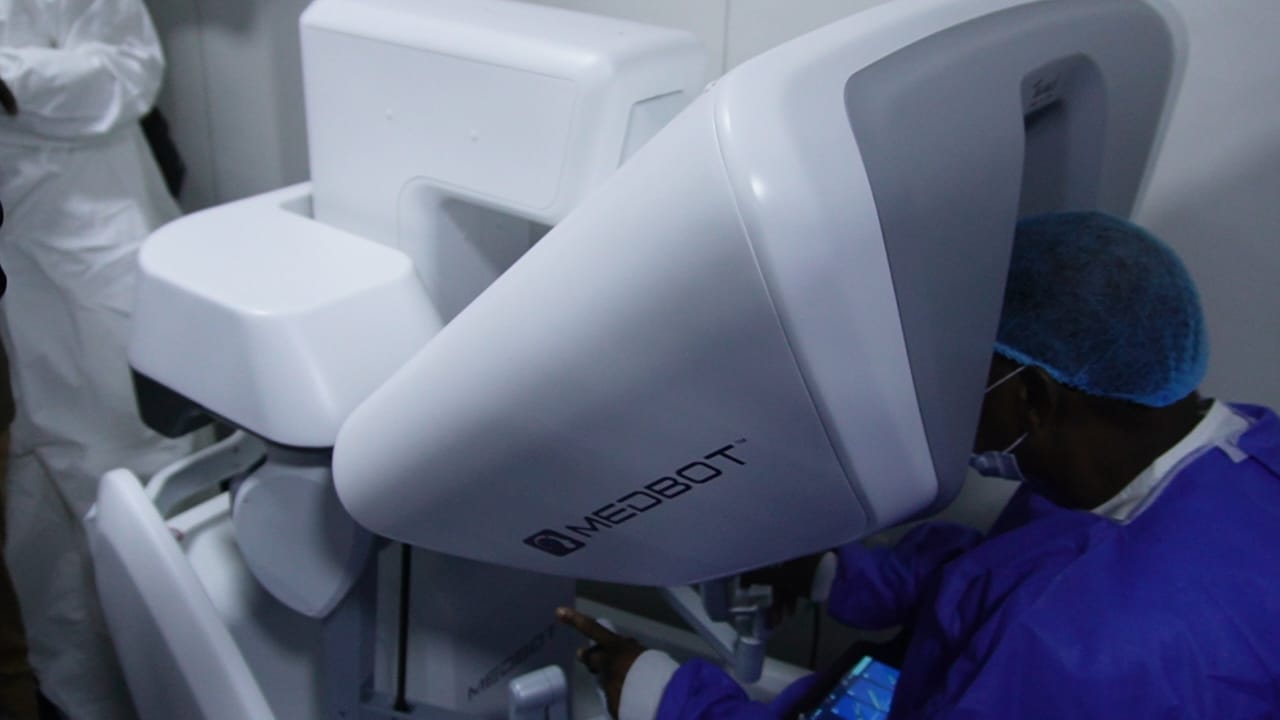
Nisa Premier Hospital, Abuja, on Tuesday hosted a landmark ceremony marking a significant step in Nigeria’s progress toward precision medicine, as the Coordinating Minister of Health and Social Welfare, Prof. Muhammad Ali Pate, officially commissioned the country’s first Toumai Pro Robotic Surgery Platform.
Speaking at the event, founder and CEO of Nisa Medical Group, Dr. Ibrahim Wada, described the development as a major achievement made possible through vision, collaboration, and the commitment of Nigerian specialists both at home and in the diaspora.
Dr. Wada expressed appreciation for the Minister’s presence, noting that it underscored the importance of the milestone. He also acknowledged the attendance of the Barbados Senior Minister of Health.
Reflecting on the evolution of surgical practice, Dr. Wada explained that medicine has advanced from open surgery to minimally invasive endoscopic procedures and now to robotics—a shift that enhances surgical precision and improves patient recovery.
“With robotic systems, we can operate more precisely and perform complex procedures through keyhole incisions, allowing patients to recover much faster,” he noted.
He revealed that Nisa’s adoption of robotic surgery resulted from a partnership with Robomed Global, a U.S.-based diaspora-led medical technology group, describing trust as a central element of the collaboration.
Dr. Wada highlighted Nisa’s growth since 1996—from a modest three-room facility to a leading women and children’s hospital—and its longstanding record of medical innovation, including achievements in IVF, genetic testing for sickle cell disorder, and internationally recognised residency training programmes.
He noted that the Nisa–Garki training ecosystem currently accommodates 98 resident doctors and has produced more than 60 specialists and 40 sub-specialists certified in fertility and IVF.
Looking ahead, he announced plans for a 12-storey medical complex in Maitama designed to meet global standards.
He stressed that the introduction of the robotic surgery platform was intended to serve the wider region. “This is not Nisa Robotics; we call it Nigeria Robotics,” he said, adding that the newly established RoboMed Academy would train medical professionals from across Africa. Trainees from Sierra Leone, Togo, Angola, and Chad are already participating.
In his remarks, Prof. Pate described the achievement as a significant advancement that places Nigeria on the continent’s emerging frontier of technologically driven medical care. He said the platform aligns with global trends toward precision surgery.
He commended Nisa Medical Group and its partners for demonstrating that world-class medical capabilities can be developed locally.
Prof. Pate also highlighted government efforts to improve accessibility and affordability in healthcare, including plans to expand national health insurance coverage from the current 21 million enrollees to a target of 50 million. He noted that technological innovation, private-sector participation, and regulatory improvements would continue to shape the sector’s progress.
The ceremony drew former ministers, diplomats, industry executives, medical leaders, financiers, and academics.
Closing the event, Dr. Wada remarked: “We started from a small room; now we build for a continent.”
With the launch of the Toumai Pro platform, Nigeria enters a new era of surgical innovation—driven by local expertise, global collaboration, and a shared commitment to advancing healthcare standards
Disclaimer
Comments expressed here do not reflect the opinions of Vanguard newspapers or any employee thereof.