
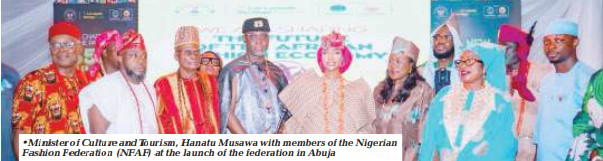
•A moment of regal fabrics, global ambition and a historic signature
•Nigeria steps forward as the first signatory to Africa’s new fashion charter
•CAFA, Afroliganza and AGFG unveil the blueprint for a $500bn creative awakening
By Luminous Jannamike
ON a night filled with colour, energy and echoes of old traditions, the Nicon Luxury Hotel in Abuja turned into the beating heart of a fashion movement that has been growing for generations. The hall didn’t just shine, it felt alive. Aso-Oke sparkled softly under the warm lights, coral beads glowed like early morning sun, and flowing agbadas moved with a beauty that felt both timeless and surprisingly modern.
This wasn’t a regular world press conference. It felt like a moment when a whole continent paused and remembered who it truly is.
Then Dr Balogun Lai Labode stepped forward; his voice steady, his words measured, his eyes shining with certainty. As President of the Confederation of African Fashion (CAFA), he spoke with the quiet confidence of someone who knew this moment had been a long time coming.
Africa, he said, was finished sending its creativity abroad for others to reshape. From now on, the continent would take control of its own story, shaping its future one stitch at a time.
“Today, Nigeria becomes the first African nation to sign the African Fashion Industry Growth Charter,” he announced.
The room didn’t just clap; it breathed out, like a weight had finally lifted. A federal minister, diplomats, traditional queens, chiefs, creators and dreamers stood dressed in a stunning mix of old and new styles: rich embroidered fabrics, flowing silks, beaded crowns and neatly shaped capes.
In that moment, one quiet truth filled the hall: Africa was stepping onto the world stage with its own light, confidently and without apology.
A Continent Preparing to Turn Thread Into Power
Labode did not pretend that Africa has no problems. He spoke honestly about the issues; countries working in isolation, weak cooperation across the continent, and a creative sector that often loses control of its own ideas. But in that charged hall, those problems felt small compared to the huge possibilities waiting ahead.
A continent with 1.3 billion people. A young population bursting with talent and creativity. A global fashion industry ready for Africa to leave its mark. Then came the figures: direct, sobering and eye-opening: Africa exports more than $10 billion in cotton-related goods, yet still imports over $20 billion worth of cotton-based materials. It’s a painful gap, but also a clear opportunity.
CAFA’s plan aims to rebuild the fashion ecosystem from the ground up. It focuses on clear policies, investment, strong manufacturing zones, protection for artisans, and better visibility for African fashion across the world.
Suddenly, a $500 billion African fashion industry no longer felt like a dream. It felt like something that should have happened long ago.
And with the charter now signed, along with the launch of the Nigerian Fashion Federation (NFAF), Nigeria stepped not just into the conversation, but into the driver’s seat of this new movement.
Where Fashion Becomes Diplomacy, Memory and Power
If the speeches fed the mind, the fashion on display touched the heart. Groups of dignitaries looked almost like living artwork. Their outfits blended gunmetal grey with deep wine shades, soft golds brushing against metallic fabrics. Fila caps rested on their heads like carved crowns, while the women’s geles rose in bold, sculpted layers. Every colour seemed to tell a story, and every fabric carried a piece of where it came from.
Each textile had its own voice: Aso-Oke woven with the steady rhythm of ancestral hands, silks dyed in warm earthy colours, damasks heavy with gold-thread dreams, and coral beads stacked with the gentle pride of royalty. It wasn’t just fashion. It was culture speaking through cloth. Then the atmosphere shifted again. The Minister of Arts, Culture, Tourism and the Creative Economy, Hannatu Musawa, announced Nigeria’s formal adoption of the Afroliganza vision.
But even before she said a word, her outfit had already made its statement, a top shaped with sharp, thoughtful folds, a flowing skirt that moved like a poem, and a magenta-and-gold turban catching the light from every angle. Coral beads fell down her neckline like a soft royal blessing.
Musawa didn’t only talk about the future, she looked like it.
The Birth of a Continent’s Fashion Revolution
Behind all the beauty and glamour of the night was a clear and organised plan, a system designed to help Africa work as one. The goal is to align standards across countries under AfCFTA, attract new money into the industry, and grow production from the cotton farms to the runway. CAFA plans to build the tools needed for this growth: investment platforms for funding, digital trade portals for selling, trusts to protect artisans, manufacturing centres across the continent, and a support network for young designers taking their first steps. Then came the announcement that made the room fall quiet. The African Global Fashion Games (AGFG), Africa’s first fashion Olympics, will take place in 2027. For nine days, the continent will host a celebration of creativity: runway battles, fashion parades, industry conferences, award nights, and a major trade fair meant to draw global buyers to African soil. Countries won’t compete for medals, but for cultural pride and economic power. “Fashion is a universal language. Africa’s influence on colour, shape and meaning cannot be denied,” Musawa said gently.
Her words lingered in the air: soft, confident, and impossible to forget.
The Human Story Behind a $500bn Possibility
But beneath all the big plans and promises, the night still beat with the simple stories of real people: the indigo dyer whose hands know colours better than any book, the weaver whose old wooden loom still carries the rhythm of generations, young designers stitching their identity into clothes now worn in London, Lagos and Los Angeles, cotton farmers who may finally see their crops valued here at home, not just shipped away for others to profit from.
The CAFA Charter gives them more than praise; it gives them structure, opportunity and a future they can depend on.
“From the soil where our cotton grows to the shine of our runways, let us build a future of pride, progress and leadership,” Labode said as he ended his speech.
In that moment, the room didn’t feel like just another event. It felt like a shared promise.
Africa has dressed the world for generations. Now, Africa is ready to earn from it, and lead the way. And under Abuja’s unforgettable night sky, the future didn’t just look possible. It felt certain, and beautifully African.
Disclaimer
Comments expressed here do not reflect the opinions of Vanguard newspapers or any employee thereof.