
By Nnasom David
Stakeholders on Wednesday reaffirmed commitment to building a more accountable, technology-driven and rights-focused criminal justice system.
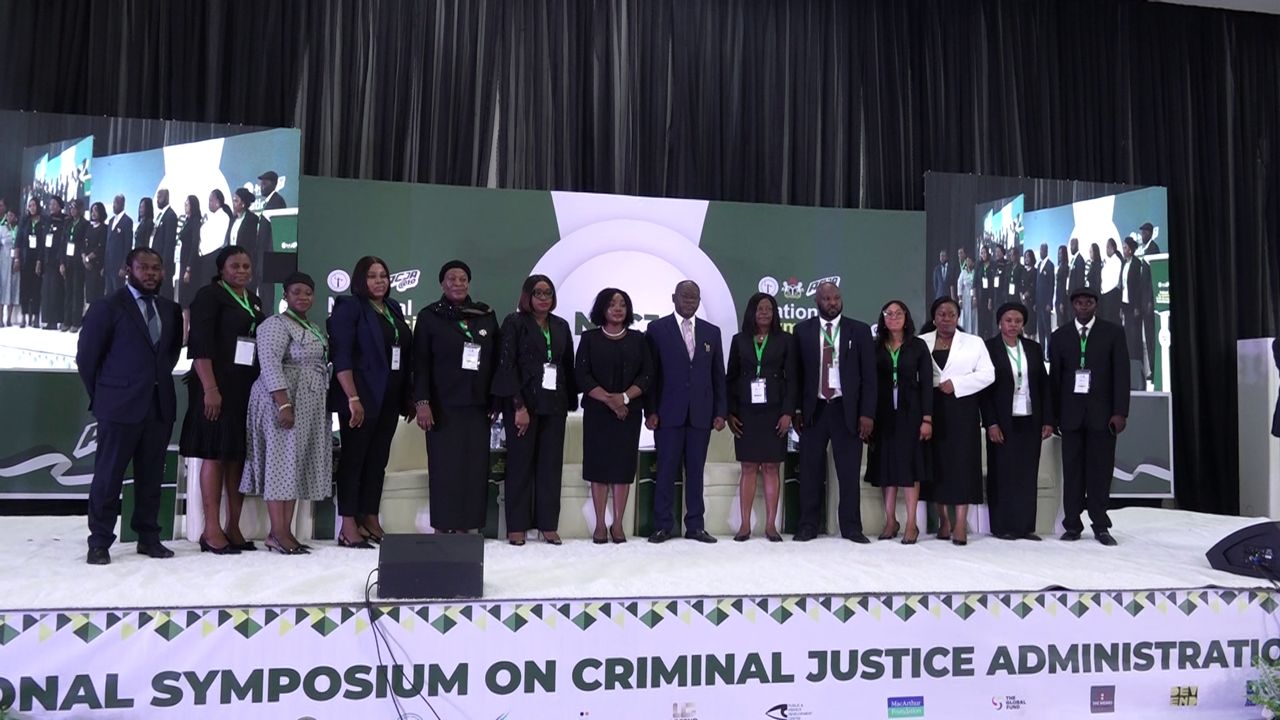
This is coming as they gathered in Abuja to mark the 10th anniversary of the Administration of Criminal Justice Act (ACJA) 2015.
Speaking on behalf of the Attorney General of the Federation and Minister of Justice, Prince Lateef Fagbemi (SAN), the Senior Special Assistant to the President on Special Duties, Ahmed Wada, delivered the minister’s keynote address at the opening of the National Symposium on Criminal Justice Administration.
Fagbemi emphasised commitment to the reform process.
Fagbemi described the ACJA as a deliberate legislative effort to harmonise Nigeria’s criminal procedure, safeguard constitutional rights and strengthen efficiency across the justice system.
He highlighted notable improvements over the past decade, including technology integration in court processes, digital case management, reduced pretrial detention, enhanced rights protections, and improved inter-agency coordination.
These gains, he said, demonstrate what is achievable when reforms are backed by political will and accountability.
However, the AGF warned that persistent challenges remain, urging a renewed push for practical reforms that include expanding access to justice for vulnerable groups, boosting public defender capacity, improving victim and witness support, reinforcing data-driven oversight, and advocating sustained funding for criminal justice institutions.
He emphasised that justice must not only be proclaimed but “proven,” insisting that rights must be protected consistently across the system.
Also speaking at the event, the Secretary to the Government of the Federation (SGF), Senator George Akume, represented by Kamila Mustafa Kida said ACJA has transformed criminal justice practice nationwide, with all 36 states now adopting the law.
Akume noted that faster trials, stricter custody standards, clearer arrest and bail procedures, and improved protections for victims and witnesses have strengthened public confidence in the justice system.
He said these achievements align with President Bola Tinubu’s Renewed Hope Agenda, which places the rule of law at the centre of national development.
A major highlight of the symposium was the launch of the Criminal Justice Reporting Portal, described as a long-awaited tool to enforce ACJA’s mandatory reporting obligations.
The SGF said the portal will convert compliance from “a paper chase into a living system of accountability.”
He urged criminal justice institutions to fully embrace the platform, noting that data transparency is critical to meaningful reform.
In her remarks, the Executive Secretary of the Administration of Criminal Justice Monitoring Committee (ACJMC) Evbu Igbinedion, said the committee is optimistic about the road ahead but warned that many state-level ACJMCs remain unfunded.
She appealed to state governors and attorneys-general to support reform structures, revealing that only three out of 36 states currently fund their ACJMCs. Despite the challenges, she expressed confidence that continued collaboration would drive deeper integration of technology and accountability into Nigeria’s justice system.
The symposium brought together judges, senior advocates, prosecutors, defence lawyers, correctional service officials, development partners and civil society representatives.
Disclaimer
Comments expressed here do not reflect the opinions of Vanguard newspapers or any employee thereof.