
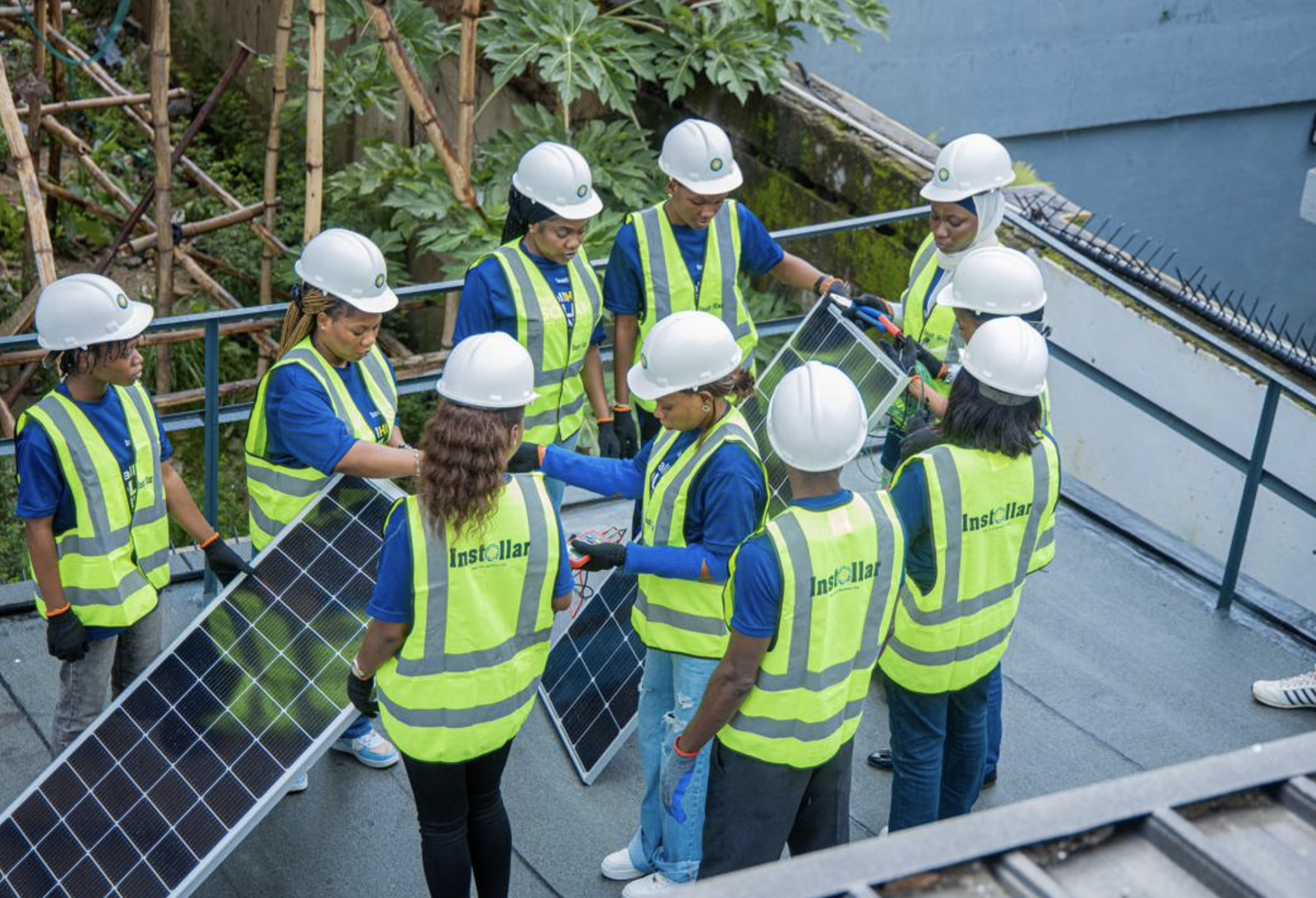
Nigeria’s energy transition is often told in the language of megawatts and investment deals, new solar plants, grid expansions, and policy blueprints.
But beneath those headlines lies a quieter, more human story: who will actually build this future? Behind every solar panel lighting up a school or powering a business, there’s a technician, often young, ambitious, and underemployed. That human link is where Instollar has found its calling.
Founded in 2022, Instollar is a workforce and technology platform connecting clean energy companies with trained, vetted solar installers and technicians. In just a few years, it has built one of Nigeria’s most critical bridges, between renewable energy growth and the people who can make it work.
“Everyone talks about energy transition, but not enough about the workforce that will drive it,” said Chinwe Udo-Davis, Instollar’s co-founder and CEO. “You can import panels, but not people. What we’re doing is ensuring the solar revolution has the right hands to sustain it.”
Through its platform, Instollar helps solar companies quickly find reliable installers while creating steady income opportunities for skilled workers across the country. So far, the company has facilitated over 2,000 solar installations and registered more than 1,200 certified technicians operating across Nigeria’s 36 states. For many of those workers, the company has turned an uncertain trade into a stable career.
Yet, for all its quiet progress, Instollar stayed largely under the radar until its official launch on October 27, 2025, in Lagos. The event, attended by friends, family, business associates, and industry supporters, marked not a beginning but a milestone, the public unveiling of a model already making an impact.
Two engineers trained by the company, Engr. Promise Okon and Engr. Ibrahim Adulwaheed, shared how Instollar had transformed their professional lives. Okon said consistent work through the platform kept him in business, while Adulwaheed noted that it gave him structure and credibility in an industry where freelance work is often unpredictable. Their experiences buttress the platform’s core value: turning skill into opportunity.
But one of the most defining aspects of Instollar’s mission is inclusion. Recognizing the gender imbalance in technical work, the company created InstallHER, a programme that trains and supports women to become solar technicians. Through partnerships with renewable energy companies and training hubs, InstallHER equips women with both technical skills and job placements, aiming to train 10,000 women by 2030.
One of its early beneficiaries, Grace Gbengero, spoke passionately at the launch. “Before InstallHER, I never imagined I could work in energy,” she said. “Now I not only earn from solar installations, but as a technical sales manager I have met all my targets before the end of the year”
InstallHER’s approach reflects a wider truth about the energy transition, that it is not only about technology but also about inclusion, opportunity, and resilience. By opening doors for women and young people, Instollar is turning the renewable energy boom into a vehicle for social transformation.
The company’s relevance goes beyond employment. It is helping formalize an informal industry, introducing standards, verification, and traceability to a sector that has long lacked them. For policymakers and investors, this kind of human infrastructure is crucial: without skilled people, even the best technology and financing models will struggle to deliver.
In an economy where unemployment and energy poverty often intersect, Instollar’s work represents a bridge between two pressing national needs:power and jobs. It’s a model that shows how climate solutions can double as economic development tools when grounded in human capacity.
As Udo-Davis summed up at the launch, “Africa’s energy future won’t just be powered by the sun.it will be powered by people.”
And in connecting those people to the work that matters most, Instollar is helping Nigeria build not just a greener future, but a more equitable one too.
Disclaimer
Comments expressed here do not reflect the opinions of Vanguard newspapers or any employee thereof.