
For decades, Nigeria’s oil and gas industry has remained the backbone of its economy — accounting for more than 85% of foreign exchange earnings and between 35% and 70% of government revenues in various years.
In this context, the role of Pipeline Infrastructure Nigeria Limited (PINL) in safeguarding the nation’s oil assets and revenue cannot be overstated. The company has emerged as a central player in protecting critical infrastructure and ensuring uninterrupted production, thereby preventing losses estimated at over $700 million per month.
PINL’s operations are primarily focused on the Trans Niger Pipeline (TNP) corridor in the Niger Delta — one of Nigeria’s most vital oil arteries. Through sustained surveillance and security interventions, the company has drastically curtailed pipeline vandalism, crude theft, and illegal bunkering.
By maintaining near-continuous monitoring of pipeline infrastructure, PINL has enhanced pipeline integrity and availability, which at one point reached an impressive 97% uptime across the upstream network. This has directly improved oil lifting and production levels, helping the Federal Government achieve its revenue targets.
PINL’s interventions have provided a stable environment for oil operations, ensuring consistent flows of royalties, taxes, and revenues to the government through the Nigerian National Petroleum Company Limited (NNPCL) and other entities.
These efforts have not only increased government revenue but have also strengthened national economic stability. With reduced production losses, the government can more effectively fund infrastructure, development projects, and the national budget.
Before PINL’s engagement, Nigeria faced rampant pipeline vandalism that led to:
Billions of dollars in annual revenue losses.
Environmental degradation and soil contamination.
Explosions and fires causing loss of life and property.
Shutdowns of export terminals and refineries, such as the Forcados Terminal, which once crippled production and export volumes.
Disruptions to electricity generation and petroleum product supply.
These incidents eroded investor confidence and triggered widespread economic instability. At its peak, crude oil theft was estimated at 470,000 barrels per day, translating to around $700 million in monthly losses.
PINL has adopted a multi-layered security framework that combines technology, community engagement, and collaboration with government security agencies.
Community Engagement and Empowerment
Host Community Ownership: PINL treats host communities as partners, fostering a sense of ownership over pipeline assets.
Employment and Empowerment: Thousands of local youths serve as surveillance guards, reducing unemployment and disincentivizing vandalism.
Scholarships and Skill Programs: PINL provides training and educational opportunities, especially for women, to build alternative livelihoods.
Whistleblower Initiative: A “see something, say something” reward system encourages real-time intelligence reporting.
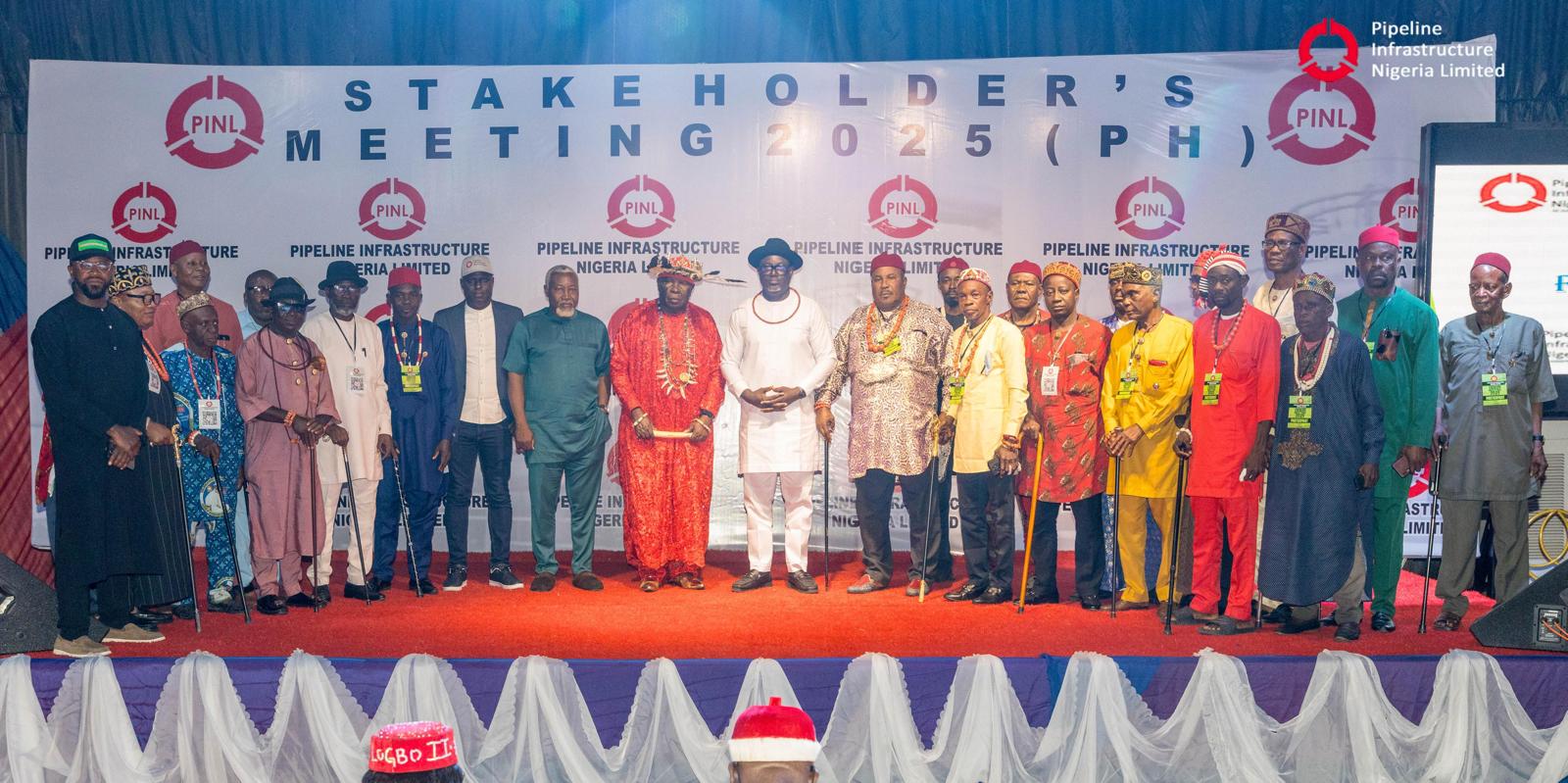
Regular Dialogue: Monthly meetings with traditional rulers, youth leaders, and community committees ensure mutual trust and problem-solving.
Collaboration with Security Agencies
Joint Operations: Conducted with the Office of the National Security Adviser (ONSA), military, and Joint Task Force (JTF).
Intelligence-Driven Missions: Using community intelligence to identify and dismantle illegal refining operations.
Prosecution: Over 100 individuals have been arrested and prosecuted for pipeline-related crimes.
Continuous Patrols: Regular physical patrols prevent reoccurrence of vandalism.
Advanced Technology Integration
Centralized Command and Control: In partnership with NNPCL’s national command center for coordinated response.
Sensor Networks: Deployment of wireless and fiber optic sensors for real-time detection of leaks, pressure changes, and tampering.
Remote Monitoring: Use of drones and satellite imagery to enhance surveillance and quick response capabilities.
This comprehensive approach has driven pipeline infractions to “near-zero” levels in several operational zones, particularly along the TNP corridor, resulting in improved oil output and investor confidence.
PINL’s achievements have earned widespread commendation from key stakeholders across government, industry, and communities.
Among those who have lauded the company’s contributions are:
The National Security Adviser (NSA)
Nigerian National Petroleum Company Limited (NNPCL)
Federal Inland Revenue Service (FIRS) — which linked Niger Delta stability to meeting revenue targets
Bayelsa State House of Assembly Committee on Youths
Community organizations: Orashi National Congress (ONC), Niger Delta Progressives Alliance (NDPA), Ijaw National Congress (INC), MOSIEND, and others.
Traditional rulers including King Philip Osaro Obele of Eleme, HRH Tekara Akobe of Eteo, and King Samuel Nnee of Tai Kingdom have also acknowledged PINL’s positive impact.
PINL has been particularly praised for:
Regular stakeholder meetings and anti-vandalism campaigns.
Inclusive engagement of non-state actors and traditional leaders.
Timely payment of local surveillance teams.
Corporate social responsibility (CSR) efforts in healthcare, skills training, and infrastructure.
Achieving near-zero infractions along critical pipelines.
By integrating technology, empowering communities, and collaborating with national security agencies, Pipeline Infrastructure Nigeria Limited (PINL) has proven to be an indispensable partner in Nigeria’s quest to secure its oil wealth and sustain economic growth.
Its model of community-inclusive security not only protects vital assets but also strengthens local economies — transforming the Niger Delta from a zone of conflict into a hub of cooperation and productivity.
In essence, PINL’s efforts continue to safeguard billions of dollars in national revenue, keeping Nigeria’s oil industry — and economy — on a steady upward trajectory.
Disclaimer
Comments expressed here do not reflect the opinions of Vanguard newspapers or any employee thereof.