
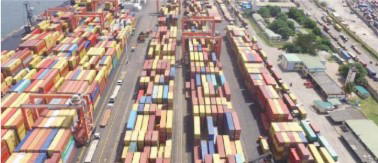
A strategic national initiative to decongest the overtaxed Apapa and Tin Can Island ports is yielding significant dividends,vas new operational data from the Nigerian Ports Authority (NPA) reveals a dramatic surge in efficiency and cargo handling at the revitalized Warri and Koko Port Complex.
According to internal NPA performance reports covering the first three quarters of 2025, the Delta Ports have achieved an average monthly ship handling rate of forty-five vessels. This marks a pivotal turnaround for facilities once considered peripheral to Nigeria’s maritime trade.
A high-ranking NPA official,speaking on the condition of anonymity, stated, “The numbers confirm our strategy. An average turnaround time of 2.89 days and a waiting time of just 1.99 days at the Delta Ports are metrics that now compete favourably with any port in the region. This is the tangible result of our targeted investments.”
The data further shows that the Delta Ports have handled an impressive 293,013 metric tonnes of cargo, contributing 10.7 per cent to the nation’s total trade volume. This contribution is seen as a direct outcome of the NPA’s deliberate recalibration of Nigeria’s trade gateways.
The NPA’s executive management has framed this revitalization not as a regional project but as a”national renaissance.” In an official communique, the Authority stated, “The chronic congestion at the southwestern ports has long served as an invisible tax on commerce. The Delta Ports stand as the obvious counterweight, strategically positioned to serve the South-South, Southeast, and North Central regions.”
This shift is underpinned by the Landlord Port Model, a cornerstone of Nigeria’s 2006 maritime reforms. Under this model, the NPA retains regulatory and infrastructure control while concessionaires like Associated Maritime Services and Integrated Logistic Services inject private capital and operational efficiency.
The NPA credits the success to a multi-pronged approach focused on dismantling both physical and perceptual barriers. A key milestone was the recent dredging of the critical Escravos Channel, which restored navigational depth and instilled confidence in ship captains and international shipping companies.
Furthermore,the Authority has deployed cutting-edge technology to ensure safety and efficiency. “The construction of the Escravos and Ramos Signal Stations has introduced modern vessel traffic management systems that rival any in the subregion,” an NPA engineering report noted.
Security, a perennial concern for investors in the region, has also been addressed with a visible NPA presence. The acquisition of the marine security vessel, SPB Likoro, has been hailed as a “reassuring layer of protection” for shipowners and their insurers, directly reducing risk premiums and making the ports more attractive.
The NPA’s vision extends beyond current successes to future-proofing the facilities. The planned institutionalisation of a Channel Management Company is a key part of this strategy. According to the Authority, this will ensure that “maintenance dredging becomes a continuous rather than occasional affair,” guaranteeing long-term viability.
Additional infrastructure projects are already on the drawing board.”The reconstruction of the collapsed breakwaters will reduce siltation and deepen navigational confidence,” an NPA spokesperson confirmed, adding that “the planned installation of Aids to Navigation and full illumination of the port premises will anchor a new era of twenty-four hour readiness.”
The NPA emphasizes that the transformation is as much about community as it is about concrete.”Steady collaboration remains the golden thread binding this vision together,” the Authority stated, highlighting its engagement with traditional rulers and local communities to replace “historical friction with shared purpose.”
This data-driven progress is rebuilding institutional confidence. The NPA has repositioned itself through “transparency and adherence to international best practices,” convincing investors that the Delta Ports are a “guaranteed growth corridor” rather than a high-risk endeavour.
With every metric tonne of cargo and every efficiently turned-around ship, the Atlantic Gambit is being validated. The NPA’s strategic pivot to the Delta is not merely decongesting Lagos; it is actively forging a more resilient, diversified, and equitable maritime network for the entire nation.
Disclaimer
Comments expressed here do not reflect the opinions of Vanguard newspapers or any employee thereof.