
By Gabriel Ewepu
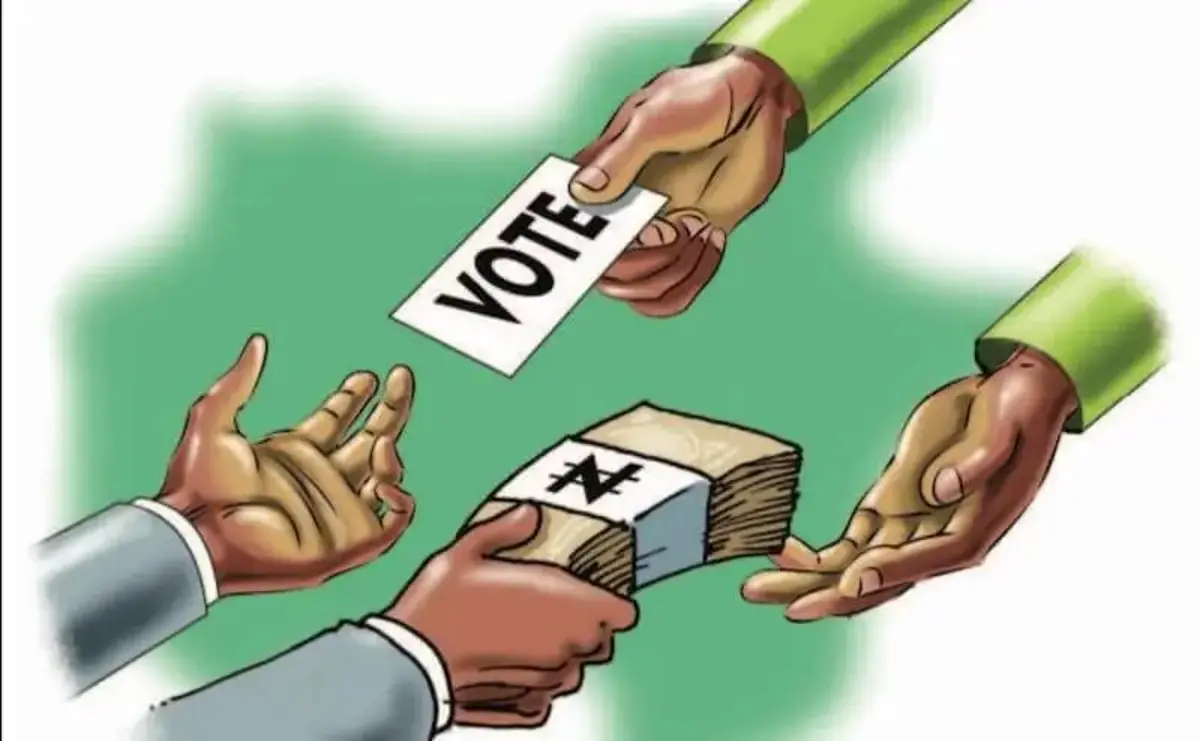
“Vote-buying was widespread and openly practised in several Local Government Areas in full glare of security personnel, and party agents offered cash or used digital transfer methods to influence voters. Amounts ranged from N2,000 to N10,000 per voter.”
This is the assessment of one of the observer groups which monitored the November 8, 2025, governorship election in Anambra State.
Four monitors of the exercise shared their assessment with Sunday Vanguard in areas of the election such as logistics, turnout and security.
All of them reported massive vote-buying in the election which, according to them, promotes electoral corruption, erodes equality in election competition, and undermines the legitimacy of electoral victory.
The Independent National Electoral Commission (INEC) had declared the candidate of the All Progressives Grand Alliance, Prof. Chukwuma Soludo, the winner of the election.
Soludo, according to INEC, polled 422,664 votes, defeating his closest rival, the candidate of the All Progressives Congress, Nicholas Ukachukwu, who scored 99,445 votes, while the candidate of the Young Progressives Party, Sir Paul Chukwuma, came third with 37,753 votes.
A total of 16 candidates from various political parties participated in the election.
The monitors, who shared reports with Sunday Vanguard, are Yiaga Africa, the Nigerian Civil Society Situation Room (Situation Room), Bridging Social Inclusion Gaps Initiative, BISIGI Africa, and the Centre for Democracy and Development (CDD).
Meanwhile, they commended the peaceful conduct of the election, saying voters conducted themselves calmly at the polling units with a few incidents of violence.
CDD, which alleged that amounts paid voters ranged from N2,000 to N10,000 per voter and that “vote-buying was widespread and openly practised in several LGAs in the full glare of security personnel and party agents offered cash or used digital transfer methods to influence voters”, added: “This is becoming a persistent feature of Nigeria’s elections.
“For political actors, vote-buying remains the most predictable strategy in the absence of issue-based campaigning and the delivery of good governance.”
For its part, Yiaga Africa slammed what it called “observed incidents of vote-buying, which characterized the election”, saying it was a major threat to the credibility of the electoral process.
It added: “This practice promotes electoral corruption, erodes equality in election competition, and undermines the legitimacy of electoral victory.
“Yiaga Africa calls on political parties to refrain from the culture of commercialization of elections in Nigeria and invest rather in practices that enhance trust in the elections.” The Situation Room, in its own report, expressed dismay over what it described as “reluctance by security agents to deal with the issue of vote-buying during the election.
“Despite this strong presence, Situation Room would like to highlight the continued reluctance of security agents to take decisive actions against the widespread practice of vote-buying during the electoral exercise”, the election monitor added.
“Situation Room is worried that our elections are continually being driven by motivations and actions that are strongly diametrically opposed to the ideals of democracy as a socio-economic political phenomenon that has its origin and destination in the service of the people.
“Increasingly, the dominant trait of the political class and elites in our country seems to be bordering on a Machiavellian understanding of the end ‘justifies the means’: a dangerous political philosophy that relegates the ideals and fine points of democracy as people-driven to the background.
“Situation Room insists that the guardrails that help define the democratic experience must not be subverted by the political elites.
“In this regard, Situation Room notes that the ugly phenomenon of vote-buying and vote-selling, occasioned by the pauperization of the citizens, has continued to thrive, and was in full swing during the 2025 Anambra governorship election.
“Situation Room believes that if there is one social dynamic that clearly signals the failure of the political class to relatively deliver on the benefits of democracy, it is the unfortunate and continuous occurrence of vote-selling by citizens who are yet to truly connect their living conditions to the activities of those to whom they sell their votes.
“Situation Room once again calls on the relevant authorities and stakeholders to genuinely commit to resolving this unfortunate occurrence in Nigeria’s elections.”
BISIGI Africa’s report pointed out that vote-buying dented the electoral process and, therefore, called for stringent measures to arrest the situation that had made the system unattractive because the election conducted in Nigeria “is now for the highest bidder”.
The monitors also commented on other aspects of the election
Yiaga Africa said the Anambra poll was consistent with its Process and Results Verification for Transparency, PRVT, report.
Its report was signed by the Chair, Anambra Election Mission, Dr. Asmau Maikudi, and Executive Director, Yiaga Africa, Samson Itodo.
The report reads in part: “Through the Watching The Vote, the hub deployed the Process and Results Verification for Transparency (PRVT), formerly called Parallel Vote Tabulation (PVT) methodology, to observe the Anambra State governorship election. This involves the deployment of 250 stationary observers to a representative randomly selected sample of 250 polling units across the 21 LGAs.
“With this methodology, we are able to provide the most timely and accurate information on the governorship election and independently verify if the official results announced by INEC are a reflection of the votes cast at the polling units.
“Therefore, the PRVT findings reveal that the results announced by INEC for all 21 LGAs are consistent with the PRVT estimates for the governorship election in Anambra State.”
Explaining further, Yiaga Africa said: “Had the official results been changed at the ward, LGA, or state collation centers, they would not have fallen within the Yiaga Africa WTV estimated ranges. Because the official results fall within the estimated ranges, governorship contestants, parties, and voters should have confidence that the official results for the 2025 Anambra governorship election reflect the ballots cast at polling units.”
Scoring the overall process, Yiaga Africa said: “Generally, the election day process was largely peaceful, and we commend the people of Anambra for upholding peace during the voting, counting, and result collation process across the state, and the security agents for their professionalism and coordination. “As noted previously, the election recorded a marked improvement in the opening of polls.”
Challenges of logistics
On logistics for the poll, Yiaga said: “The fact that less than half of the polling units were operational at the official start time indicates INEC needs to continue to address the persistent logistical bottlenecks that plagued Nigeria’s elections.”
Voter participation
On voter participation, Yiaga Africa emphasized the urgent need for a national conversation on the deepening crisis of low voter turnout, adding: “The persistent decline in turnout, particularly among youth, raises critical questions about democratic legitimacy and the health of Nigeria’s democracy.”
The Situation Room report was signed by the Convener, Yunusa Ya’u; Co-Convener, Mimidoo Achakpa; and Co-Convener, Franklin Oloniju.
It reads in part: “Situation Room notes that the election was generally peaceful with voters conducting themselves calmly at the polling units with a few incidents of violence.
“Situation Room particularly commends the quick and drama-free results collation process, which was devoid of the irregularities typically associated with INEC’s vote tabulation and score recording at Collation Centres.
“If this continues in future elections, then it will be a positive and encouraging development in electoral management.
“Situation Room observed that the INEC Results Viewing Portal (IReV) came alive shortly after the official hour for close of polls and achieved 97% uploads of polling unit–level results (Form EC 8A) within five hours, precisely at 7:30pm on election day. This is also commendable.”
Security
On security, it said: “Security agents generally managed their duties with civility throughout the election process.”
Voter turnout
On turnout, Situation Room said it was disappointingly low across Anambra. Its words: “Although this was an improvement from the 10% that was recorded in the 2021 governorship election, this still calls for deeper reflection on how we can overcome voter apathy and disillusionment with the political process.
“The 2025 Anambra governorship election was largely peaceful but marred by what may be attributed to lingering public distrust in public institutions and governance.
“Many citizens still seemed uninterested in the process and were seen carrying on with their trading in the markets. However, there was a marked improvement from the 2021 governorship election especially with the political and security environment.”
Peaceful poll
In the BISIGI Africa report signed by Executive Director, Tina Chidi, it said the election was conducted in a peaceful and secure environment. “Election officials and security personnel in polling units, where we observed, displayed professionalism and adequate knowledge of election procedures”, the report said.
“Voters conducted themselves in a peaceful and orderly manner.”
Security
On security, it pointed out: “Over 45,000 security personnel were deployed for the election. Security was present at 87.3% of polling units while 12.7% recorded no security presence, which made the election largely peaceful.”
Performance of electoral institutions
The CDD and its Election Analysis Centre (CDD-EAC) report signed by Director, CDD-West Africa, Dr Dauda Garuba, and Chair, Election Analysis Centre, Prof Victor Adetula, said:
“With INEC’s claim of 98.8% PVC collection rate, a 99.62% result upload on the IReV and a generally peaceful election environment, INEC made significant progress.
“These successes are commendable. However, 5.4% of polling units experienced notable delays, with INEC officials arriving late.
“CDD observed that political parties did not do enough to mobilise voters across the state. The campaign period was marked by low visibility and an absence of issue-based campaigns, which contributed significantly to the lack of competitiveness observed during the election, as noted in our previous reports.”
Security environment
On security, it wrote: “Over 45,000 security personnel were deployed for the election. Security personnel were present at 87.3% of polling units observed by CDD-EAC, while 12.7% recorded no security presence.
“The massive deployment of security personnel ensured that the election was largely peaceful. This situation, however, raises an urgent question: what happens to flashpoint communities after the security is withdrawn and life returns to the status quo?”
Inclusion
On voter participation, CDD said: “Despite high registration numbers, turnout was only 21.4 percent. This figure, an improvement from the 10.2 percent recorded in the 2021 election, still reflects a troubling disengagement from the democratic process, underscoring the need for renewed efforts in civic education, electoral reform, and meaningful governance that inspire trust and participation.
“A significant proportion of the young population stayed away, despite earlier enthusiasm during the Continuous Voter Registration process.
“Women and persons with disabilities also faced multiple barriers such as difficulty in accessing the polling booths and the absence of voting aid materials.”
Information disorder
CDD tracked over 200 claims related to the 2025 Anambra governorship election, of which 45 were deemed fact-checkable and most relevant to the electoral process.
Analysis revealed that 54% of these claims were FALSE, 27% were TRUE, while 10% were MISLEADING. The remaining claims fell into other categories requiring context or clarification.
Political party candidates, INEC, and security personnel were among the targets of disinformation in the election. Disinformation actors weaponised insecurity and deployed hate speech and artificial intelligence to distort facts about the election process and manipulate public perception.
Recommendations
“The 2025 Anambra election reveals that Nigeria’s electoral challenges are deeply linked to wider governance failures. Weak institutions, elite dominance, economic hardship, insecurity, and lack of accountability continue to shape voter behaviour and electoral outcomes. “CDD recommends that the ongoing electoral reforms must target improving INEC’s operational capacity through timely funding, decentralised planning, and consistent communication. Such operational issues include logistics, mandatory real-time result publication via IReV, early voting for essential personnel and adequate personnel training.
“Political parties should prioritise voter education and conduct issue-based campaigns. They must be compelled to uphold internal democracy and adhere to transparent campaign financing.”
“Elections cannot be treated as temporary security events. The government at all levels must develop a more sustainable security architecture that addresses root causes and provides year-round safety for residents.”
“Only then can we safeguard electoral processes without relying on massive deployments that strain national resources and offer no long-term protection.
“Conscious steps must be taken to discourage vote trading through deliberate efforts to deliver good governance while promoting civic education across all strata of society to discourage transactional politics. The National Orientation Agency must take centre stage on this.
“Ongoing reforms of the electoral act must take into consideration the need to arrest and prosecute electoral offenders.
“Stakeholders, including media, security agencies and civil society organisations, must collaborate to identify and debunk disinformation during elections. INEC should enhance its public communication strategies to provide timely information that counters false narratives before they gain traction.
“INEC must promote inclusion through collaboration with relevant organisations on training personnel and the provision of voting aid materials for marginalised groups.
“As the country prepares for the 2026 off-cycle elections and the 2027 general elections, these reforms must be prioritised. Nigeria’s democratic survival depends not just on voting but on the strength of the institutions and the governance practices that surround it.”
Disclaimer
Comments expressed here do not reflect the opinions of Vanguard newspapers or any employee thereof.