
By Elizabeth Osayande
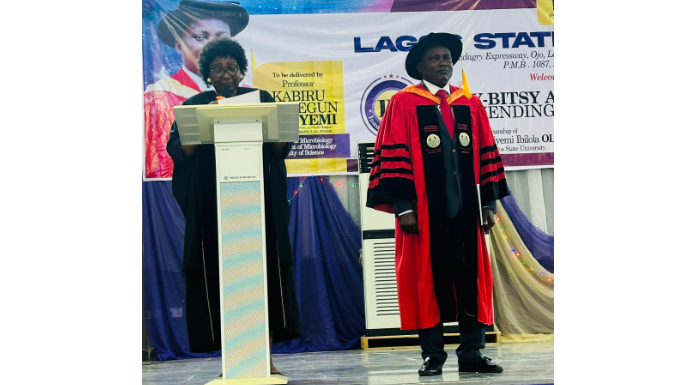
Lagos State University’s Professor of Microbiology, Kabiru Olusegun Akinyemi, has emphasised the need for a multifaceted approach to tackle the negative impacts of microbes on humans.
Delivering the 112th LASU Inaugural Lecture, Akinyemi highlighted the importance of legislation, mass literacy, surveillance, and proper drug manufacturing and consumption practices.
Prof. Akinyemi, who gave LASU’s 112th inaugural lecture themed: “ Itsy-bitsy animalcules in our lives: An unending war and survival strategy”, explained that some indigenous medicinal plants are promising alternatives to the growing, emerging and re-emerging MDR pathogen bacteria.
The first LASU alumnus staff member to become a Professor gave some key recommendations on ways to tackle the war against microbes. Some of which included: “Legislation and policy to establish a national health policy promoting the search for novel antimicrobial products from plants and implement periodic reviews of antimicrobial agents used in hospitals and clinics.
“Mass literacy and the launch of public awareness campaigns on the dangers of indiscriminate drug use and promoting safe methods of sewage and refuse disposal;
“Surveillance and infrastructure that would lead to establishing a National Genomic Database and Nigerian Bacterial Culture Typing Centre to track bacterial strains and develop diagnostic kits.
“Education and research that would involve the overhaul the education sector to make programmes professional-based and allocate 5-10% of university budgets to innovative research
Akinyemi emphasised that the war between microbes and humans is dynamic and complex, requiring a balanced approach to achieve coexistence and resilience. He advocated for a “train the trainer” policy to promote technological innovations and capacity building for young researchers.
By implementing these recommendations, Nigeria can take significant strides in tackling the growing threat of antimicrobial resistance and promoting public health.
As Akinyemi noted, “Our war with microbes is perpetual, and the future depends on research and innovation with capacity building for young researchers.”
Disclaimer
Comments expressed here do not reflect the opinions of Vanguard newspapers or any employee thereof.