
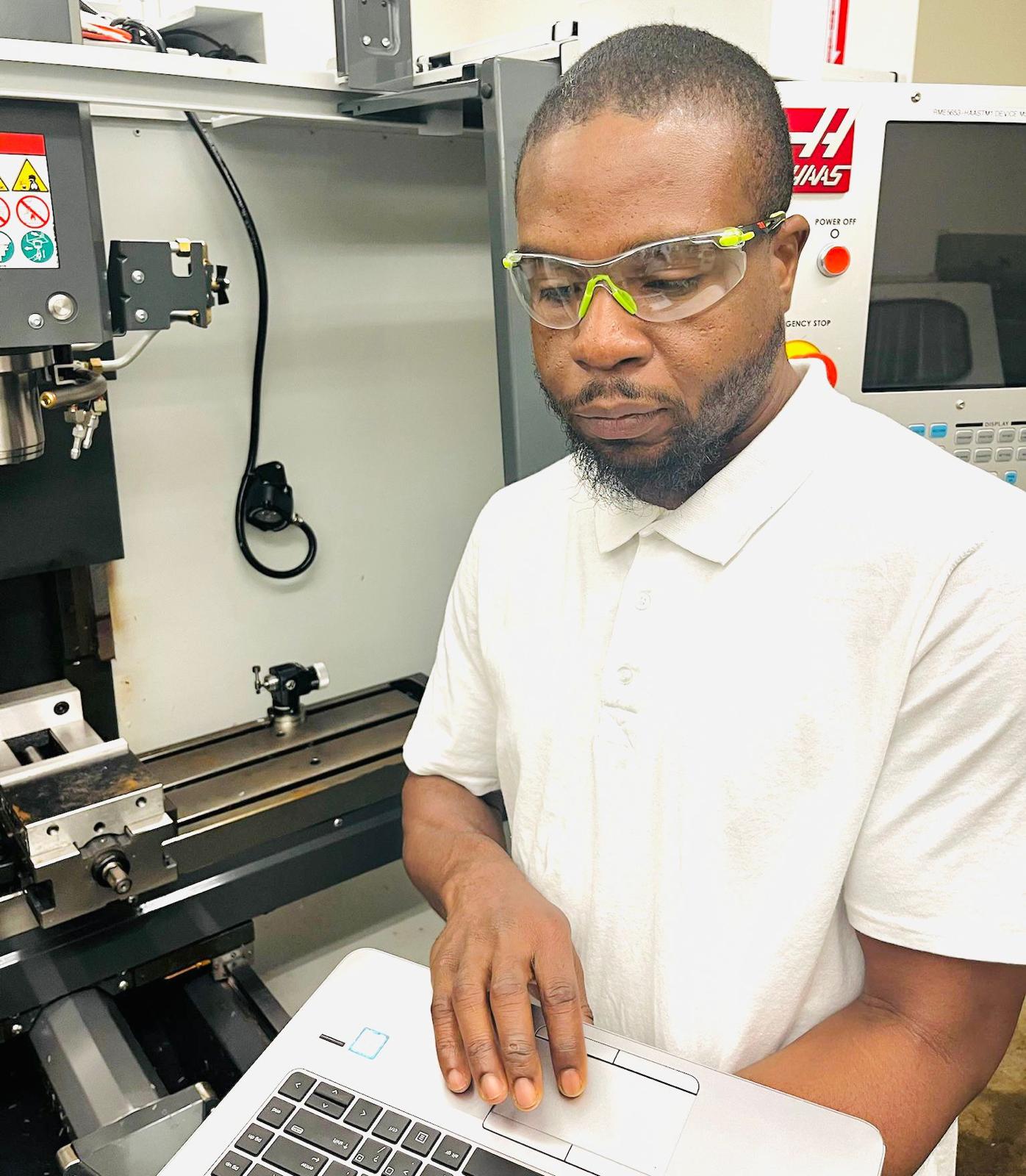
By Efosa Taiwo
Nigeria’s manufacturing industry is at a decisive turning point that will shape its industrial destiny for generations, says Tobechukwu Abor, a Nigerian researcher at Missouri University of Science and Technology (Missouri S&T), specializing in advanced manufacturing.
In a new analysis, Abor identifies Additive Manufacturing—better known as 3D printing—as the key technology Nigeria must urgently adopt to achieve global competitiveness and industrial self-reliance.
“Additive Manufacturing fundamentally changes the economics and possibilities of production,” Abor explained. “It eliminates many constraints of traditional manufacturing, enables rapid prototyping and iteration, reduces material waste dramatically, and allows creation of geometries impossible to produce through conventional machining, casting, or molding.”
Unlike conventional manufacturing that removes material, 3D printing builds components layer by layer from digital models, offering speed, precision, and flexibility. Once limited to plastic prototypes, it now produces aerospace parts, medical implants, and industrial tools with exceptional quality.
Abor highlighted major benefits for Nigerian industries: faster production cycles, mass customization, and drastically reduced material waste.
“Nigerian manufacturers adopting Additive Manufacturing gain immediate competitive advantages,” he said. “They can produce complex parts domestically that currently must be imported and enter high-value sectors previously inaccessible.”
He outlined wide applications, from customized prosthetics and dental devices in healthcare to lightweight aircraft and auto parts, as well as corrosion-resistant oil and gas components.
Abor noted that investment barriers are low: small businesses can start with 3D printers costing $200–$5,000, while industrial metal printers range from $100,000 to over $1 million.
“The critical insight is that Additive Manufacturing enables staged investment aligned with business growth,” he explained.
He urged Nigeria to prioritize education and policy support. “Nigeria’s universities, polytechnics, and technical colleges can integrate Additive Manufacturing education into existing programs relatively easily,” he said.
“Government action multiplies private sector investments. Strategic policies can position Nigeria as an African Additive Manufacturing hub.”
Abor warned that the window of opportunity is closing as Kenya, South Africa, Ghana, and Rwanda move ahead. “Nigerian manufacturers must act within months, not years, to capture available opportunities,” he cautioned.
“Additive Manufacturing enables Nigeria to leapfrog conventional manufacturing infrastructure,” he added. “The time for action is now. Nigeria’s industrial future depends on decisions made today.”
Disclaimer
Comments expressed here do not reflect the opinions of Vanguard newspapers or any employee thereof.