
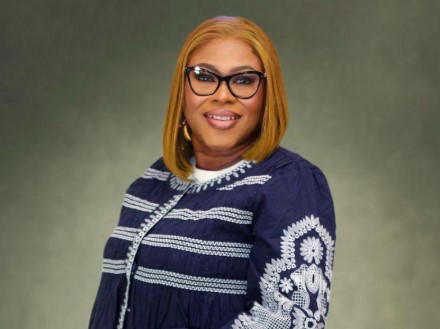
By Christine Umoekereka
Our president has not committed a crime, nor is he a magician. He cannot singlehandedly fix what we have collectively broken. We must take an honest look at ourselves and reflect on our shared actions and responsibilities.
As the proverb says, “A single tree cannot make a forest,” and “A single leaf working alone provides no shade.”
The concept of community creates the unity and strength necessary to rebuild our nation. Nigeria’s renewal will require a hardworking, committed, and ethically driven collective effort to bring the Nigerian dream to life.
“Together everyone achieves more.”
Just as a teacher cannot succeed if the students refuse to learn, a president cannot succeed if citizens fail to play their part. As emphasized in my book, Our Collective Contribution, the rebuilding of Nigeria demands a nationwide transformation of values and attitudes. The book argues that civic reorientation should begin early—through education that teaches teamwork, responsibility, and integrity. It recommends incorporating such civic materials into school curricula to reshape national consciousness and promote patriotism from childhood.
Indeed, “We don’t know what we are not taught.”
Nigeria suffers not merely from leadership challenges, but also from a lack of collective civic responsibility. Too often, citizens focus solely on personal success while neglecting community development. We advance as individuals but stagnate as a nation.
To change this trajectory, we must nurture the mindset of teamwork, service, and shared progress. However, while emphasizing collective effort, it is essential to acknowledge that leadership carries a profound responsibility. True nation-building requires accountability on both sides: the governed and the governing. Citizens must embrace discipline, integrity, and active participation, but leaders, in turn, must model transparency, equity, and ethical governance. When leaders lead by example, citizens are inspired to follow suit.
Effective leadership is not about perfection but about responsibility and moral clarity. Therefore, civic education should target both citizens and leaders alike. Leadership ethics, transparency, and accountability must be institutionalized through public servant training, open governance, and citizen oversight mechanisms. When both leaders and citizens perform their respective duties conscientiously, national progress becomes not only possible but sustainable.
In comparing Nigeria’s internal divisions to those of other nations, we must also avoid idealizing foreign societies. For example, while the United States remains a model of civic participation, it too struggles with regional, racial, and political divides. The lesson, therefore, is not that other nations are without conflict, but that they have built systems to manage differences through dialogue, law, and shared values. Nigeria can and must do the same—embracing diversity as strength while working under a common national purpose. To build a great nation, we must learn to effectively utilize our resources, balance our spending, and develop a culture of self-reliance.
As ‘Our Collective Contribution’, this process begins with self-examination and education.
Some of the reflective exercises included in the book challenge readers to consider:
- What personal actions can you take to make Nigeria better?
- What natural and agricultural resources can generate sustainable income for the country?
- How can you contribute to changing Nigeria’s national narrative?
- How can tribalism and materialism be addressed from the grassroots level?.
- What can unity and shared sacrifice accomplish that individual ambition cannot?
This work is not a critique of government but a call for civic enlightenment. As the title implies, Our Collective Contribution reminds us that every citizen plays a role in either advancing or weakening the state. It is a call to awaken our sense of patriotism, moral discipline, and shared responsibility.
As the the book states: “The president is not a sorcerer with magical powers, nor can he conjure prosperity from nothing. Let us be realistic about the parts we have each played in the decline of our nation. You can only reap what you sow, and as a nation, you can only spend what you have.”
Ultimately, it is the people who form the moral and operational backbone of a country. By their attitudes, diligence, and sense of duty, the nation either rises or falls. Patriotism and citizenship are the foundation of national growth. Civic education, ethical leadership, and public accountability must coexist as mutually reinforcing pillars for Nigeria’s progress.
Furthermore, tribalism remains one of the most destructive forces against national unity. When the government appoints qualified individuals to serve, these appointments should be evaluated on merit, not ethnicity. A Hausa, Yoruba, or Igbo appointee remains, first and foremost, a Nigerian.
As Abraham Lincoln once said, “A house divided against itself cannot stand.” Nigeria must embrace its plural identity as a strength rather than a weakness.
Our environment profoundly shapes our children’s character and values. Let us begin the
process of rebuilding from the grassroots by instilling discipline, empathy, and national pride early. If we “catch them young,” we can foster a generation that values service over status and unity over division.
The call is simple but urgent: “It’s time we join our hands together to build our country. Nigeria is my country, and I am ready to participate in making it a beautiful nation again.”
A prosperous Nigeria is not the task of one leader—it is our collective mission. Let us choose to participate constructively, think critically, and hold both ourselves and our leaders accountable. Constructive support and ethical collaboration can inspire any president to perform better. When citizens and leaders unite in purpose, motivation and progress follow.
We are stronger together when integrity, discipline, and shared responsibility guide our national journey.
Christine Umoekereka, a registered nurse and author of ‘Our Collective Contribution’, wrote from Canada.
Disclaimer
Comments expressed here do not reflect the opinions of Vanguard newspapers or any employee thereof.