
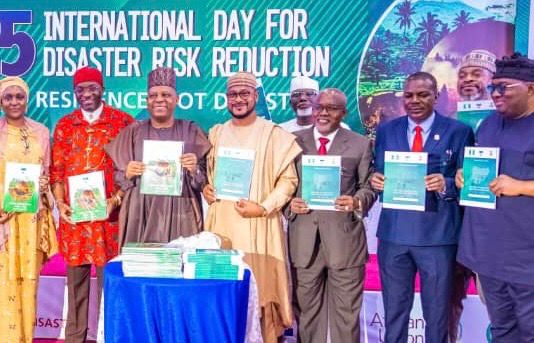
…Says focus should shift from disaster response to prevention
The House of Representatives Committee on Emergency and Disaster Preparedness has expressed its readiness to support the establishment of a National Resilience Fund to strengthen the country’s capacity for disaster prevention, preparedness, and adaptation.
Chairman of the Committee, Rt. Hon. Joseph Bassey, disclosed this in Abuja during the 2025 International Day for Disaster Risk Reduction, themed “Fund Resilience, Not Disaster.”
Bassey said the proposed fund would help ensure sustainable financing for proactive measures while improving transparency and accountability in disaster management spending.
“It is a great honor and privilege to join you at this important national roundtable on disaster risk management funding, with the very timely theme, ‘Fund Resilience, Not Disaster,’” he said.
He commended the organizers for convening key stakeholders from government, development partners, the private sector, and civil society to discuss strategies for strengthening disaster management frameworks in the country.
According to him, the theme underscores the need to shift Nigeria’s disaster management approach from a reactive posture to one that prioritizes prevention and preparedness, noting that investing in resilience is not an act of charity but “sound economics and responsible governance.”
The lawmaker reaffirmed the National Assembly’s commitment to strengthening the legal and institutional framework for disaster risk reduction.
He outlined the committee’s ongoing efforts, which include: Reviewing existing laws in line with the Sendai Framework for Disaster Risk Reduction (2015–2030);
Advocating increased budgetary allocations to the National Emergency Management Agency (NEMA) and other related agencies;
Supporting the establishment of a National Resilience Fund dedicated to prevention, preparedness, and adaptation; and
Enhancing legislative oversight for transparency and accountability in disaster management spending.
Bassey stressed that building national resilience requires a collective effort involving all levels of government, the private sector, development partners, and civil society actors.
He further urged stakeholders to integrate disaster risk reduction into their policies and budgets, while exploring innovative mechanisms such as insurance, risk transfer, and climate finance to manage vulnerabilities effectively.
“The message of this roundtable is clear,” Bassey said. “We must move from response to resilience, from reaction to prevention, and from funding disaster to funding resilience. Together, let us ensure that we build a safer, stronger, and more sustainable nation for all.”
Disclaimer
Comments expressed here do not reflect the opinions of Vanguard newspapers or any employee thereof.