
By Ebunoluwa Sessou
Stakeholders have called for increased access to affordable and gender-responsive renewable energy products to empower women in agriculture and mining across West Africa.
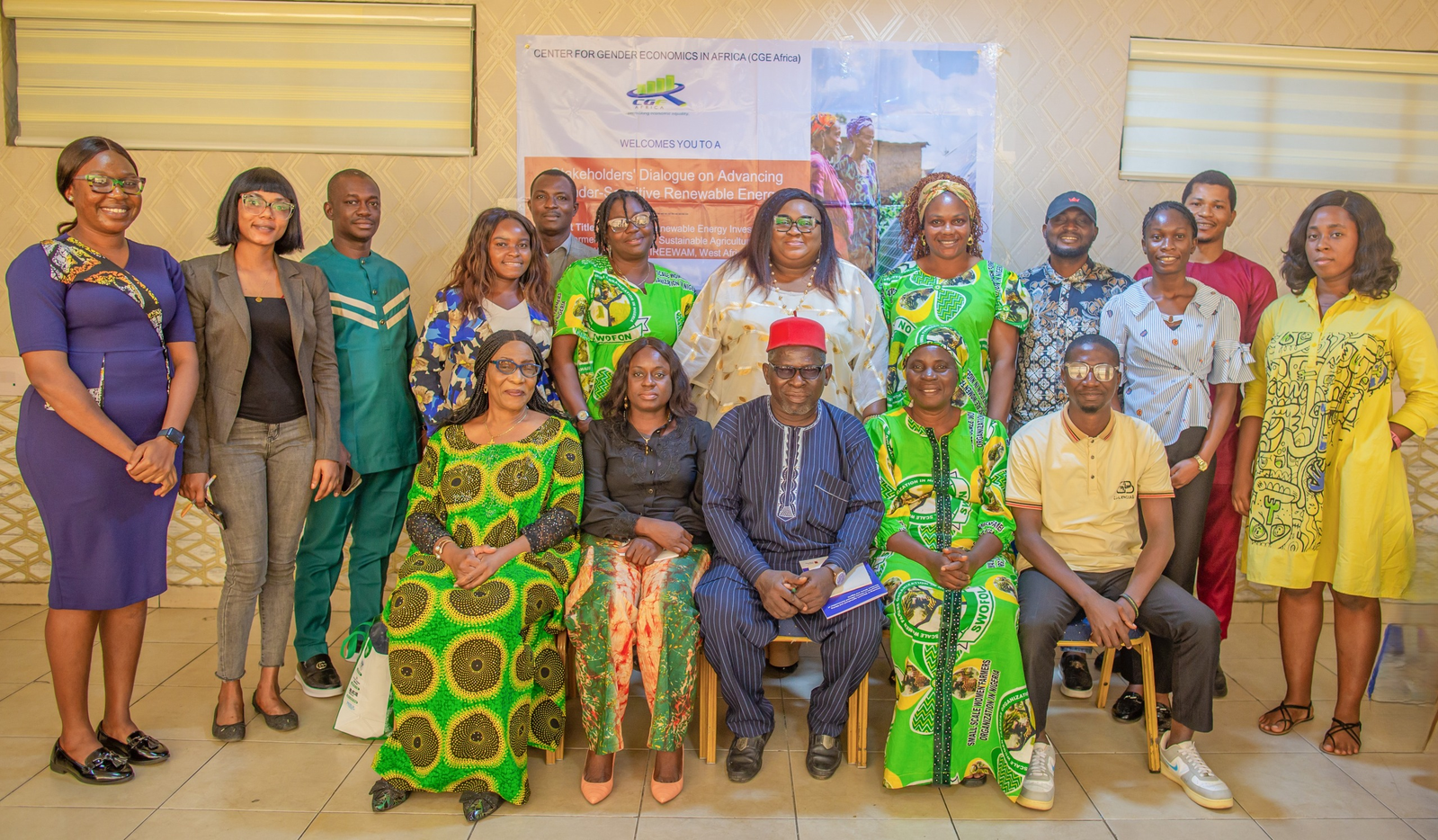
This call was made during a Stakeholders Dialogue on Advancing Gender-Sensitive Renewable Energy, organized by the Centre for Gender Economics in Africa (CGE Africa) under the project titled “Increasing Renewable Energy Investments for Empowerment of Women in Sustainable Agriculture and Mining in West Africa (IREEWAM).”
The dialogue brought together key players from the Ministry of Energy, private sector, civil society organizations, women associations, and the media to chart a path towards making renewable energy technologies inclusive and affordable for women, especially those in rural communities.
Speaking at the event, Engineer Akinola Shobanjo of Powertech Solar Energy Co. Limited applauded the initiative, describing it as an eye-opener that rekindled conversations around gender inclusion in energy innovation.
“The girl child has not been involved in so many things that they should have been involved in. Most of the activities are being dominated by men. It’s refreshing to see the focus shifting to women and girls,” he said.
He noted that Powertech Solar Energy is already working to make renewable energy systems more affordable by engaging manufacturers to reduce production costs.
“Many people want to access solar energy systems, but the prices are high. We have been working with manufacturers to review import charges and reduce costs. In the next few months, prices will drop, and solar systems will become more affordable and easier to maintain,” he assured.
Also speaking, Dr. Anita Nana Okuribido, President, Women in Renewable Energy Association (WIRE-A), described the dialogue as a timely step toward achieving inclusivity in the energy sector.
“I am elated that CGE Africa has created this platform to give women a common voice in the energy transition. Gender is not just about women; it includes men, boys, and girls. But we must recognize that energy poverty wears the face of a woman,” she stated.
Okuribido emphasized the need to domesticate renewable energy production to ensure affordability, adding that imported green technologies often remain out of reach for rural women.
“What is the essence of renewable energy products if the targeted users cannot afford them? We must begin to produce locally, reduce the drudgery in women’s lives, and improve their earning power through community-based renewable energy initiatives,” she said.
In his remarks, Adeniyi Adeyanju, Executive Secretary of NECA’s Network of Entrepreneurial Women (NNEW), reiterated the organization’s partnership with CGE Africa, noting that affordability remains a major challenge.
“This is a laudable project that will impact women entrepreneurs, especially in rural areas. We will work with CGE Africa to make renewable energy accessible and affordable to our members,” she affirmed.
Adeyanju also called for collaboration between the Lagos State Ministry of Commerce and the Ministry of Energy to ensure effective implementation of renewable energy projects, adding that government ministries are open to partnerships that drive economic empowerment for women.
Highlighting the objectives of the dialogue, Uchenna Idoko, Founder of CGE Africa, said the meeting aimed to identify renewable energy products that can make life easier for women in agriculture, mining, and related sectors.
“We developed a list of renewable products and discussed their accessibility and affordability. The issue of cost remains a major concern, as some solar products are no longer subsidized and have become too expensive for low-income earners,” she explained.
She added that affordability could be addressed through collaboration between the private sector, government, and philanthropies, calling on public officials to prioritize energy subsidies in constituency projects.
“Rather than spending funds on leisure, constituency funds can be used to provide solar lamps or create solar pavilions in coastal areas where women in fishing can sort their catches at night. This will improve productivity and prevent wastage,” she suggested.
Idoko further urged government agencies to create an open investment framework that encourages private sector participation in renewable energy, emphasizing that sustained funding and local manufacturing are key to achieving energy inclusion.
The dialogue concluded with a shared commitment among stakeholders to promote gender-responsive renewable energy solutions that will not only bridge the energy gap but also enhance women’s participation and empowerment across sectors in West Africa.
Disclaimer
Comments expressed here do not reflect the opinions of Vanguard newspapers or any employee thereof.